Romanian politics: Eight topics to follow in 2026
The justice system remains a key issue, while several high-level appointments are expected this year, including in the intelligence services. Here are several topics to watch in the coming period.
The governing coalition dynamics

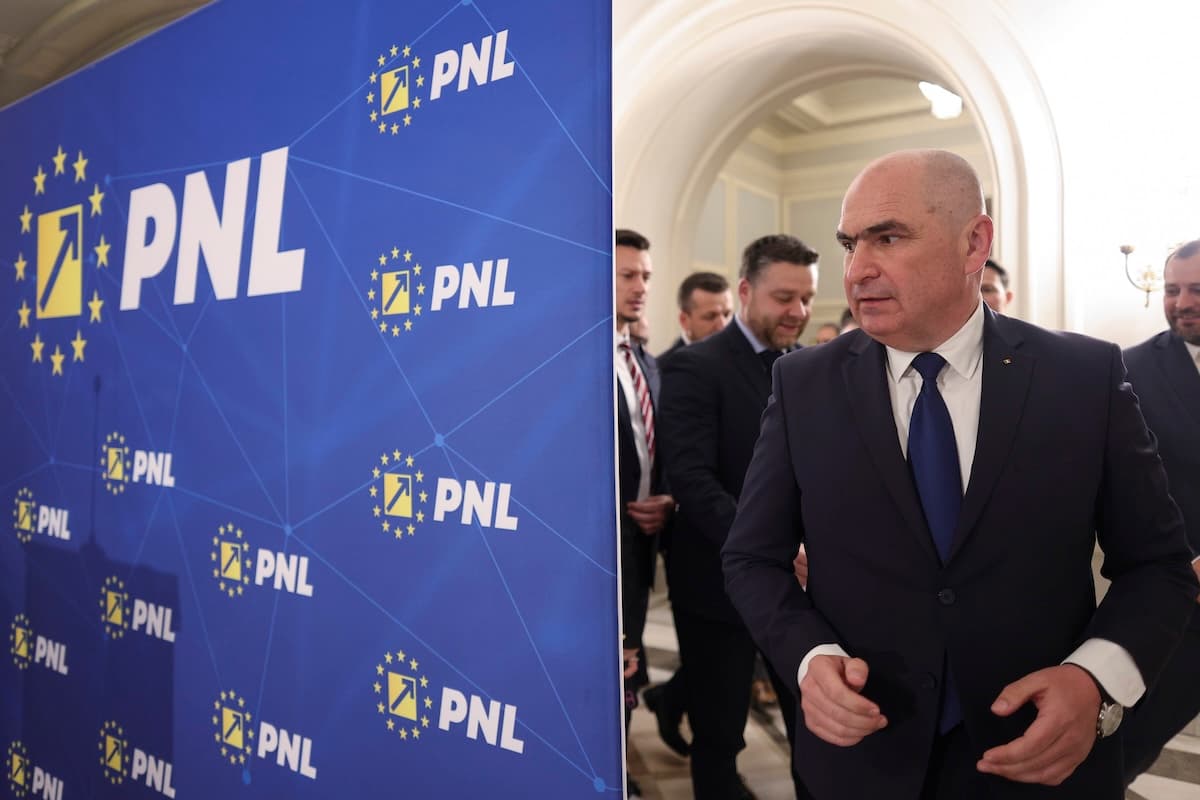
The government led by prime minister Ilie Bolojan, backed by a coalition made up of the Social Democratic Party (PSD) and the National Liberal Party (PNL), along with the Save Romania Union (USR) and the Democratic Alliance of Hungarians in Romania (UDMR), enacted since mid-2025 a series of measures aimed at tackling the country's budget deficit, which stood at 9.3% of GDP in 2024. It introduced a series of tax hikes, including raising the standard VAT rate from 19% to 21%, increasing the dividend tax rate from 10% to 16%, and expanding the contributions to the healthcare system to include pensioners earning above RON 3,000 per month, among other measures.
The reform of the local administration has been another issue on the agenda. A target to cut personnel spending by 10% at the central and local levels of public administration has sparked tensions in the coalition, with PSD opposing the measure. Last month, PSD said it was starting internal consultations on whether to remain in the ruling coalition.
Although it did not support a December no-confidence motion against the Bolojan government initiated by the hard right opposition party AUR, PSD did back the same party's motion against Environment Minister Diana Buzoianu, a member of the reformist center-right Save Romania Union (USR) party. Sorin Grindeanu, the PSD leader, has also opposed the appointment of non-profit leader Oana Gheorghiu as deputy PM, a choice of PM Bolojan, taking issue with her previous criticism of the U.S. administration on social media.
President Dan has repeatedly stated that the governing coalition is functioning and has cited a stable government as his main achievement in the first 100 days in office. As recently as this week, he said he bets on it being stable this year. He also said the international context is difficult and that "this is not the time for revolutions and destabilization in Romania," G4media reported.
The magistrates' pension reform & follow-up on 'Captured Justice'
The justice system has featured prominently on the public agenda last year, with the focus on the magistrates' pension system, attempts to reform it, and end-of-year street protests in major cities across the country following the release of the documentary Captured Justice by the investigative platform Recorder.
The government led by Ilie Bolojan has been trying to pass a law changing the pension rules for magistrates as part of a package aimed at reining in the country's budget deficit. The law seeks to gradually increase the retirement age for magistrates to 65 years, the standard in the public pension system; increase the minimum length of service to 35 years from 25 at present; and cap the magistrates' pension to no more than 70% of the last net salary. Following a complaint of unconstitutionality filed by the High Court of Cassation and Justice, the Constitutional Court of Romania (CCR) ruled in October that the law that modifies the pension rules for magistrates is unconstitutional because the government had not awaited the advisory opinion from the Superior Council of Magistracy (CSM), which is consultative but mandatory. After obtaining the CSM opinion, which was negative, the government assumed responsibility for the bill in Parliament for a second time. In early December, the High Court challenged the law and referred it to the Constitutional Court (CCR). The latter postponed a ruling in the case several times, most recently on December 29, after four CCR judges appointed by the Social Democratic Party (PSD) failed to show up for the court's meeting. The court president postponed the decision to January 16.
The delay came amid turmoil following the release of the documentary Captured Justice. The exposé, which has gathered 5 million views on YouTube, points to mechanisms to delay major corruption cases to their prescription date and pressures on members of the judiciary trying to do their job. The Recorder investigation prompted a string of street protests, while president Dan said he would initiate a referendum among magistrates in January to determine whether the Superior Council of Magistracy (CSM) acts in the public interest. In statements made following a meeting of the Coalition of the Willing in Paris on January 6, Dan said the details of the referendum would be established "in the coming days."
Top-level appointments in judiciary, intelligence services
The Romanian Intelligence Service (SRI) has been under interim management for more than two years, after Eduard Hellvig, who led the institution on a mandate that started in 2015, resigned from the post in July 2023. The mandate of Gabriel Vlase, who leads the Foreign Intelligence Service (SIE), ends this year. President Nicușor Dan, who is tasked with making both appointments, had previously said he was interested in building political consensus around the appointees to secure the required votes for approval by Parliament. He also argued that the next job holders should not be involved politically and expressed a wish to make the appointments by the end of 2025 or early 2026, as reported by Digi24.
The mandates of the general prosecutor, the head of the National Anticorruption Directorate (DNA), and of the head of the Directorate for Investigating Organized Crime and Terrorism (DIICOT) also end this year. The appointments involve proposals made by the Justice Minister, a job currently filled by the Social Democrat (PSD) Radu Marinescu, receive the approval of the Superior Magistracy Council (CSM), and then the approval or not of the president.
In the coming period, the president will negotiate with PSD the judicial and intelligence appointments, sources told G4media, as the party has the highest number of MPs and its representative is the justice minister.
Furthermore, the five-year mandate of Renate Weber as Ombudsman (Avocatul Poporului) ended in July 2024, but the Parliament has yet to start the process of appointing a replacement.
Bilateral meetings on the presidential agenda
In addition to attending several B9 and multilateral events, president Nicușor Dan had several bilateral meetings last year, including a state visit to Germany, where he met with president Frank-Walter Steinmeier and chancellor Friedrich Merz, and to France, where president Emmanuel Macron hosted Dan during a working visit in Paris. A NATO Industry Forum event held in Bucharest in November 2025 was an opportunity for a meeting with NATO secretary general Mark Rutte, while later, in December, King Charles III received Dan at Buckingham Palace during his official visit to the United Kingdom.
This year, French president Emmanuel Macron is expected to visit Romania, while Dan is due to meet U.S. president Donald Trump in the first part of 2026, according to comments by Foreign Affairs Minister Oana Țoiu. The Presidential Administration is working with U.S. counterparts on topics related to economic cooperation, defense, and security in preparation for the visit, the minister has said.
AUR's push to suspend the president
As part of the parliamentary opposition, AUR introduced several no-confidence motions against the Bolojan government in the six months it has been in office. The first came as early as July 2025, followed by four in September, and another one in December, all of them unsuccessful.
Now, AUR is looking to start the procedures to suspend the president, claiming he is interfering in the functioning of the judicial system with the initiative to organize a referendum among magistrates. At the end of December, AUR deputy Ștefăniță Avrămescu said the initiative had the support of 120 MPs. By February, it could gather the needed 155 votes, he said, according to Hotnews. AUR has been trying to convince the sovereignist Young People's Party (POT) to back the initiative, so far without success.
The president can be impeached for "serious acts that breach the provisions of the Constitution." The proposal to suspend the president can be initiated with at least a third of the votes of MPs and involves consulting the Constitutional Court. If the required number of MP votes is met, a national referendum is held on impeaching the president.
The move to suspend the president is not unprecedented in local politics. President Traian Băsescu survived two impeachment efforts. One in 2007, when the public voted against the initiative, and another one in 2012, when the referendum was invalidated because it did not meet the turnout threshold.
Defense and the regional situation
The recently sworn-in Defense Minister Radu Miruţă requested for 2026 an increase in the budget of the Ministry of Defense from 2.3% of GDP, as it was in 2025, to 2.7% of GDP for 2026 because of the war in Ukraine. In his turn, president Dan has spoken of the need to strengthen defense capabilities through increased investment and closer coordination within NATO and the European Union, arguing that Russia will remain a security threat to Europe even if the war in Ukraine ends in a peace agreement.
At the end of November, the Parliament approved the National Defense Strategy, which will guide national security policy for the 2025-2030 period. It outlines objectives such as strengthening defense capabilities, deepening cooperation with partners, supporting Moldova and Ukraine, advancing stability in the Western Balkans, and promoting EU enlargement.
When it comes to defense acquisitions, the country recently signed a major contract with France for the acquisition of Mistral portable short-range air defense missile systems; signed an intergovernmental contract with Turkey for the purchase of a HISAR-class light corvette; and closed an agreement to acquire 18 F-16 fighter jets from the Netherlands, aircraft already stationed at the Fetești Air Base as part of the European F-16 Training Center (EFTC).
At the end of the year, the government also allocated EUR 50 million to support Ukraine's defense through the US-backed PURL mechanism.
At a regional level, Romania holds this year the presidency of the Central European Initiative (CEI), a forum established after the fall of the Berlin Wall and gathering 17 member states in Central, Eastern, and South-Eastern Europe. The country's mandate is aimed at advancing the European integration of candidate countries, alongside support for Ukraine, and priorities such as combating disinformation, strengthening regional connectivity, and the economic dimension.
The OECD accession
A project involving strong economic and institutional aspects, the OECD accession has been an objective of successive governments. Romania has advanced in its bid for OECD membership, with 15 of the 25 OECD committees adopting positive conclusions. After a meeting with president Dan in September of last year, OECD secretary-general Mathias Cormann spoke of the "ambitious but achievable goal of completing this process in 2026." Romania is set to undergo this year an economic analysis evaluation, which will be launched in March 2026. In December of last year, Romania received the status of associate member of OECD's Development Assistance Committee (DAC), the international forum responsible for coordinating official development assistance provided to developing countries. The country's accession to the DAC comes amid a steady increase in recent years in the volume of development assistance it provided, with USD 539.1 million extended in 2024, the Foreign Affairs Ministry (MAE) said.
EU funding opportunities
After hitting the EUR 100 billion mark in EU funds received since joining the European Union in 2007, the country aims to attract at least EUR 15 billion in European funds this year, according to Dragoş Pîslaru, the minister of Investments and European Projects. The sum would go towards investments in hospitals, schools, highways, local infrastructure, and economic competitiveness, he explained. In the last six months of 2025, the state disbursed EUR 456.2 million per month, compared to an average of EUR 86.6 million monthly before June 2025, he said. At the same time, in the second half of last year, Romania sent payment requests of EUR 6.3 billion, compared to EUR 3 billion in the first six months. Furthermore, the sum received went from EUR 2.9 billion to EUR 5.2 billion, the minister said, calling 2026 "the year of the (Recovery and Resilience Facility) PNRR."
(Photo: Stevanovicigor | Dreamstime.com)
simona@romania-insider.com