Name of Romanian microbiologist among those to be engraved on frieze displayed in the Eiffel Tower
Agnes Ullmann, a microbiology specialist of Romanian origin, is among the 72 female researchers whose names are to be engraved on a frieze displayed in the Eiffel Tower in Paris, local news agency Agerpres reported.
Radu Dumitrescu · Journalist
· Updated · 2 min read
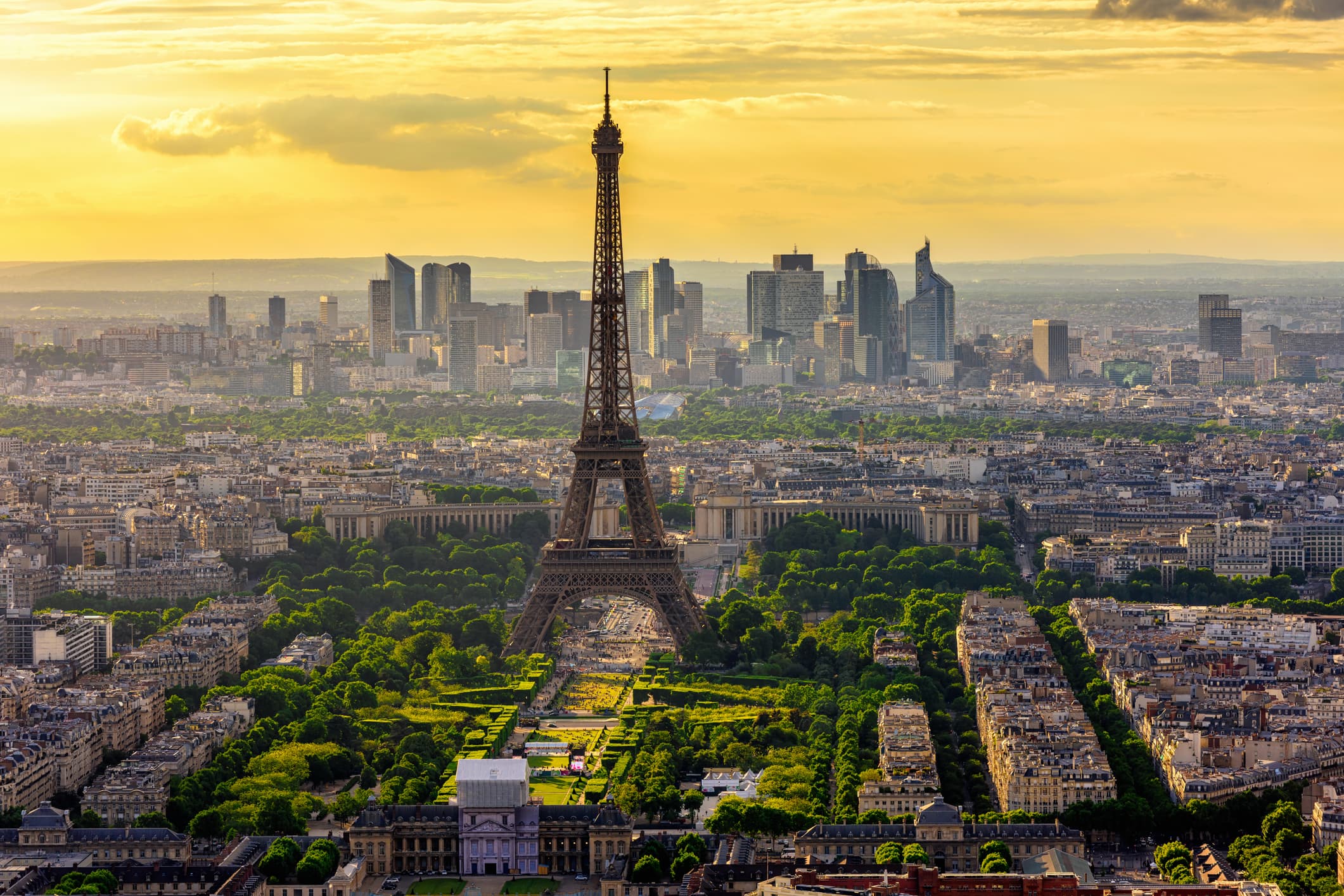
Agnes Ullmann, a microbiology specialist of Romanian origin, is among the 72 female researchers whose names are to be engraved on a frieze displayed in the Eiffel Tower in Paris, local news agency Agerpres reported.
The Eiffel Tower currently hosts a frieze on which the names of 72 men, French researchers, engineers, and industrialists, are engraved. The names of men such as Gustave Eiffel and Léon Foucault, chosen because they brought honor to France between the years 1789 and 1889, symbolize humanity’s hopes linked to science at the end of the 19th century.
Paris authorities recently decided to add the names of 72 female researchers on a similar installation. Among them are the legendary Marie Curie, but also Angélique du Coudray, an obstetrician born in 1712, Yvonne Bruhat, a physicist and mathematician who died in 2025, and Agnes Ullmann, a microbiology specialist of Romanian origin.
Initiated in March 2025 by the City Hall of Paris, the Eiffel Tower Operating Company (or SETE) and the Femmes & Sciences association, this project aims to restore these women to “their place in the scientific Pantheon,” the Paris municipality announced. The new frieze will be placed just above the existing frieze, at the level of the first floor.
“The time has come to give women the place they deserve in the Eiffel Tower, this exceptional monument, admired all over the world and designed by Gustave Eiffel to pay tribute to science and scientists! Soon, young girls who look at the Eiffel Tower will also be able to have the ambition to become a doctor, mathematician, chemist, biologist, computer scientist, engineer, physicist, astrophysicist, or climate specialist. We need researchers and women who imagine tomorrow. Here is a magnificent perspective, which should make us all happy!” declared mayor Anne Hidalgo in a press release cited by Agerpres.
Agnes Ullmann (1927–2019) was a microbiology specialist of Romanian origin, naturalized as a French citizen in 1966. With the help of Jacques Monod, she fled Hungary in 1959 and was employed at the National Research Center in France (1972–1992) and the Pasteur Institute (1978–1996), where she was appointed head of laboratory in 1978, then professor (1983). She wrote almost 200 articles in scientific publications and contributed to various courses.
Ullmann contributed on a large scale to the rise of molecular biology. Her work proved crucial for the development of new treatments and vaccines. She was particularly interested in whooping cough and developed vaccines by combining genetically modified whooping cough toxin with antigenic fragments.