Ancient bacteria strain resistant to modern antibiotics discovered in ice cave in Romania
Scientists have uncovered an ancient, cold-adapted bacterial strain trapped in ice inside Romania’s Scărișoara Cave that is resistant to several modern antibiotics. The discovery suggests that antimicrobial resistance evolved naturally long before the development of contemporary medicine, as reported by CNN.
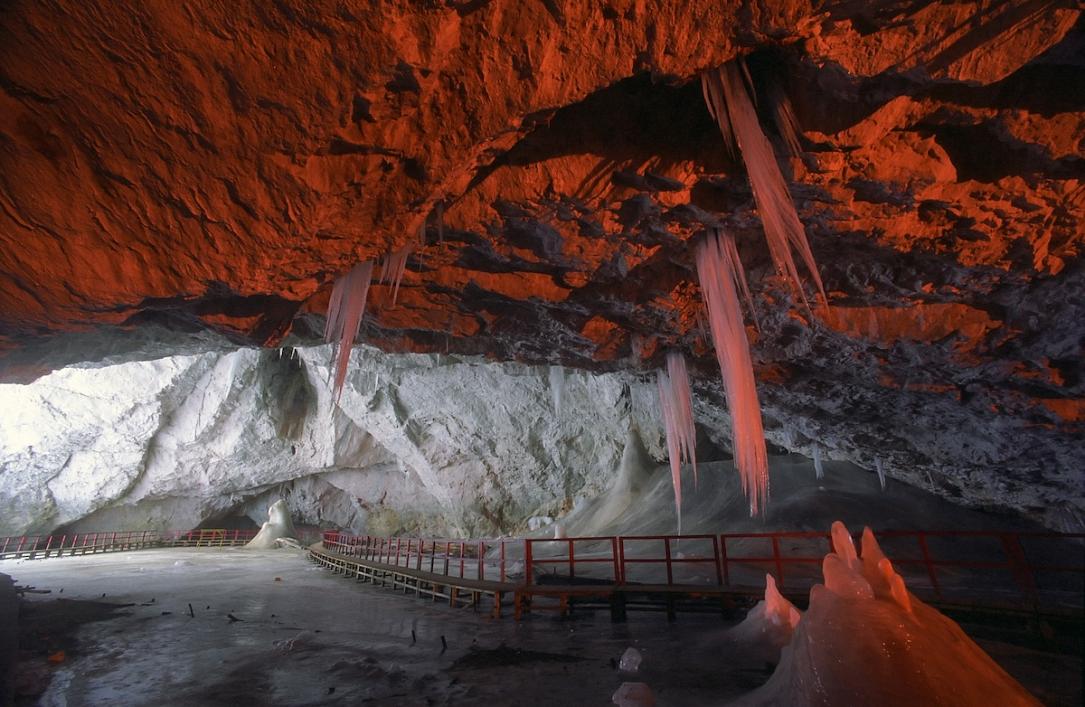
The bacterium was recovered from a 25-meter ice core drilled in the Great Hall of Scărișoara Cave, home to one of the world’s largest underground glaciers, formed around 13,000 years ago. However, the sample analyzed in the study was from 5,000-year-old ice.
Researchers found that the strain, known as Psychrobacter SC65A.3, is resistant to 10 out of 28 antibiotics tested, including trimethoprim, clindamycin, and metronidazole.
Cristina Purcărea, senior scientist at the Institute of Biology Bucharest of the Romanian Academy and lead author of the study published in Frontiers in Microbiology, said: “Ancient bacteria can resist modern antibiotics because antibiotic resistance is an ancient evolutionary characteristic that was shaped over millions of years by competition between microbes.”
The cold-loving bacterium, classified as a psychrophile, thrives in icy environments and is not considered harmful to humans. Genome analysis revealed genes linked to both survival at low temperatures and resistance to antimicrobial agents.
Researchers also identified 11 genes that may produce molecules capable of inhibiting other bacteria, fungi, and viruses, raising hopes that such compounds could help in the development of new antibiotics amid growing global resistance.
“The team in Romania found this particular bug had resistance to 10 reasonably advanced synthetic antibiotics, and that in itself is interesting,” said Matthew Holland, a postdoctoral researcher in medicinal chemistry at the UK’s University of Oxford. “But what they report as well is that it secreted molecules that were able to kill a variety of already resistant, harmful bacteria.”
Scientists have been warning that as climate change accelerates, the melting of glaciers and ice caves, dormant microbes trapped for millennia, could be released into modern ecosystems. While most are likely harmless, some may carry antibiotic resistance or unknown biological properties.
The World Health Organization estimates that nearly five million deaths annually are linked to antimicrobial resistance, underlining the urgency of finding new treatments, CNN reported. Scientists increasingly look to extreme environments, including ice caves and deep-sea ecosystems, for potential antibiotic candidates.
"Researchers emphasize that cave ice deposits can function as true genetic archives of the microbial past and as potential sources of new bioactive molecules relevant to current medical and biotechnological research," the Institute of Biology Bucharest wrote in a recent post on Facebook, referring to the recent discovery.
irina.marica@romania-insider.com
(Photo source: Rechitan Sorin/Dreamstime.com)