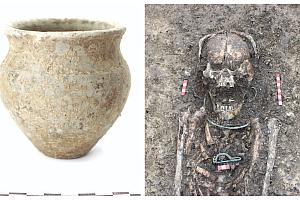
Central Romania: 7,500-year-old clay female figurine discovered near Sfântu Gheorghe
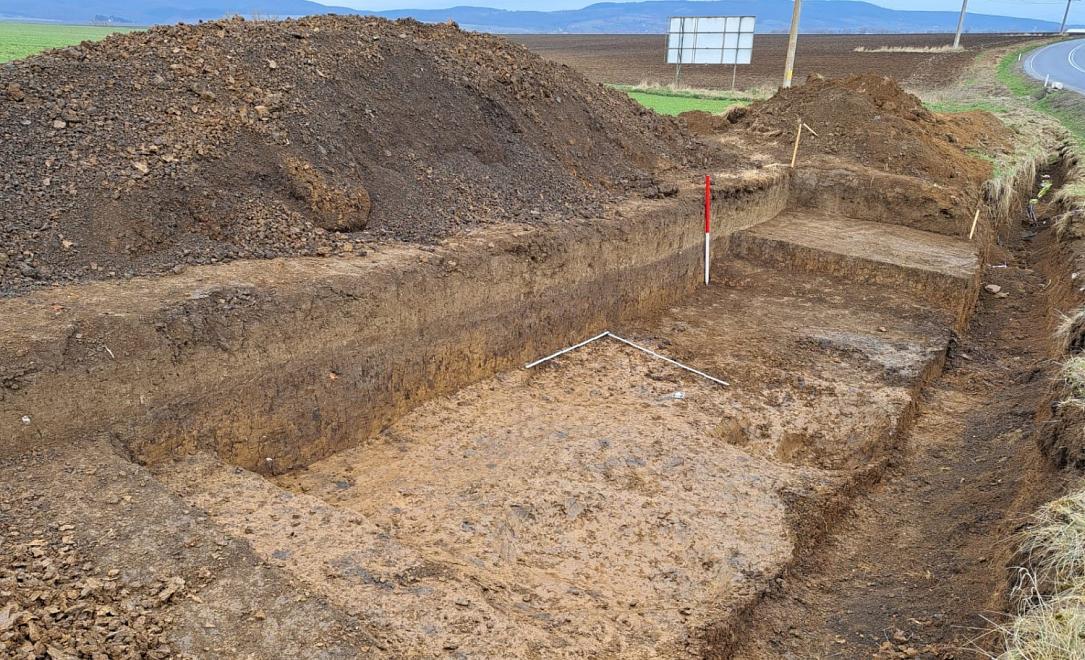
Archaeologists have uncovered a 7,500-year-old clay female figurine near Sfântu Gheorghe in central Romania, the National Museum of the Eastern Carpathians (MNCR) announced on social media, as reported by Agerpres. The discovery was made during preventive excavations at the Arcuș-Platoul Târgului (Vasarteto) site, carried out ahead of electricity network expansion works near Sepsi Arena.
The statuette, dated between 5,800 and 5,500 BC and attributed to the Starčevo-Criș culture, was found inside a Neolithic dwelling alongside pottery fragments, traces of burnt clay, and charcoal. The Starčevo-Criș culture is among the earliest agricultural cultures in southeastern Europe.
Standing just 6 centimeters tall, the figurine was crafted from clay mixed with chaff and sand and fired at high temperature, the museum explained. It features incised V-shaped eyes, a small oval nose, and fine lines suggesting long hair, possibly tied in a bun - considered one of the earliest depictions of female hairstyle north of the Danube.
“The arms, modeled laterally, appear raised, and at the front, two small protrusions indicating the breasts can be seen - a clear sign that we are dealing with a female figure. This position, with the arms open, was typical of Neolithic representations, symbolizing prayer, invocation, or communion with the divine,” the museum also said.
Archaeologists believe the artifact may have had a ritual function, possibly serving as an offering, amulet, or fertility symbol.
Specialists noted that such figurines are rare within the Starčevo-Criș culture, making the Arcuș discovery particularly valuable for understanding early Neolithic communities in the region.
irina.marica@romania-insider.com
(Photo source: Facebook/MNCR - Muzeul Naţional al Carpaţilor Răsăriteni)