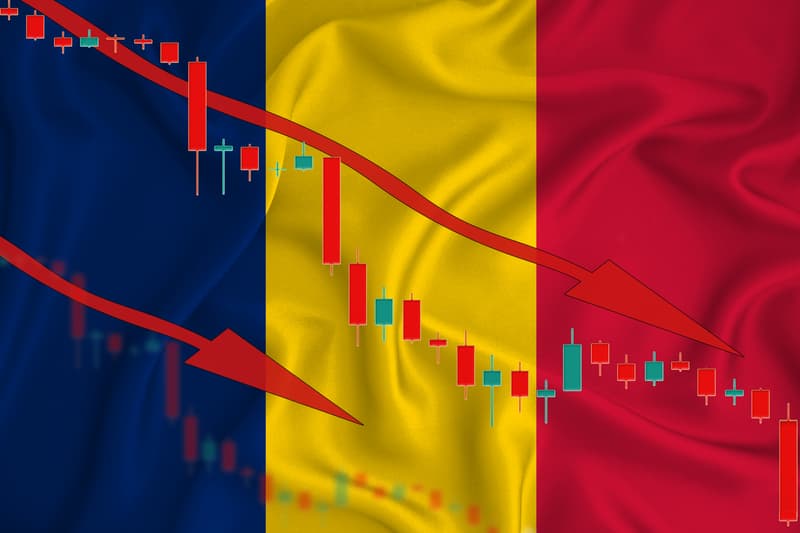
Confidence in the Romanian economy continues to decline in December
Confidence in the Romanian economy declined again in December due to a new drop in consumer morale, as well as among managers in services and construction.
The Economic Sentiment Indicator (or ESI) recorded 93.1 points in December, compared to 94.2 points in November, reaching the lowest level since December 2020. The ESI is calculated by the European Commission based on the responses of managers from the main sectors of the economy, as well as consumers, and has a high degree of correlation with gross domestic product developments.
The confidence index has been low for eight consecutive months, but the tide is showing signs of turning. “We observed an exaggerated reaction in the ESI figures in 2025, linked to political turmoil and fiscal consolidation measures, especially on the consumer side. GDP data showed a more moderate economic response,” notes Vlad Ioniță, economist at Banca Comercială Română, cited by Profit.ro.
As a quarterly average, the ESI fell in Q4 to 93.1 points, from 94.3 points in the previous quarter, suggesting a sequential contraction of the economy. Statistical data from the real economy are not yet available beyond October. However, BCR still expects a slight increase in GDP dynamics in the fourth quarter.
The bank estimates an acceleration of the economy in 2026 to 2.1%, from 1.3% in 2025, dependent on the implementation of investments funded by European funds. At the same time, Ioniță notes that GDP dynamics in the last quarter of 2025 are relevant for economic growth in 2026 due to the carryover effect.
Consumer morale approached historical lows again, with a decline of 1.1 points in December, amid a deterioration in expectations regarding the financial situation and a decrease in intentions for major purchases, while perspectives on the economic situation improved.
“Consumers likely remain excessively pessimistic following the tax increases over the summer and persistently high inflation,” Ioniță said.
In July, electricity bills rose sharply, and in August, consumption taxes (VAT and excise duties) increased, which gave new impetus to inflation, which doubled from around 5% to nearly 10% per year, a level around which it is expected to remain until this summer. From January 1, the population was hit by a new wave of tax increases, this time on real estate properties and automobiles, which in some cases more than doubled. From April, the gas price cap also expires, which could bring a significant increase in bills. At the same time, caps on commercial markups for basic food products are also set to expire.
Managers in the retail sector reported increases in business in recent months and expect sales growth in the period ahead, as well as a decrease in inventories, so the indicator rose by 0.6 points.
In the services sector, managers’ confidence deteriorated in December by 0.4 points, amid declining business activity and demand, as well as worsening expectations regarding future demand.
In the construction sector as well, confidence fell (-0.7 points), driven by a decline in orders and expectations regarding hiring. The index on hiring intentions rose by 0.6 points in December, to 100.5 points, as managers in industry and retail expect an increase in the number of employees, while in construction and services, a decline is expected.
(Photo source: Oleg Kachura | Dreamstime.com)