80 years later, 14,000 donors, one theater: Interview with Grivița 53 founder Chris Simion-Mercurian
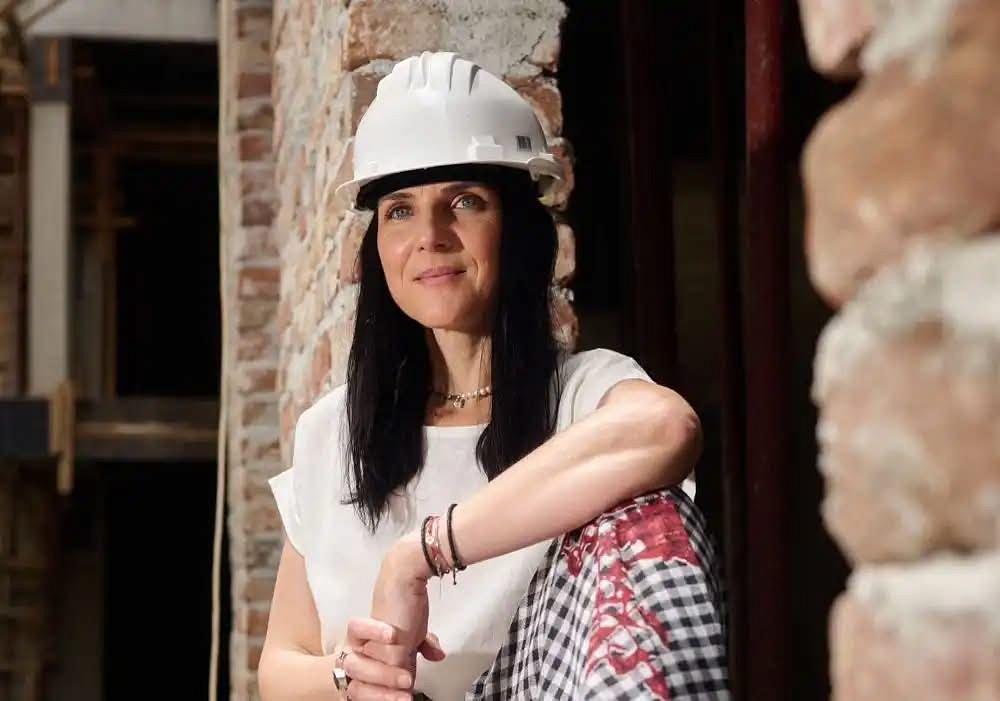
At 53 Calea Griviței in Bucharest stands the new building of the “first theater built together from the ground up.” Backed by more than 14,000 donors, the once “impossible idea” has become one of Romania’s most ambitious independent cultural projects - and the first private theater built from scratch in nearly 80 years. In this interview, founder Chris Simion-Mercurian reflects on the risks, lessons, faith, and small wins that shaped the journey from idea to stage.
“Beyond the numbers, for me, 'together' remains something very concrete: thousands of gestures of trust, gathered over time, brick by brick.” - Chris Simion-Mercurian, director, writer, and theater founder.
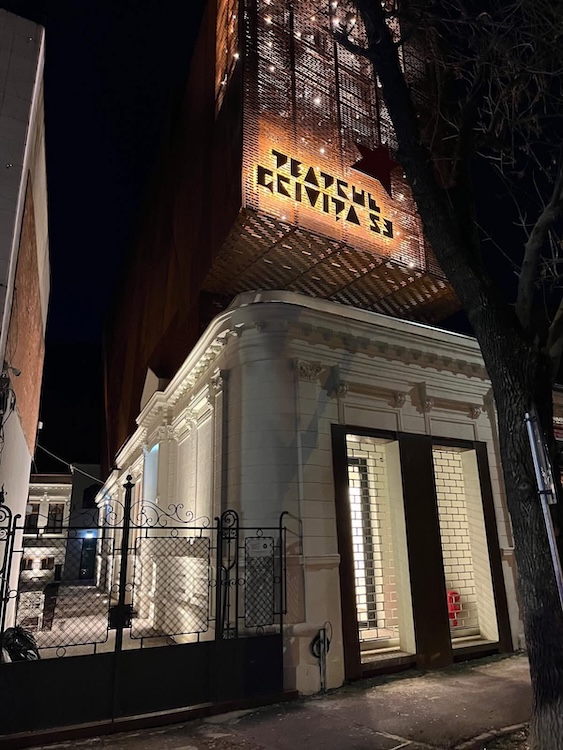
Built from scratch over nine years and funded by more than 14,000 individual donors and companies, Grivița 53 stands as Romania’s first newly constructed independent theater in roughly eight decades. The project began in 2016, when director Chris Simion-Mercurian used the money from selling her grandmother’s house to purchase a plot of land on Calea Griviței in Bucharest, turning a personal dream into what would become a national cultural milestone. A bold initiative developed together with her husband, Tiberiu Mercurian.
A fundraising campaign launched in 2017 invited supporters to symbolically “buy” bricks, seats, and windows, transforming individual contributions into the physical structure of the theater. In 2022, the project received its long-awaited construction permit, and building works began the following year.
The theater officially opened its doors in September 2025 as a EUR 4.5 million investment financed entirely through private donations, sponsorships, and grants. Designed by architect Codrin Trițescu, the four-level building includes two performance halls and flexible spaces conceived as a contemporary cultural hub.
More than 4,100 donor names are displayed at the entrance, a visible reminder of the community behind the project.
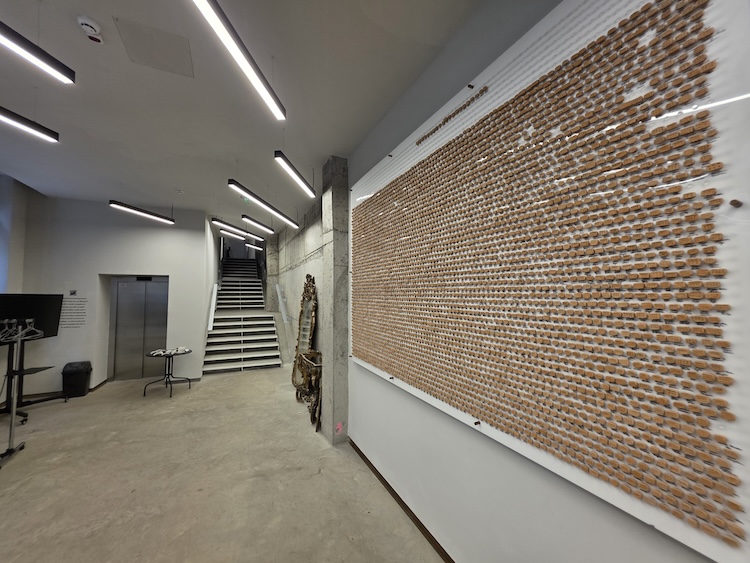
“It is a movie-like story. Maybe one day someone will be inspired by it and make a film,” Chris Simion-Mercurian told Romania-insider.com.
In the Q&A below, she reflects on the risks, setbacks, convictions, and lessons that shaped Grivița 53 - and on what independent theater means in Romania today.
- For Romania Insider readers who may not yet know you: who is Chris Simion-Mercurian, and how did the roles of director, writer, and theater founder come together over time?
Chris is a rebellious artist, a free spirit, a nonconformist woman in constant search of self, in constant search of God. Chris lives what life offers her; she is curious, she does not stay in her comfort zone, and she is not afraid of her fears; she confronts herself. She does not turn down challenges. She accepts the natural stages of growth and transformation. She chooses difficulty rather than betraying her soul. She is not arrogant, but she preserves her integrity. She acknowledges her vulnerability and uses it.
Theater directing and writing are extensions of my soul. Being a cultural manager, cultural PR, organizer, and doing the technical work I’ve done were not choices, but necessities. I became a theater founder because I had to choose between my soul and compromise, and I chose my soul.
- Grivița 53 became concrete in 2016, with the purchase of the land. But when was the idea of building a theater from scratch actually born? Was it a need of the city or a personal one?
The idea was born before the land. The land was only the first concrete step. For me, the beginning was a need for “cleanliness and truth.” The need for a place where you can build without lying to yourself and without lying to others.
Of course the city needed such a space, but I don’t believe great projects begin only with a diagnosis of the city. They begin with personal responsibility: if you feel something is missing and you truly want it, you build it. And you take ownership of the journey that comes with it.
- Grivița 53 is called “the first independent theater built together.” What does that mean in numbers: investment, donations, donors, space, halls, seats?
It’s not just “called” that. It is, in concrete terms, the first theater built together from the ground up. The initiative was mine, when I sold my grandmother’s house and used the money to buy the land on Calea Griviței 53. 'Together' means the community that this effort brought together. 14,000 founding donors and several dozen companies. This is a historic achievement for Romania’s cultural sector. It is a first. Grivița 53 is not the success of one ego. It is the success of a community. People who trusted me, who knew who I am and what guarantees I offer as a person and as an artist.
In numbers: the total investment amounts to approximately EUR 4.5 million. A decisive moment came in 2021, when we secured a EUR 1,903,989 grant that made it possible to move from fundraising campaigns and sponsor meetings to actual construction. Construction officially began in 2023, on the land purchased in 2016. The building was inaugurated on September 18, 2025, and the theater itself, along with the premiere of its first original production, opened in December of last year.
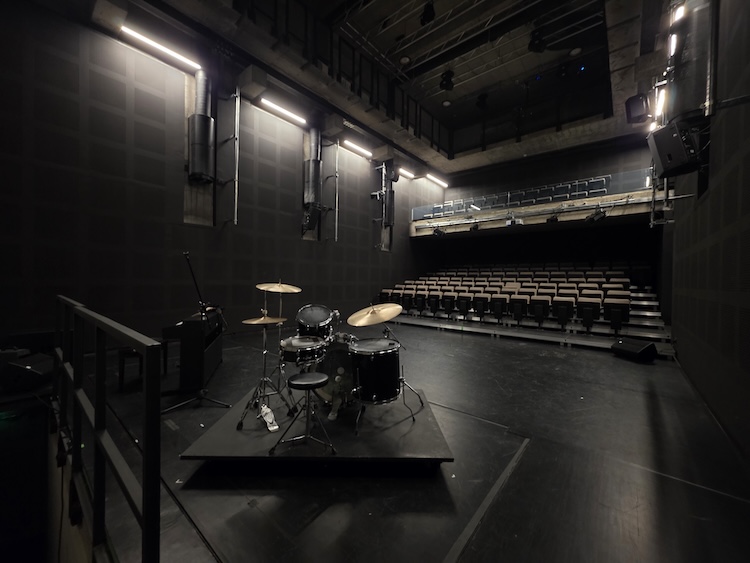
The building has four levels, two performance halls, and spaces designed for contemporary theater, dance, landmark cultural events, artistic residencies, workshops, exhibitions, installations, and interdisciplinary projects.
But beyond the numbers, for me, 'together' remains something very concrete: thousands of gestures of trust, gathered over time, brick by brick.
- Was there ever a moment when you seriously considered giving up? What kept you going?
I had unrealistic expectations; I believed this was an effort that would be supported by everyone, by the entire professional community, because building such a space after 80 years is historic. It was supported only by some. Eventually, I understood that people are free to choose what they believe in and what they don’t. I expected the authorities to ease the bureaucracy; it was the opposite. I expected members of the team to believe as strongly as we did, but they didn’t seem confident at all - we had to push hard to keep things moving.
We received enormous help from people who seemed to appear out of nowhere, like angels, at key moments. I didn’t try to look for logic in it, because human logic often runs parallel to divine logic. I stayed the course, went through the journey, and we reached the end. It’s a movie-like story. Maybe one day someone will be inspired by it and make a film.
Even so, there was never a moment when we decided to give up. I didn’t take it personally. I accepted it as it came, it was part of the labor, a kind of filter that sifted and selected. Every closed door opened another one. What matters is that we arrived where we are today, we wrote a page of cultural history and are leaving behind not just a theater, but a landmark, an example.
- What did you learn about people during the years when you asked the public for support, and how did this “impossible idea” change you?
I learned that it is essential for people to trust you, to trust who you are. That the choices you make define you. Solidarity exists when people encounter you authentically. I also learned that along the way you will meet envy, irony, and sarcasm - but not everything can be perfect.
When someone approaches you with a negative feeling, it’s not about you, but about them. People don’t envy what they don’t desire, right?
And I learned something else: expectations lead to disappointment. You open your soul and want the other person to come along with you, but they are free not to. And you have to respect that. The ones who are meant to join you in the story are the ones who will.
- After last year’s official opening, what did the theater’s first months look like, and what surprised you most in meeting the audience? Is there a moment or reaction that has stayed with you?
The first months were intense and very alive. As difficult as it was to physically build the theater, it must now be built just as carefully on a cultural level. That is the real work at this point: shaping the identity of the space through performances and through the way we meet our audience.
Because we didn’t build just another theater. We built a theater that didn’t yet exist. What surprised me most was how quickly a sense of belonging was created.
- In March, Eugenio Barba opens the international program “Iconic Personalities.” What’s next for the theater, and how important is the international component? Will we also see performances or other events in English?
Between March 7 and 22, we will host a major event - a Eugenio Barba and Odin Teatret mini-season, which will open our international program: three weeks of performances, workshops for adults and children. And a performance titled Fiesta, created especially for us.
Eugenio Barba’s presence at Grivița 53 is a validation that places us on the global theater map. Meeting the creator of anthropological theater is a unique experience. It’s the kind of moment you remember for a lifetime. I would also like to take this opportunity to thank the partners supporting Eugenio Barba’s presence at Grivița 53: the District 1 City Hall, Raiffeisen Bank, the Romanian Cultural Institute, the Italian Cultural Institute, Aqua Carpatica, Euromedia, and De’Longhi.
More information is available on our website, Grivita53.ro, where readers can find all the details.
- How do you choose the performances and artists included in Grivița 53’s program?
They have to be artists who respect the effort that went into building this theater, artists who are willing to step out of their comfort zone, who want to succeed, who are willing to fail, regardless of how much experience they have. We ask for a certain attitude and respect, because we have offered and continue to offer the same in return. We do not want to collaborate with an artist at any cost. We will not make compromises for a name. And that is not arrogance. It’s common sense.
Grivița 53 is built on adaptations, texts written especially for us, physical theater, experimental theater, performances, and immersive experiences. Nothing commercial in the sense of being unnecessary, mediocre, or superficial. We do not judge such productions, but they will not exist at Grivița 53, because we have a different direction. It will be a living space, where culture educates and enriches.
- If you had an unlimited budget for Grivița 53 starting tomorrow, what would you change, and what would you absolutely refuse to change?
We would hire more people, because right now we are a very small team, doing everything, and it’s hard. I would develop more programs where education is the central focus. I would change the pace at which we can build the cultural program and expand our financial capacity to support the artists and teams working here. I would invest in people and in time.
What I would refuse to change is the essence: Grivița 53 is a free, living, committed space. It has good energy, clean. I would also not change our beliefs, our principles, our values, or our mission. The identity of this place is built without fundamental compromises. If we lose that, we can have any budget in the world, it won’t matter. If you sell your soul, you sell your essence.
- What is independent theater in Romania today, and why is it important? Is there a different audience compared to state theaters?
Independent theater means freedom and risk. It means taking responsibility, because no one will hold you up if you fail. But that is precisely what can give birth to something alive.
The audience is not a “different” audience, it’s the same person who needs truth. The difference is that here, people often come with a different openness: a willingness to be part of the story, to support the initiative, to become a founding supporter of the cultural space we began building at Grivița 53. That’s how a community grows: organically, through promises kept and through honesty. As long as you don’t mislead people into thinking they’re receiving one thing and then give them another, the community remains.
* the original interview was in Romanian
Irina Marica, irina.marica@romania-insider.com
(Photos: courtesy of Chris Simion-Mercurian/Grivița 53)