Survey: Romanians are closer to “traditional” values, less aware of gender discrimination
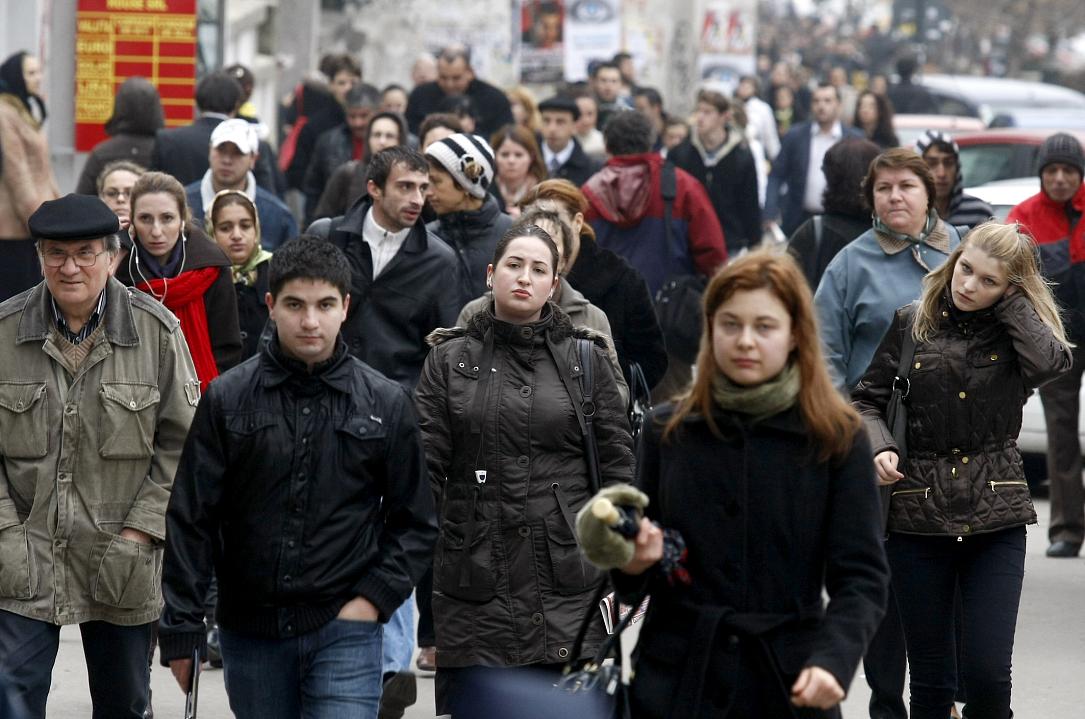
Romanians have limited perceptions of gender inequalities and continue to maintain traditional views on the roles of women and men, according to Eurostat data from the survey on the perception of gender stereotypes, processed by Social Monitor, a project of the Friedrich-Ebert-Stiftung Romania.
Traditional gender roles continue to be more accepted in Romania and in countries in the region: 74% of Bulgarians consider that the most important role of a man is to earn money, as do 69% of Poles and 60% of Romanians, while the EU average is 42%. By comparison, in Germany only 38% of respondents consider this the main role of men, and in Sweden, only 11% agree.
Regarding the role of women, 62% of Romanians consider that their main responsibility is to take care of the home and family, as do 71% of respondents from Poland or 74% from Bulgaria, compared with only 23% from Spain or 11% from Sweden. The EU average is 38%.
Most Romanians are in disagreement with the idea that it is equally important for women and men to be financially independent. Only 76% of Romanians consider it important for women to have financial independence, the lowest percentage in the European Union, compared with the EU average of 90% or 88% of Bulgarians, 91% of Spaniards, or 95% of Swedes.
Regarding gender discrimination at work, only 28% of Romanian respondents consider that men are treated better than women, compared with the EU average of 51%. Instead, 54% of Romanians consider that women and men are treated equally, compared with only 40% EU average or 27% of the French.
Only half of Romanians (48%) consider that women politicians would be disadvantaged and that men are treated better, versus 54% EU average or 70% of Swedes. Moreover, 11% of Romanians consider that women on the political scene are treated better than men, compared with 6% EU average or 4% of Poles.
On other aspects, Romanians are more moderate than respondents in neighboring countries. For example, Romanians are equally divided (49% agree, 49% disagree, 2% don’t know) on whether having children is more fulfilling for a woman than for a man. By comparison, 79% of respondents from Hungary or 70% of respondents from Poland consider that having children is more fulfilling for a woman than for a man. The EU average is 43% agree versus 53% disagree, the most notable contrast being in Sweden, where only 19% agree versus 78% disagree.
Another aspect where Romanians are most conservative is paternity leave: only 53% of Romanians consider that taking parental leave is an enriching experience for a father, compared with 95% of Swedes, or 87% of the French, or 75% of Poles. Only Bulgaria comes close Romania in this regard, with 64% agreeing with this statement.
Another aspect of the survey is related to the idea of gender equality. Only 66% of Romanians agree that men would also benefit from equality between women and men, the lowest percentage of all countries, the EU average being 75%. Neighboring countries fall within the EU average, as do countries like France, Germany, or Spain, with only Sweden having an overwhelming majority of 96% agreeing with this statement.
On the issue of feminism, Romanians are fairly aligned with the EU average. Roughly 42% of Romanians agree that “feminism has gone too far,” compared with 45% EU average or 53% of Spaniards. On the other hand, 50% of Romanians do not agree with this statement; in other words, respondents are aware that much remains to be done regarding gender equality at the societal level.
(Photo source: Viorel Dudau|Dreamstime.com)