Romania must move from "market with potential" to strategic platform for energy capital, says Enexus CCO Alina Ștefan
In a region where energy security, renewables and geopolitics increasingly overlap, Enexus is quietly building a very concrete bridge between Turkish capital and Romanian projects. Since 2021, the company has been working on the ground to…
Romania Insider · with Alina Ștefan, Chief Commercial Officer, Enexus
· Updated · 7 min read
In a region where energy security, renewables and geopolitics increasingly overlap, Enexus is quietly building a very concrete bridge between Turkish capital and Romanian projects. Since 2021, the company has been working on the ground to channel Turkish investment into Romania’s renewable energy sector, from early stage development to ready to operate assets. The result is a pipeline of real, grid ready and bankable projects that goes far beyond presentations and memoranda of understanding.
The Turkey-Romania Energy Forum in Ankara, now at its third and largest edition, grew directly out of this work. Designed less as a showcase and more as a working room, the Forum brought together nearly 250 investors, developers, EPCs, financiers, manufacturers and diplomats to discuss risks, grid constraints, permitting realities and time to money. For many participants, challenges that often dominate the local Romanian narrative were seen instead as execution items, not deal breakers. In this interview with Romania Insider, Alina Ștefan, Chief Commercial Officer of Enexus, explains why Ankara was the right place to host this dialogue, where she sees the most immediate opportunities in Romanian renewables, storage and grid related infrastructure, and how the newly launched Black Sea Energy Cooperation Association (BESCA) aims to turn interest into concrete investment projects in Romania, in multiple areas. She also sets out a clear ambition: helping Romania evolve from a simple “opportunity market” into a strategic platform for international energy capital in the wider Black Sea region. Read the full interview below.How did the idea of the Turkey–Romania Energy Forum in Ankara come about, and what specific need in the market is this dialogue and business platform meant to address?Alina Ștefan: The 2025 edition of this event was the third and biggest from a series that started in 2023. The idea emerged from what we were already doing on the ground. Since 2021 Enexus has been directly involved in facilitating Turkish investments into the Romanian renewable energy market, from early-stage project development to ready-to-operate assets. What became clear very quickly was that Romania could use a stronger, more structured narrative abroad, not as a “market with potential”, but as a country able to absorb capital through bankable, grid-ready, executable projects. The Forum was designed to address precisely this gap. It was not conceived as a promotional event, but as a working platform where investors, EPCs, financiers and public representatives could openly discuss risks, constraints, grid realities and concrete investment pathways. The reason we chose Ankara is due to the strong appetite of Turkish capital for renewable investments and Romania’s growing strategic role in the Black Sea energy landscape. At the same time, Ankara concentrates many of Turkey’s key business leaders, financial institutions and decision-makers, which allows us to engage in direct, high-level discussions about the realities of the Romanian market and translate that interest into concrete, project-driven conversations.
Free newsletters
Romania, in your inbox before your first coffee.
Get the Daily — the morning briefing, free, in English, unsubscribe anytime. Want business, real estate or travel digests too? Pick your newsletters →
Enexus presents itself as a connector between Turkey and Romania in energy and infrastructure. How did collaboration between companies from the two countries look before this forum, and what did you aim to change or accelerate through this event?
Alina Ștefan
: Collaboration existed also before the Forum. Turkish investors were analyzing Romania, some from a distance, relying sometimes on secondary data or intermediaries, while Romanian stakeholders often found challenging the direct access to decision-makers and capital allocators from Turkey. Through this Forum, we aimed to accelerate the transition from analysis to decision to invest. For investors coming to Romania, Enexus is a reliable single point of trust, with the ability to translate the Romanian regulatory, technical and grid context into investor language, while also aligning local developers and authorities around realistic, financeable project structures. We support market entry end-to-end: project sourcing, technical due diligence, permitting, grid connection strategy, EPC delivery, storage integration and, increasingly, energy trading and asset optimisation. We designed this model to support investors in all stages of the transition to renewable energy, and this way of working gives us control over the entire chain, reduces risks for investors and shortens time-to-money. Even more important, it sets the ground for further investments, once the entry into the market is made through the green energy project. The result of this mix is a much faster convergence between capital, projects and execution capacity.
What types of companies and institutions took part in the Turkey–Romania Energy Forum, and what was the profile of the discussions in Ankara, from concrete investment projects to exchanges of know-how and technology?
Alina Ștefan
: The Forum brought together nearly 250 participants including Turkish and international investors, renewable energy developers, EPC companies, equipment manufacturers, financial institutions and diplomatic representatives. Some of the participants were investors actively looking to expand their portfolios and assess concrete opportunities in clean energy. Enexus acted as a gateway, providing the confidence and local insight needed for investors to view renewable energy as a credible entry point for their broader investments in Romania, supported by a carefully selected pipeline of real, executable projects. The discussions were highly pragmatic. Enexus played the role of organizer and facilitator, bringing together investors that shared their hands-on experience about how they assessed risk, opportunity and execution in Romania’s energy sector. An interesting learning was that Romanian challenges often perceived locally as barriers (such as grid access, permitting timelines or time to connection) were not seen as blockers by Turkish investors. What mattered most to them was time to money and speed of execution, reinforcing what a great momentum it is now to act in Romania. All this reinforced the Forum’s role as a platform that gives substance to the conversation, builds confidence through real examples, and encourages others to move from analysis to action.
What are the main business opportunities you see between Turkey and Romania in renewable energy, infrastructure and related services, and in which sectors do you believe there is still significant untapped potential?
Alina Ștefan
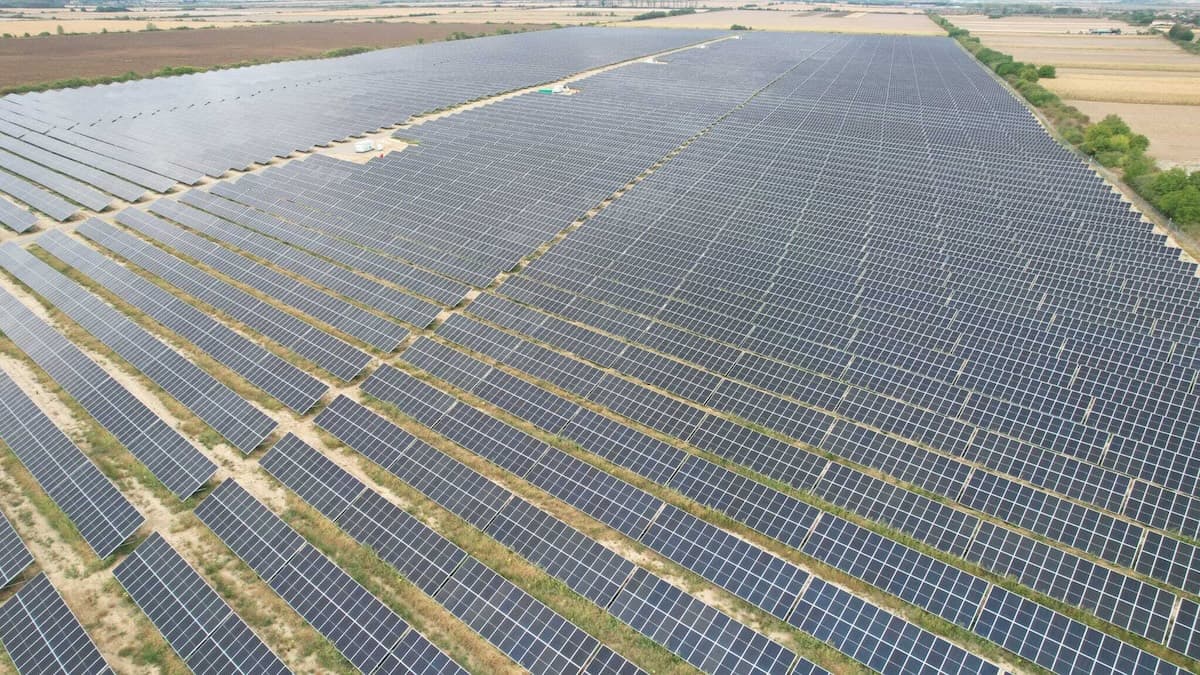
: From a market perspective, Romania is clearly entering a phase of maturity. A new wave of more sophisticated investors is emerging - investors who take a long-term view and increasingly focus on financial models built around the real cost of energy, risk allocation and bankability, rather than pure capacity growth. In this context, renewable energy remains the most immediate opportunity, particularly large-scale solar combined with battery storage. Romania offers a rare mix of grid-accessible land, EU market access and growing demand for flexibility solutions. Beyond generation, significant untapped potential exists in energy storage, grid-related infrastructure, energy trading and industrial micro energy hubs, where Turkish investors’ scale and execution speed meet Romania’s strategic positioning and long-term demand. As a result, the window of opportunity is now. Competitive advantage will belong to those who can move quickly from concept to execution, especially in BESS-driven and hybrid projects. State-backed schemes and European funding mechanisms are increasingly supporting storage-focused investments, improving bankability and risk profiles. And continued dialogue between investors, industry and institutions, combined with EU support instruments, is accelerating capital deployment and reinforcing Romania’s role in the broader energy transformation.
How does Enexus go beyond simple protocol meetings and turn this forum into a real platform for projects, partnerships and bilateral investments?
Alina Ștefan
: Enexus goes beyond protocol by staying involved before and after the Forum. At the event we curated the discussions based on real project pipelines, introduced investors directly to execution-ready opportunities, and continued the dialogue through structured follow-ups. Our role does not end at matchmaking. We actively support feasibility, permitting alignment, EPC structuring and financial optimisation, ensuring that discussions translate into executable projects rather than remaining at the level of intent. The Forum in Ankara is a long-term framework, so this year will be about continuity. This is precisely why BESCA (The Black Sea Energy Cooperation Association) was launched there, as a permanent cooperation platform designed to carry forward diplomatic and economic dialogue, align public and private interests, and curate opportunities based on the real investment needs investors want to bring into Romania. Signals from the Forum indicate that over the next few years, we might see several hundred megawatts of Turkish-backed projects moving into construction and operation, particularly in hybrid and storage-integrated formats. Beyond energy assets alone, we see these investments acting as an entry point for broader industrial and strategic capital, opening the door to additional investments across the Romanian economy. Our objective is straightforward: to help Romania evolve from an “opportunity market” into a strategic platform for international energy capital.
is designed to support exactly this transition, by bringing together investors, institutions and industry players who are ready to move from dialogue to execution. *
This interview was edited by Romania Insider for Enexus.