Romania labeled as emerging drug consumption market in new DIICOT report
Romania is becoming an emerging drug consumption market connected to European distribution networks, according to a report from the Directorate for Investigating Organized Crime and Terrorism, or DIICOT.
Radu Dumitrescu · Journalist
· Updated · 2 min read
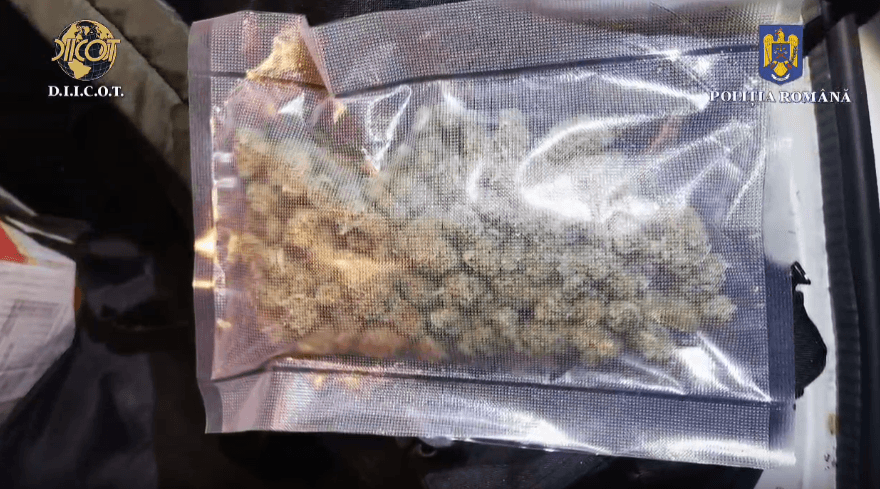
Romania is becoming an emerging drug consumption market connected to European distribution networks, according to a report from the Directorate for Investigating Organized Crime and Terrorism, or DIICOT.
Experts say drugs are brought into the country through legal commercial routes, especially via international courier services or intermediaries who exploit the high mobility within the EU area.
Proof of the trend can be seen in official statistics. Last year, over 3 tons of drugs were seized in Romania. Roughly 1 ton was high-risk drugs.
“Romania, through its major municipalities, is no longer just a transit area, but also an emerging consumption market, connected to European drug distribution networks, from which imports of drugs or new psychoactive substances are carried out via legal commercial routes, especially through international courier services or intermediaries who exploit the high mobility within the EU area,” the institution noted.
Another characteristic is that the distribution networks have fragmented into small, local groups, which operate mainly in cities with university centers.
“While in the past the hierarchical organization model dominated, today structured groups coexist with local micro-networks, consisting of a few individuals who distribute drugs or new psychoactive substances directly to consumers. The age of substance users has decreased, with high school students beginning to acquire such drugs,” the same source added.
The type of drugs is also changing. Although cannabis remains the most widespread substance, 2025 data indicate a rise in the circulation of high-risk drugs, especially new psychoactive substances, with cases reported of combinations of new psychoactive substances marketed as cocaine or MDMA, particularly among young people. This trend reflects the European tendency to shift toward newer (mixed) products that are more profitable, with a major impact on public health.
Globally, the drug market continues to expand, fueled by overproduction, substance diversification, and the adaptability of criminal networks. According to the World Drug Report 2025, over 316 million people used drugs in the last year.
The same report shows that the Western European market is oversaturated, especially with cocaine, while Eastern Europe shows a slow but steady increase in prevalence. Young people in Romania, Poland, and Bulgaria are increasingly exposed to new psychoactive substances (NPS), which are significantly distributed through digital channels and packaged in deceptive forms, often as supplements or apparently “legal” products.
Free newsletters
Romania, in your inbox before your first coffee.
Get the Daily — the morning briefing, free, in English, unsubscribe anytime. Want business, real estate or travel digests too? Pick your newsletters →