Romania marks 167 years since the “Small Union” of the Romanian Principalities on January 24
Romania’s annual January 24 celebration marks the 1859 Union of the Romanian Principalities, or the Small Union, when Moldavia and Wallachia united to create Romania. The event took place 167 years ago and laid the foundation of the modern Romanian state.
The Union, however, did not happen at once, nor was it easily achievable. It involved the great powers of the age, shrewd political maneuvers from local elites, and continued efforts on the part of the population.
The 1848 Revolution
At the dawn of the 1848 European revolution, territories with a majority Romanian population belonged to different empires. The western parts of modern-day Romania, namely Transylvania, Bukovina, Bessarabia, and the Banat, were part of the Austro-Hungarian Empire, while Moldavia and Wallachia were a protectorate of Tsarist Russia under the suzerainty of the Ottoman Empire.
A first step that led to the unification of the principalities of Moldova and Tara Romaneasca was taken in 1848 when the customs union between Moldova and Tara Romaneasca took place during the reigns of Mihail Sturdza and Gheorghe Bibescu. The unification idea became a main theme in the political debate, both in the two principalities and internationally.
In June 1848, the Wallachians addressed a memorandum to the Ottoman Empire, the nominal sovereign of the two principalities, expressing the “natural desire of the Romanians to unite into a single state.”
After the revolution was defeated, the two empires reestablished control over the two principalities, but the idea of an union took root in the minds of Romanians.
The election of Alexandru Ioan Cuza
A new chance at the union was created after Russia was defeated in the Crimean War (1853–1856) and lost its protectorate over the Principalities. The latter received more independence and a political program for their union into a neutral and autonomous state was adopted in Iași in 1857. Very quickly, small and large landowners, peasants, and urban centers adopted resolutions in favor of their union into a single state with the name Romania.
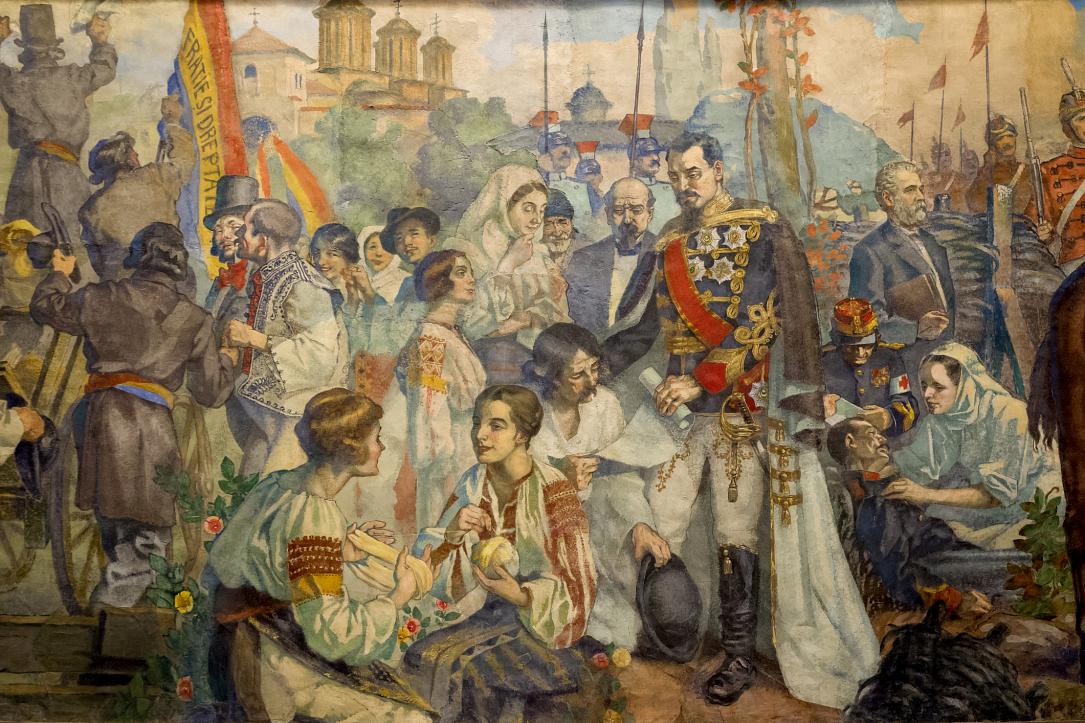
The two principalities then elected Alexandru Ioan Cuza as ruler of Wallachia and Moldavia on January 5, 1859, in Iași, and on January 24 of the same year in Bucharest, achieving the de facto union.
The Paris Conference of the guaranteeing powers gave official recognition to the accomplished fact of January 24, 1859. Turkey recognized Alexandru Ioan Cuza as ruler of the Principalities in 1861, confirming its recognition of Romania.
Cuza would rule between 1859 and 1866.
The reforms
The unification of the two Romanian Principalities opened the way for a series of reforms that modernized the country. Often referred to as Cuza's Reforms, they were championed by the new ruler and spanned from the remake of the justice and fiscal systems to an agrarian reform.
One of the first measures taken during his rule was to increase the state’s land resources by seizing, in 1863, the assets of the country’s monasteries. It is estimated that over a quarter of the country’s farmland belonged to the Eastern Orthodox monasteries and produced untaxed revenue. The reform gave land to 400,000 peasant families, while approximately 60,000 other peasants received land for building a house and a garden.
Romania adopted the metric system, a Civil Code, and a new administrative organization was introduced. The county tribunals, the appeal courts, and the Court of Cassation were also established during Cuza’s rule.
Furthermore, the 1864 electoral law expanded the base of voters, and ensured a wider participation from among the peasantry and the middle-class.
Also in 1864, a “public instruction” law was passed, stipulating, among others, that primary school education is compulsory and free. The law established primary, secondary, and advanced education cycles.
(Photo source: Marian Mocanu | Dreamstime.com)