Business Views

Ready for Tomorrow (Even If Tomorrow Isn’t Ready Yet)

15 April 2026

The children sitting in classrooms today will enter a workforce shaped by artificial intelligence, global collaboration, and entirely new industries. Preparing them for that future demands more than traditional education, it calls for an approach that develops creativity, adaptability, and resilience alongside academic knowledge.

This is the thinking behind Maple Bear's updated global curriculum, launched in 2025. With over 72,000 students across 500 schools in 39 countries, Maple Bear is one of the world's largest bilingual school networks, and its Canadian-rooted educational model is now present in Romania, in Cluj-Napoca, where Maple Bear operates two kindergartens and one elementary school. Enrollment is currently open for the upcoming school year, more details are available at www.maplebear.ro.

To understand the philosophy behind the curriculum update and what it means for students and families, we spoke with Justine O'Grady, Director of Curriculum at Maple Bear Global Schools.


Q: Maple Bear recently launched an updated global curriculum. What inspired this update?

Justine O'Grady: Education is constantly evolving, just like the world our students are growing up in. Maple Bear now serves more than 72,000 students across 39 countries in 500 schools, and with such a diverse global community, it is essential that our curriculum reflects both strong academic standards and the realities of multilingual, multicultural learning environments.

The updated curriculum builds on decades of Canadian educational best practices alongside the latest pedagogical research. Our goal was to strengthen academic rigor while ensuring that students develop the competencies needed for the future: curiosity, adaptability, collaboration, and critical thinking.

At the same time, the curriculum was designed to remain flexible enough to support students with different levels of English proficiency, as well as teachers with diverse professional backgrounds across our global network, ensuring that high-quality learning can happen in every Maple Bear classroom around the world.

Q: How was the updated curriculum developed and what key principles guided its design?

Justine O'Grady: The development process was very intentional and research-driven. Maple Bear's curriculum team of more than 30 curriculum writers drew on Canadian provincial frameworks, international educational research, and decades of classroom experience from Canadian educators working within the Maple Bear network.

One of the most important principles in the design was balancing two complementary instructional approaches: direct instruction and inquiry-based learning.

This balance reflects what research consistently shows to be effective, especially in multilingual and internationally diverse contexts. Different subjects require different instructional strategies, and our curriculum reflects that reality.

For example, our Mathematics and Science program integrates inquiry-based learning throughout, encouraging students to investigate concepts, test ideas, and develop problem-solving skills. Our English Language Arts (ELA) uses more direct instruction in the early years to build foundational literacy skills such as phonemic awareness, vocabulary development, reading fluency, and writing. This does not mean that inquiry is absent from language learning. Rather, it is carefully scaffolded so that students can engage in meaningful exploration once they have the linguistic tools to do so successfully.

Research increasingly shows that direct instruction and inquiry-based learning are most effective when used together, with explicit teaching providing the scaffolding that enables students to engage successfully in deeper inquiry.

Q: What does inquiry look like in practice in Maple Bear classrooms?

Justine O'Grady: Inquiry-based learning is a core component of Maple Bear programming. It exists on a spectrum. At one end, you have structured inquiry, where the teacher guides the investigation. At the other end, there is open inquiry, where students independently design and explore questions.

In Maple Bear classrooms, particularly in Grades 1 to 3, teachers intentionally use structured inquiry. In practice, this means that teachers carefully design learning experiences where students investigate ideas, ask questions, and test their thinking, while still receiving clear guidance and support. This approach is informed by large-scale educational research, including John Hattie's Visible Learning, which synthesizes more than 1,500 meta-studies on effective teaching practices.

As students gain stronger language and cognitive skills, teachers gradually introduce more open and independent forms of inquiry.

Q: Mathematics is often taught very traditionally in many schools. What makes the Maple Bear approach to teaching math different?

Justine O'Grady: In many traditional math programs, students are often expected to memorize procedures and apply formulas without always understanding the underlying concepts. At Maple Bear, our approach is different. We focus on helping students develop a deep understanding of mathematical concepts rather than simply learning steps to solve problems.

The Maple Bear math curriculum is grounded in well-established educational research, including the work on Visible Learning, which highlights the importance of making thinking visible in the classroom and ensuring that students actively engage with their learning.

In practice, this means students explore mathematical ideas through discussion, problem-solving, hands-on activities, and real-world connections. Teachers guide students to explain their reasoning, compare strategies, and reflect on their thinking. This helps students develop confidence with numbers and a stronger conceptual understanding of mathematics.

Another key feature of the program is that students learn to represent mathematical ideas in multiple ways: for example, using models, visual representations, symbols, and words. This approach supports deeper understanding and allows students to build flexible problem-solving skills.

Ultimately, our goal is not only for students to learn mathematics, but to think mathematically, to approach problems with curiosity, persistence, and the confidence that they can find solutions.

Q: What does a typical learning experience look like in a Maple Bear classroom and beyond?

Justine O'Grady: A typical learning experience might combine storytelling, discussion, collaborative work, movement, and hands-on exploration. Students are actively involved in the learning process rather than passively receiving information.

This approach supports both academic learning and broader developmental goals such as confidence, collaboration, creativity, and communication.

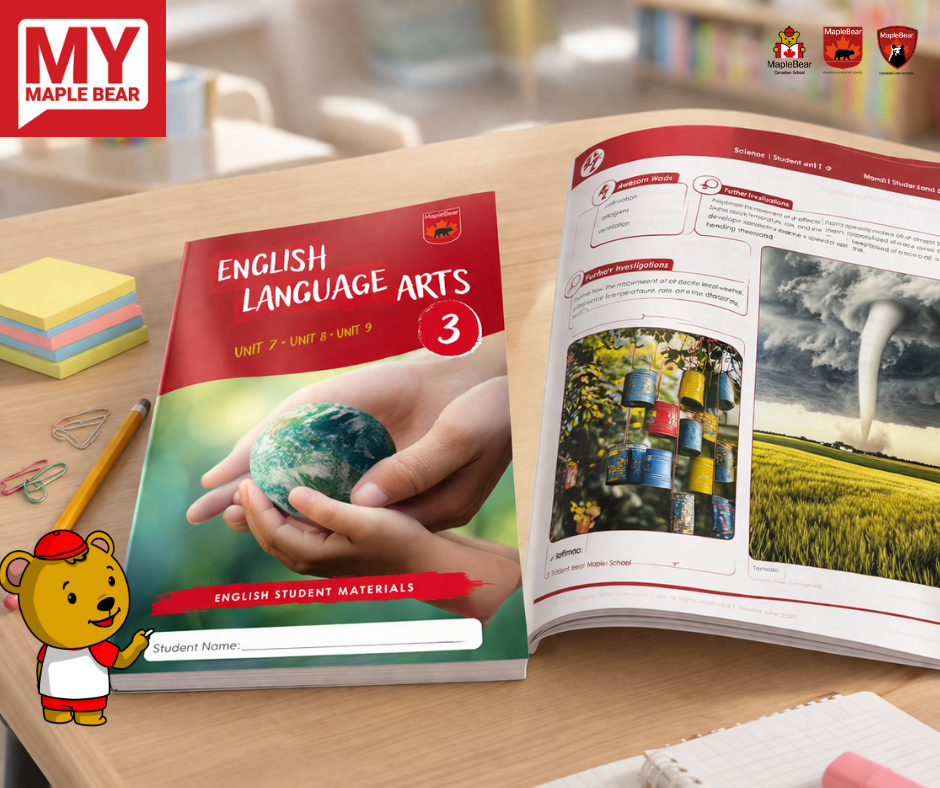
A key element that supports student learning and development is the MYMapleBear platform, which provides both digital and printed learning resources. These materials are used by teachers in the classroom and are also accessible to families at home.

Regular reading in English at home plays a critical role in language acquisition, helping students strengthen vocabulary, comprehension, and confidence with the language. Even a short period of daily reading can significantly accelerate a child's development in an immersion environment. The digital resources available through MYMapleBear make it easier for families to access appropriate texts and support this daily reading habit.

By making learning more accessible beyond the classroom, MYMapleBear helps strengthen the connection between school and home and reinforces the important role that family engagement plays in a child's educational journey.

Q: You mentioned the MYMapleBear platform, could you tell us a bit more about it, and how it supports students in preparing for their learning journey?

Justine O'Grady: The Maple Bear learning journey is designed as a continuous academic pathway that ultimately prepares students for their post-secondary destinations.

From the earliest years, the Maple Bear curriculum builds the core competencies that are essential for success. These include strong literacy and numeracy foundations, inquiry-based thinking, critical analysis, collaboration, and independent learning.

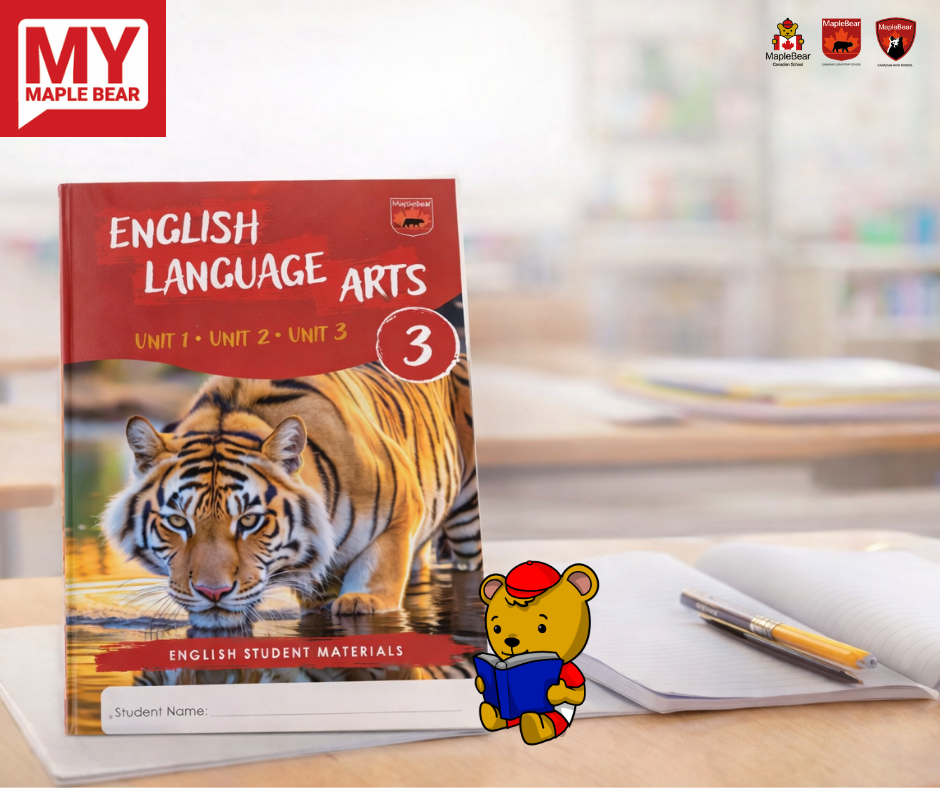
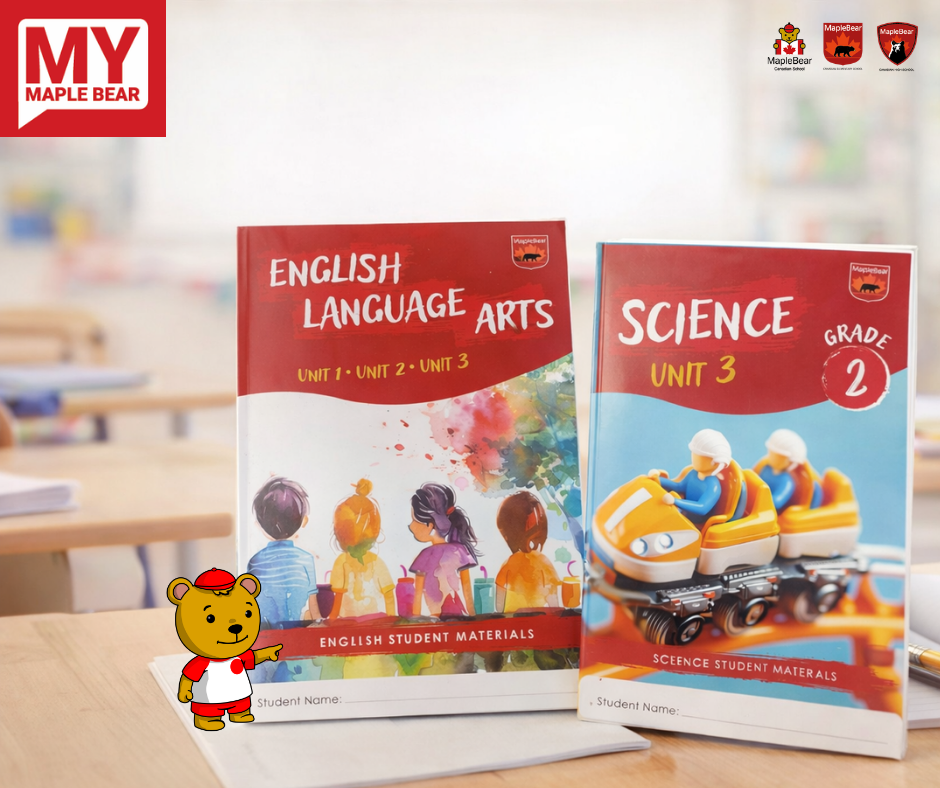
The MYMapleBear platform supports this journey by providing physical Student Learning Materials (SLM) and a digital ecosystem that connects students, teachers, and families to the learning process. Through the platform, families can access learning resources and stay informed about their child's progress, helping reinforce learning beyond the classroom.

At the same time, the Maple Bear Student Learning Materials (SLM) used by students in the classrooms provide structured, engaging learning experiences that support the development of these academic and cognitive skills.

Together, the new curriculum, the MYMapleBear platform, and the SLMs create a coherent learning pathway that gradually prepares students for the academic expectations, responsibility, and independent learning required for lifelong success.

Q: Maple Bear high schools offer a dual diploma: the local diploma, and the OSSD. Could you explain what the OSSD is and what it offers students?

Justine O'Grady: OSSD stands for the Ontario Secondary School Diploma, the official secondary school diploma issued in Ontario, Canada. The OSSD is among the most internationally respected academic qualifications in the world. Although the OSSD is not widely known among the general public in Central and Eastern Europe, it is highly respected by universities worldwide and is recognized and accepted by top institutions on par with other well-known diplomas such as the IB and A-Levels.

Although Maple Bear students study in their various countries, they are also officially registered within the Ontario education system as Canadian high school students. This means their academic program follows the Ontario curriculum and academic standards, which are widely recognized by leading universities around the world.

The Ontario diploma reflects the same educational philosophy that underpins the Maple Bear approach: critical thinking, inquiry-based learning, and the development of well-rounded, independent learners.

One of the key strengths of the OSSD is its assessment approach. Instead of relying heavily on high-stakes final exams, it emphasizes continuous evaluation, with 70% of the final grade based on ongoing work such as assignments, projects, presentations, and class observations. This reduces the pressure of one-time exams and supports consistent learning, steady progress, and deeper engagement throughout the year. It also allows students to apply to universities using completed credits, rather than relying on predicted grades.

Another important feature is its flexible and student-centered structure. Students can select courses that align with their strengths, interests, and future academic or career goals, while still meeting rigorous academic requirements.

Q: The term "future-ready learners" is often used in education. What does that mean in the Maple Bear context?

Justine O'Grady: Being future-ready does not mean accelerating academic content or pushing students beyond their developmental stage. Instead, it means developing the skills that allow students to adapt, think critically, and solve problems in a complex and rapidly changing world.

At Maple Bear, we focus on building competencies such as curiosity and inquiry, creativity and problem-solving, communication and collaboration, adaptability and resilience. These skills help students learn how to ask meaningful questions, explore ideas, work effectively with others, and approach challenges with confidence.

In our classrooms, students are encouraged to think independently, express their ideas, and reflect on their learning. Teachers guide this process through structured activities, discussion, collaborative projects, and hands-on exploration.

These capabilities begin developing in the earliest years and continue to grow throughout a student's learning journey, preparing students not only for academic success but also to navigate new challenges and opportunities in the future.

Q: What message would you like to share with schools and families joining the Maple Bear community?

Justine O'Grady: At Maple Bear, our focus is on student success and well-being, and we work closely with our schools and teachers every step of the way to help make that possible. Through academic leadership, professional training, and ongoing collaboration, we work closely with school leaders and teachers to ensure the successful implementation of the curriculum.

Our trainers and academic coaches regularly visit schools around the world, providing on-site support, mentoring, and guidance to teaching teams. In addition, the Maple Bear Academy offers teachers continuous access to professional learning resources, allowing them to further develop their practice at any time.

For families, Maple Bear offers the reassurance that their children are part of a globally connected education network built on Canadian best practices. Parents can feel confident that their children are receiving a balanced education that supports both strong academic foundations and the development of essential life skills such as critical thinking, collaboration, and resilience.

Ultimately, our mission is simple: we want every student to leave a Maple Bear classroom being knowledgeable, confident, curious, and ready to engage with the world, because preparing students for the future begins with supporting the whole child today.

*This interview was made in collaboration with Maple Bear.
Normal
Business Views

Ready for Tomorrow (Even If Tomorrow Isn’t Ready Yet)

15 April 2026

The children sitting in classrooms today will enter a workforce shaped by artificial intelligence, global collaboration, and entirely new industries. Preparing them for that future demands more than traditional education, it calls for an approach that develops creativity, adaptability, and resilience alongside academic knowledge.

This is the thinking behind Maple Bear's updated global curriculum, launched in 2025. With over 72,000 students across 500 schools in 39 countries, Maple Bear is one of the world's largest bilingual school networks, and its Canadian-rooted educational model is now present in Romania, in Cluj-Napoca, where Maple Bear operates two kindergartens and one elementary school. Enrollment is currently open for the upcoming school year, more details are available at www.maplebear.ro.

To understand the philosophy behind the curriculum update and what it means for students and families, we spoke with Justine O'Grady, Director of Curriculum at Maple Bear Global Schools.


Q: Maple Bear recently launched an updated global curriculum. What inspired this update?

Justine O'Grady: Education is constantly evolving, just like the world our students are growing up in. Maple Bear now serves more than 72,000 students across 39 countries in 500 schools, and with such a diverse global community, it is essential that our curriculum reflects both strong academic standards and the realities of multilingual, multicultural learning environments.

The updated curriculum builds on decades of Canadian educational best practices alongside the latest pedagogical research. Our goal was to strengthen academic rigor while ensuring that students develop the competencies needed for the future: curiosity, adaptability, collaboration, and critical thinking.

At the same time, the curriculum was designed to remain flexible enough to support students with different levels of English proficiency, as well as teachers with diverse professional backgrounds across our global network, ensuring that high-quality learning can happen in every Maple Bear classroom around the world.

Q: How was the updated curriculum developed and what key principles guided its design?

Justine O'Grady: The development process was very intentional and research-driven. Maple Bear's curriculum team of more than 30 curriculum writers drew on Canadian provincial frameworks, international educational research, and decades of classroom experience from Canadian educators working within the Maple Bear network.

One of the most important principles in the design was balancing two complementary instructional approaches: direct instruction and inquiry-based learning.

This balance reflects what research consistently shows to be effective, especially in multilingual and internationally diverse contexts. Different subjects require different instructional strategies, and our curriculum reflects that reality.

For example, our Mathematics and Science program integrates inquiry-based learning throughout, encouraging students to investigate concepts, test ideas, and develop problem-solving skills. Our English Language Arts (ELA) uses more direct instruction in the early years to build foundational literacy skills such as phonemic awareness, vocabulary development, reading fluency, and writing. This does not mean that inquiry is absent from language learning. Rather, it is carefully scaffolded so that students can engage in meaningful exploration once they have the linguistic tools to do so successfully.

Research increasingly shows that direct instruction and inquiry-based learning are most effective when used together, with explicit teaching providing the scaffolding that enables students to engage successfully in deeper inquiry.

Q: What does inquiry look like in practice in Maple Bear classrooms?

Justine O'Grady: Inquiry-based learning is a core component of Maple Bear programming. It exists on a spectrum. At one end, you have structured inquiry, where the teacher guides the investigation. At the other end, there is open inquiry, where students independently design and explore questions.

In Maple Bear classrooms, particularly in Grades 1 to 3, teachers intentionally use structured inquiry. In practice, this means that teachers carefully design learning experiences where students investigate ideas, ask questions, and test their thinking, while still receiving clear guidance and support. This approach is informed by large-scale educational research, including John Hattie's Visible Learning, which synthesizes more than 1,500 meta-studies on effective teaching practices.

As students gain stronger language and cognitive skills, teachers gradually introduce more open and independent forms of inquiry.

Q: Mathematics is often taught very traditionally in many schools. What makes the Maple Bear approach to teaching math different?

Justine O'Grady: In many traditional math programs, students are often expected to memorize procedures and apply formulas without always understanding the underlying concepts. At Maple Bear, our approach is different. We focus on helping students develop a deep understanding of mathematical concepts rather than simply learning steps to solve problems.

The Maple Bear math curriculum is grounded in well-established educational research, including the work on Visible Learning, which highlights the importance of making thinking visible in the classroom and ensuring that students actively engage with their learning.

In practice, this means students explore mathematical ideas through discussion, problem-solving, hands-on activities, and real-world connections. Teachers guide students to explain their reasoning, compare strategies, and reflect on their thinking. This helps students develop confidence with numbers and a stronger conceptual understanding of mathematics.

Another key feature of the program is that students learn to represent mathematical ideas in multiple ways: for example, using models, visual representations, symbols, and words. This approach supports deeper understanding and allows students to build flexible problem-solving skills.

Ultimately, our goal is not only for students to learn mathematics, but to think mathematically, to approach problems with curiosity, persistence, and the confidence that they can find solutions.

Q: What does a typical learning experience look like in a Maple Bear classroom and beyond?

Justine O'Grady: A typical learning experience might combine storytelling, discussion, collaborative work, movement, and hands-on exploration. Students are actively involved in the learning process rather than passively receiving information.

This approach supports both academic learning and broader developmental goals such as confidence, collaboration, creativity, and communication.

A key element that supports student learning and development is the MYMapleBear platform, which provides both digital and printed learning resources. These materials are used by teachers in the classroom and are also accessible to families at home.

Regular reading in English at home plays a critical role in language acquisition, helping students strengthen vocabulary, comprehension, and confidence with the language. Even a short period of daily reading can significantly accelerate a child's development in an immersion environment. The digital resources available through MYMapleBear make it easier for families to access appropriate texts and support this daily reading habit.

By making learning more accessible beyond the classroom, MYMapleBear helps strengthen the connection between school and home and reinforces the important role that family engagement plays in a child's educational journey.

Q: You mentioned the MYMapleBear platform, could you tell us a bit more about it, and how it supports students in preparing for their learning journey?

Justine O'Grady: The Maple Bear learning journey is designed as a continuous academic pathway that ultimately prepares students for their post-secondary destinations.

From the earliest years, the Maple Bear curriculum builds the core competencies that are essential for success. These include strong literacy and numeracy foundations, inquiry-based thinking, critical analysis, collaboration, and independent learning.

The MYMapleBear platform supports this journey by providing physical Student Learning Materials (SLM) and a digital ecosystem that connects students, teachers, and families to the learning process. Through the platform, families can access learning resources and stay informed about their child's progress, helping reinforce learning beyond the classroom.

At the same time, the Maple Bear Student Learning Materials (SLM) used by students in the classrooms provide structured, engaging learning experiences that support the development of these academic and cognitive skills.

Together, the new curriculum, the MYMapleBear platform, and the SLMs create a coherent learning pathway that gradually prepares students for the academic expectations, responsibility, and independent learning required for lifelong success.

Q: Maple Bear high schools offer a dual diploma: the local diploma, and the OSSD. Could you explain what the OSSD is and what it offers students?

Justine O'Grady: OSSD stands for the Ontario Secondary School Diploma, the official secondary school diploma issued in Ontario, Canada. The OSSD is among the most internationally respected academic qualifications in the world. Although the OSSD is not widely known among the general public in Central and Eastern Europe, it is highly respected by universities worldwide and is recognized and accepted by top institutions on par with other well-known diplomas such as the IB and A-Levels.

Although Maple Bear students study in their various countries, they are also officially registered within the Ontario education system as Canadian high school students. This means their academic program follows the Ontario curriculum and academic standards, which are widely recognized by leading universities around the world.

The Ontario diploma reflects the same educational philosophy that underpins the Maple Bear approach: critical thinking, inquiry-based learning, and the development of well-rounded, independent learners.

One of the key strengths of the OSSD is its assessment approach. Instead of relying heavily on high-stakes final exams, it emphasizes continuous evaluation, with 70% of the final grade based on ongoing work such as assignments, projects, presentations, and class observations. This reduces the pressure of one-time exams and supports consistent learning, steady progress, and deeper engagement throughout the year. It also allows students to apply to universities using completed credits, rather than relying on predicted grades.

Another important feature is its flexible and student-centered structure. Students can select courses that align with their strengths, interests, and future academic or career goals, while still meeting rigorous academic requirements.

Q: The term "future-ready learners" is often used in education. What does that mean in the Maple Bear context?

Justine O'Grady: Being future-ready does not mean accelerating academic content or pushing students beyond their developmental stage. Instead, it means developing the skills that allow students to adapt, think critically, and solve problems in a complex and rapidly changing world.

At Maple Bear, we focus on building competencies such as curiosity and inquiry, creativity and problem-solving, communication and collaboration, adaptability and resilience. These skills help students learn how to ask meaningful questions, explore ideas, work effectively with others, and approach challenges with confidence.

In our classrooms, students are encouraged to think independently, express their ideas, and reflect on their learning. Teachers guide this process through structured activities, discussion, collaborative projects, and hands-on exploration.

These capabilities begin developing in the earliest years and continue to grow throughout a student's learning journey, preparing students not only for academic success but also to navigate new challenges and opportunities in the future.

Q: What message would you like to share with schools and families joining the Maple Bear community?

Justine O'Grady: At Maple Bear, our focus is on student success and well-being, and we work closely with our schools and teachers every step of the way to help make that possible. Through academic leadership, professional training, and ongoing collaboration, we work closely with school leaders and teachers to ensure the successful implementation of the curriculum.

Our trainers and academic coaches regularly visit schools around the world, providing on-site support, mentoring, and guidance to teaching teams. In addition, the Maple Bear Academy offers teachers continuous access to professional learning resources, allowing them to further develop their practice at any time.

For families, Maple Bear offers the reassurance that their children are part of a globally connected education network built on Canadian best practices. Parents can feel confident that their children are receiving a balanced education that supports both strong academic foundations and the development of essential life skills such as critical thinking, collaboration, and resilience.

Ultimately, our mission is simple: we want every student to leave a Maple Bear classroom being knowledgeable, confident, curious, and ready to engage with the world, because preparing students for the future begins with supporting the whole child today.

*This interview was made in collaboration with Maple Bear.
Normal

Romania Insider Free Newsletters