Romania’s lawmakers approve 2026 budget law
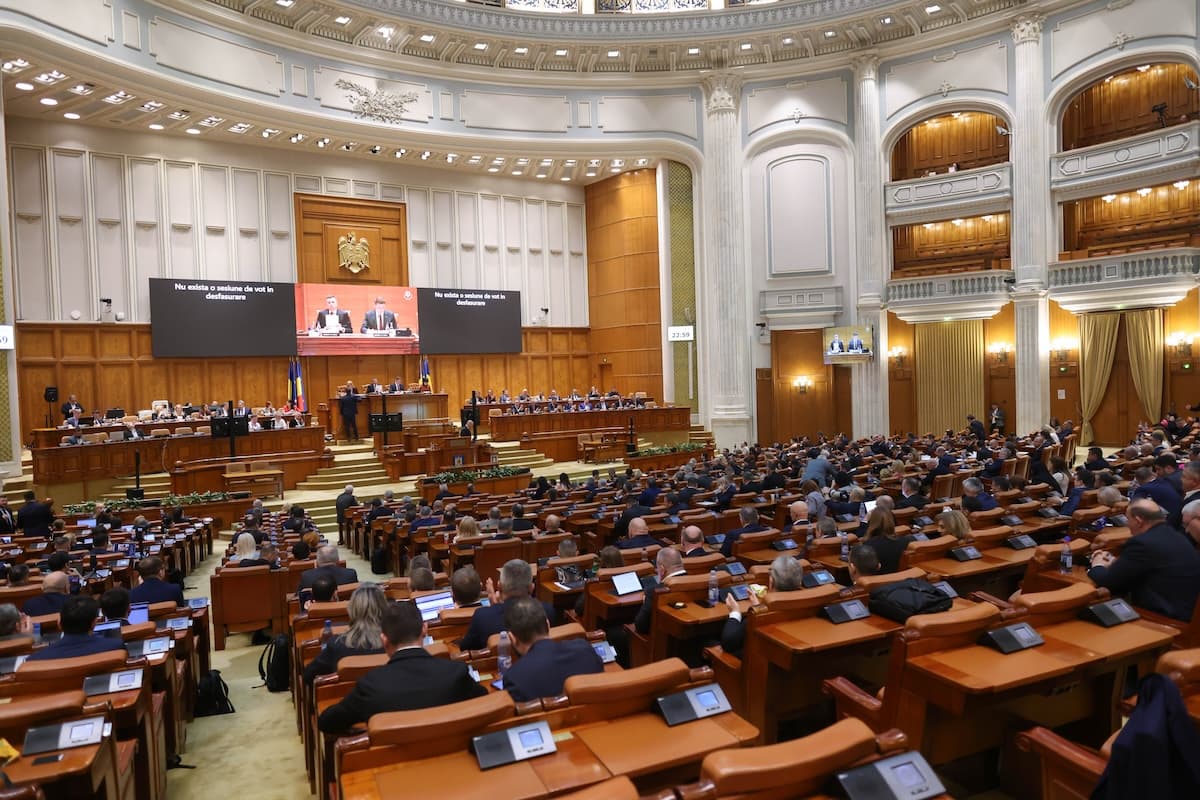
On March 20, after the Social Democrats (PSD) reached an agreement with Liberal (PNL) prime minister Ilie Bolojan on the “solidarity package”, the joint chambers of the Romanian Parliament approved the 2026 budget, with 319 votes against 104 and three abstentions. The general government budget deficit was set at 6.25% of GDP, but the outdated underlying macroeconomic scenario (1% economic growth, 6.5% average consumer price inflation) will require significant amendments.
The main opposition party, the Alliance for the Union of Romanians (AUR), will refer the law to the Constitutional Court, party leader George Simion announced following the vote, G4media.ro reported. Notably, the agreement on financing the “solidarity package” proposed by PSD was achieved at the cost of deferring due payment to magistrates originating in backward adjustment of wages by court rulings.
The 2026 budget envisages the revenues to the general government budget rising to 36% of GDP in 2026 from 34.7% of GDP in 2025, driven by more transfers from the EU budget (4.8% of GDP from 4.0% of GDP) and stronger VAT revenues (7.6% of GDP from 7.0% of GDP).
The tax revenues are expected to gradually rise from 16.8% of GDP in 2025 to 17.4% in 2026 and 18.0% of GDP in 2029 – under the medium-term plan. However, as the transfers from the EU budget are expected to decline, the total budget revenues will drop to 33.0% of GDP in 2029 from 36.0% this year, under the government’s plan.
On the expenditures side, total expenditures will decline to 42.3% of GDP this year from 42.4% in 2025 – despite a robust advance of investments from 7.2% of GDP in 2025 to 8.0% of GDP in 2026. The personnel expenditures are expected to drop from 8.8% of GDP last year to 8.2% in 2026. Notably, the personnel expenses are planned to fall down to 7.3% of GDP by 2029. Social assistance would also diminish from 13.1% of GDP to 12.2% of GDP (and 11.8% of GDP in 2029).
The public expenditures, after filtering out the investments (boosted by the EU transfers under the RRF and MFF), will drop to 34.3% of GDP this year from 35.2% of GDP in 2025. They will further drop to 31.0% of GDP in 2029 under the government’s fiscal consolidation plan – highlighting the expenditures-backed nature of the consolidation.
The Fiscal Council previously issued a favourable opinion on the budget plan, confirming it is consistent pending implementation, but also said adverse external conditions could derail it. The Fiscal Council also commented on the need to boost revenues as a medium-term strategy for reaching sustainable deficits, whereas the consolidation is predominantly achieved through cutting expenditures in 2026 and further until 2029.
iulian@romania-insider.com
(Photo source: Inquam Photos / George Călin)