In pictures: Northern lights return to Romania after strong solar activity

20 January 2026

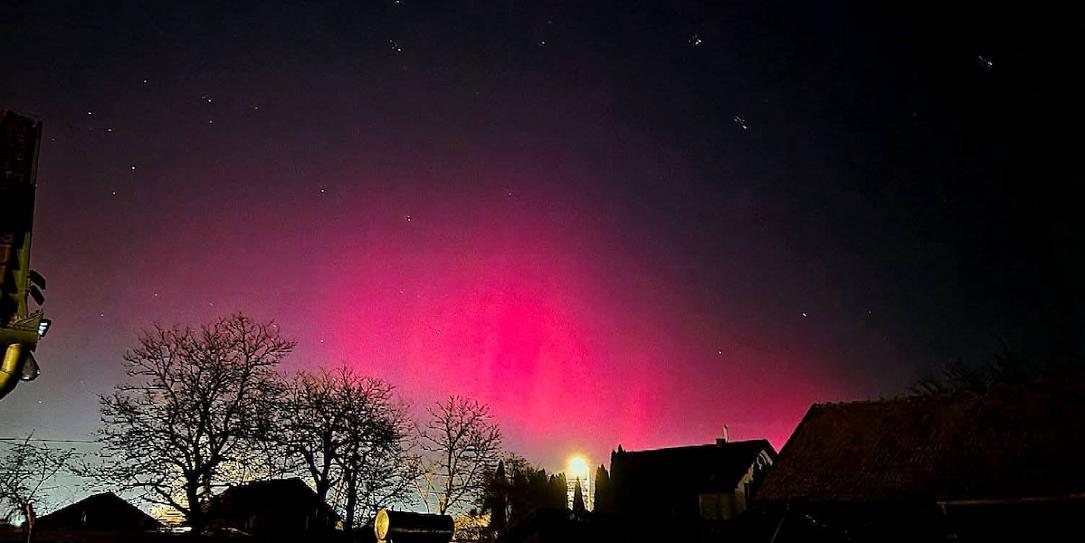
Strong solar activity created spectacular auroras in many parts of the world, including Romania, on the night of Monday to Tuesday, January 19 to 20.

A level four [out of five] solar radiation storm, monitored by the US National Weather Service, caused the expanded aurora. The red-green lights could be seen in Canada and the northern half of the United States, as well as in certain areas of Europe, including Germany, Switzerland, and Ukraine.

In Romania, the lights could be seen from Mureș, Vrancea, Maramureș, Timiș, Bihor, Arad, Bistrița Năsăud, Covasna, Vaslui, Hunedoara, and other counties in the northern and western parts of the country.

“An S4 severe solar radiation storm is now in progress - this is the largest solar radiation storm in over 20 years. The last time S4 levels were observed was in October 2003. Potential effects are mainly limited to space launch, aviation, and satellite operations.” NOAA Space Weather Prediction Center said on X.

Intensified solar activity causes auroras around the Earth’s poles, known as the northern lights [aurora borealis] and the southern lights [aurora australis]. During this time, energized particles from coronal mass ejections reach the Earth’s magnetic field, and they interact with gases in the atmosphere, creating lights of different colors in the sky.

radu@romania-insider.com

(Photo source: Facebook/Meteoplus)

Normal

In pictures: Northern lights return to Romania after strong solar activity
20 January 2026

Strong solar activity created spectacular auroras in many parts of the world, including Romania, on the night of Monday to Tuesday, January 19 to 20.

A level four [out of five] solar radiation storm, monitored by the US National Weather Service, caused the expanded aurora. The red-green lights could be seen in Canada and the northern half of the United States, as well as in certain areas of Europe, including Germany, Switzerland, and Ukraine.

In Romania, the lights could be seen from Mureș, Vrancea, Maramureș, Timiș, Bihor, Arad, Bistrița Năsăud, Covasna, Vaslui, Hunedoara, and other counties in the northern and western parts of the country.

“An S4 severe solar radiation storm is now in progress - this is the largest solar radiation storm in over 20 years. The last time S4 levels were observed was in October 2003. Potential effects are mainly limited to space launch, aviation, and satellite operations.” NOAA Space Weather Prediction Center said on X.

Intensified solar activity causes auroras around the Earth’s poles, known as the northern lights [aurora borealis] and the southern lights [aurora australis]. During this time, energized particles from coronal mass ejections reach the Earth’s magnetic field, and they interact with gases in the atmosphere, creating lights of different colors in the sky.

radu@romania-insider.com

(Photo source: Facebook/Meteoplus)
Normal

Romania Insider Free Newsletters