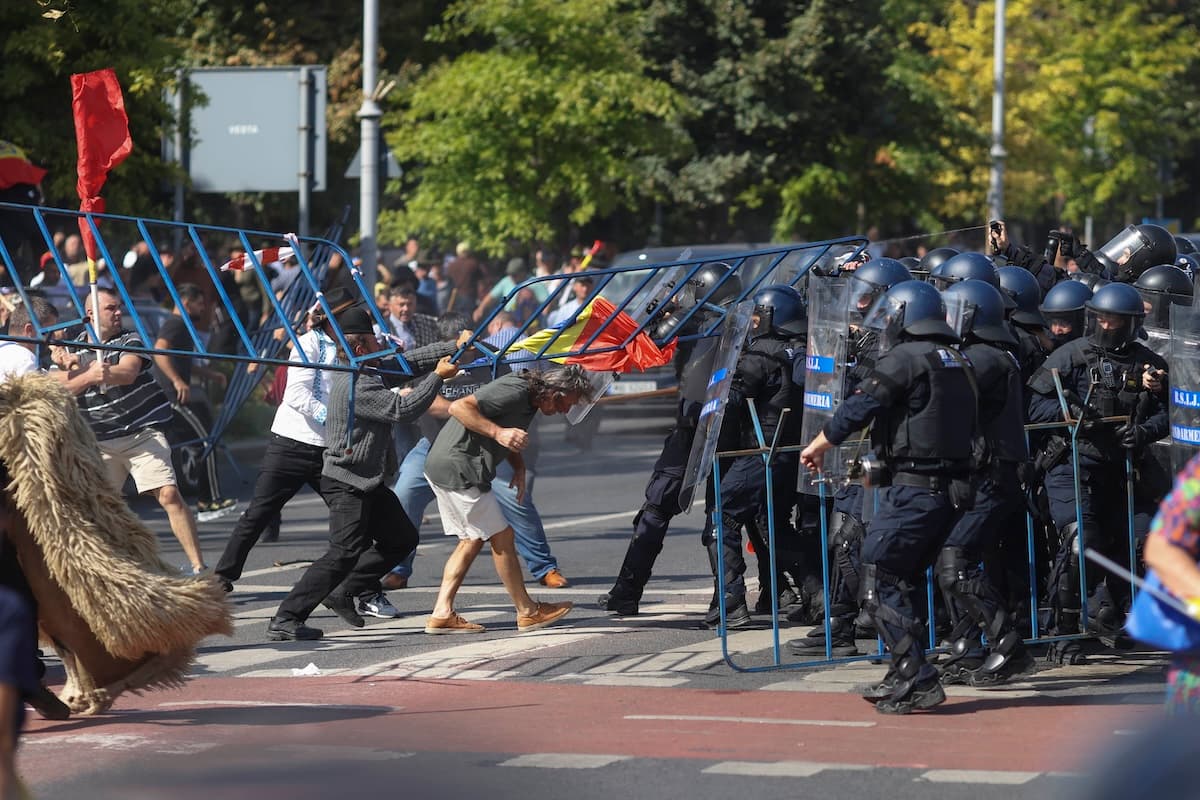
Nationalist rally with antisemitic undertones takes place in Bucharest
Thousands of people gathered in central Bucharest on January 15 for a rally initially organised in opposition to the so-called Vexler Law, the legislation aimed at strengthening Romania’s legal framework against extremism, antisemitism,…
iulian ernst · Journalist
· Updated · 2 min read
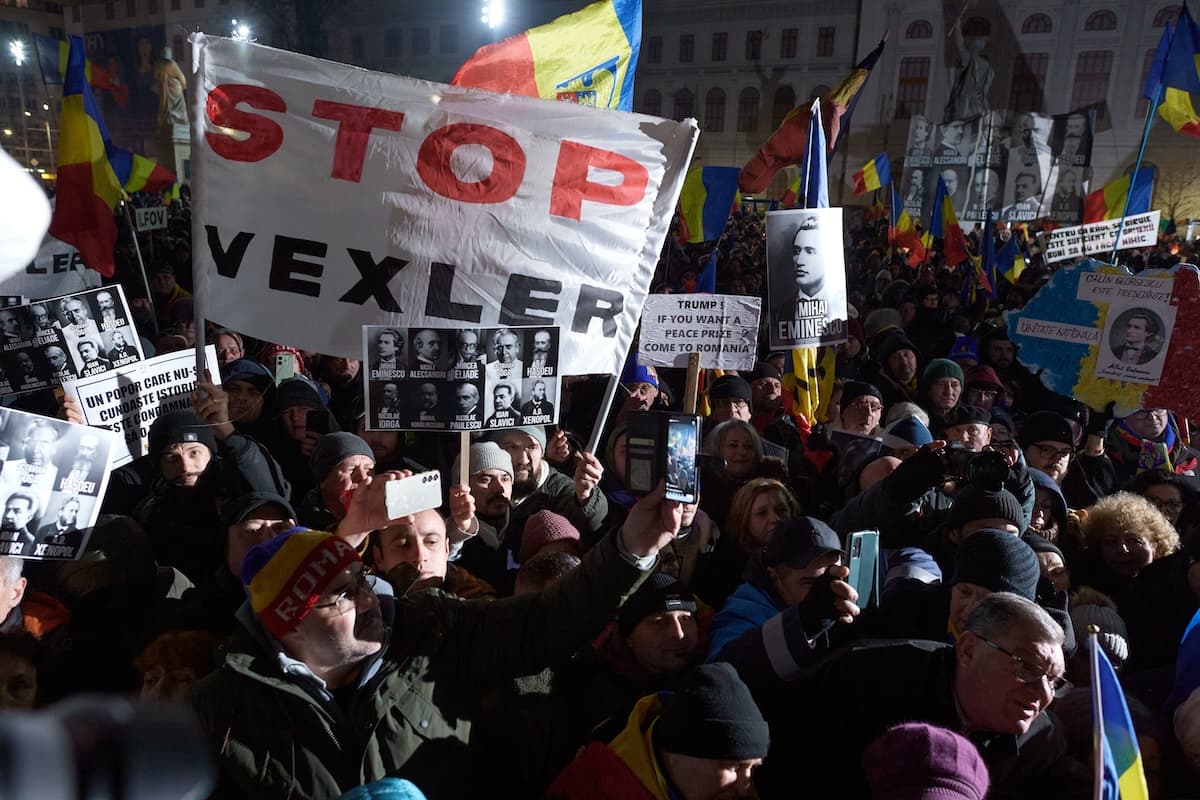
Thousands of people gathered in central Bucharest on January 15 for a rally initially organised in opposition to the so-called Vexler Law, the legislation aimed at strengthening Romania’s legal framework against extremism, antisemitism, and xenophobia. The demonstration later broadened into a protest against the government and state authorities more generally.
The rally was first promoted by Claudiu Târziu, co-founder and former leader of the nationalist Alliance for the Union of Romanians party, known as AUR, who pulled out to form a new political movement. Târziu and his supporters framed the protest around opposition to the Vexler Law, formally titled the Law on Combating Antisemitism and Xenophobia, Hotnews.ro reported.
AUR and its current leader, George Simion, also mobilised supporters for the event, but advanced a wider anti-establishment message targeting the government, parliament, and the political class. During the protest, a separate group of supporters of Călin Georgescu, a former presidential candidate who is currently under indictment on charges of treason, joined the gathering.
Although the crowd was heterogeneous in terms of political affiliation and motivation, participants were largely united by nationalist and isolationist rhetoric. Antisemitic messages voiced by some protesters were tolerated or echoed by others, contributing to an atmosphere marked by extremist undertones.
The debates on Vexler Law in Parliament were marked by similar notes, encouraged by gestures of the law’s author, Silviu Vexler, a member of the Jewish community in the Chamber of Deputies.
The Vexler Law has itself become a subject of political and legal controversy. President Nicușor Dan recently referred the legislation to the Constitutional Court and sent it back to parliament for reconsideration before promulgation, citing concerns over clarity and proportionality. The law amends existing legislation against extremist organisations and symbols, expanding definitions and penalties related to antisemitism and xenophobia.
During the rally, banners and chants went beyond criticism of the draft law and targeted state institutions, the European Union, and what protesters described as foreign influence in Romanian politics. Several messages drew on historical references and conspiracy narratives associated with far-right movements.
(Photo source: Inquam Photos / Codrin Unici