Mayors in Romanian villages challenge PM's attempt to balance their budgets
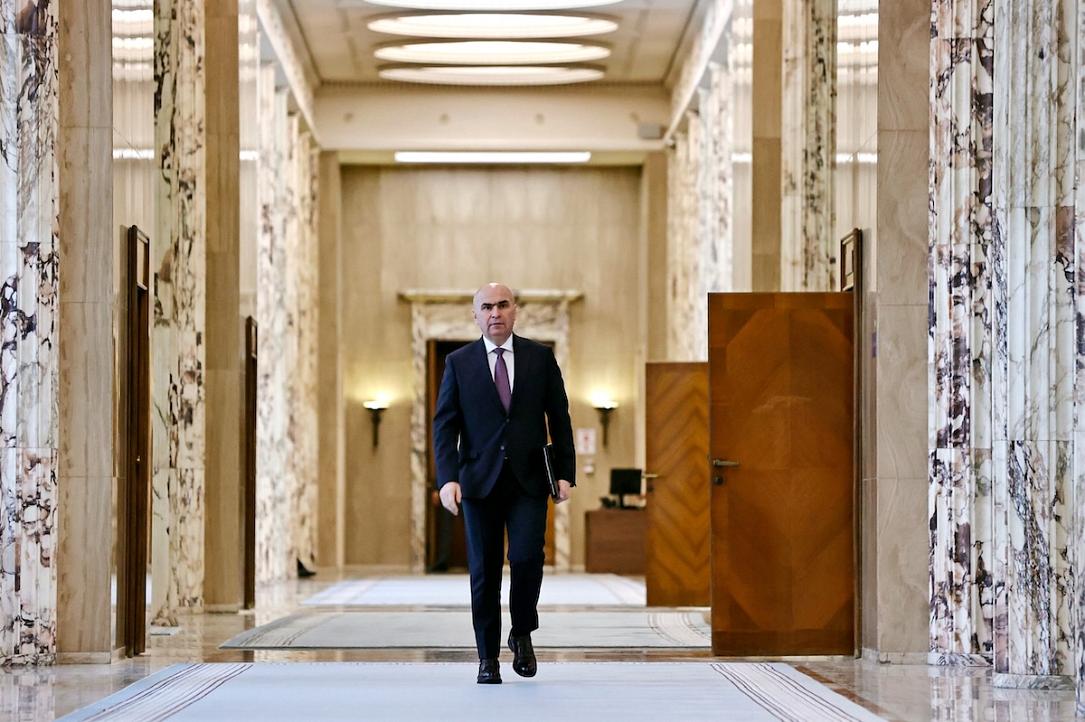
Hundreds of villages in Romania are protesting the public administration law promoted by prime minister Ilie Bolojan, which aims to reduce the overhead expenditures in small administrative units, bringing them close to the local revenues. A warning strike is organised on February 10 in over 1,500 communes of Romania, while a delegation of the Association of Communes in Romania (ACoR) will meet PM Bolojan.
The tensions between mayors and the PM are rising days before the supposed legislation of the public administration law in Parliament by a special accelerated procedure that potentially exposes the executive to a no-confidence motion.
The Social Democrats (PSD) will most likely use the opportunity to at least weaken the position of Liberal (PNL) PM Bolojan, who, despite limited progress so far, keeps pushing towards deeper reforms – as opposed to the Social Democrats’ increasingly open rhetoric in support of past policies that generated the wide fiscal slippage in 2024.
The ruling coalition (including PSD and UDMR) announced it had agreed on the public administration law months ago, but the Hungarian party UDMR has recently questioned the prime minister’s decisions and asked for more flexibility in setting local taxes. The senior ruling Social Democratic Party (PSD) has amplified its criticism against PM Bolojan, and they keep encouraging dissidents within Bolojan’s Liberal Party (PNL) in a visible attempt to overthrow the prime minister and ideally throw reformist USR out of the coalition while keeping the ruling agreement signed last year in place.
The village mayors protesting PM Bolojan’s law have various political orientations, with some Liberal mayors partaking in the protests and some Social Democrat mayors criticising their party's leadership as well.
"The total revenues collected by Romanian city and village halls cover only a quarter of their personnel expenses. We no longer have the possibility to transfer huge sums to local authorities," PM Bolojan stated in an interview with Digi24, as quoted by Ziare.com, explaining the logic behind the public administration law.
Under the law, which the members of the ruling coalition have agreed on since December, the local administration units have to cut by 10% their payroll envelope – either by cutting the wages/bonuses (for a one-year transition period) or by reducing the personnel.
Representatives of the FORUM Public Administration Union announced that the warning strike will take place between 10:00 and 12:00 on February 10, targeting 1,582 communes, Digi24 reported.
"There is a revolt in the local administration because of the plan drafted by the government of PM Bolojan regarding the reform in local and central administration," the unionists said in a post.
PM Bolojan will participate on Tuesday morning in the debate on the topic "Administrative reform, the policy of reducing public spending and its impact on communes in Romania", organized by the ACoR, according to the prime minister's official agenda published by the government.
Although the village mayors are now protesting the law that reduces their payroll envelope, the local tax adjustment operated by the government at the end of last year is visibly on their agenda.
Under a law including budgetary measures, the lower and upper limits set by the central administration for the property taxes set at the level of local administration were increased. An average 70% rise in property taxes was envisaged – which was broadly accepted as reasonable in the context of very low rates charged so far across the whole country compared to EU peers.
After realising that the government will deduct the transfers from the central government by offsetting the rise in property taxes collected locally (which was clearly stated from the very beginning), some mayors decided that they may have increased the property tax rates too much. They decided to cut back the taxes – which was not possible under the law. UDMR required PM Bolojan to allow mayors to change their minds and cut the property taxes back.
Separately, the new regulations put an end to a long list of special regimes allowed to categories of residents for not paying property taxes (or paying preferential rates). Some 10% of the properties in Romania were not subject to property taxation because of the physically challenged certificates held by owners.
PM Bolojan announced a thorough evaluation of the certificates during this year, which naturally prompted criticism due to the delicate nature of the topic and because the PM decided to cut the allowances before reviewing the certificates. But “we no longer have the possibility to transfer huge sums to local authorities," as explained by PM Bolojan during his Digi24 interview.
iulian@romania-insider.com
(Photo source: Gov.ro)