Partner Content

iDSBU – Education, Responsibility and Dialogue in a Changing European Context
27 January 2026

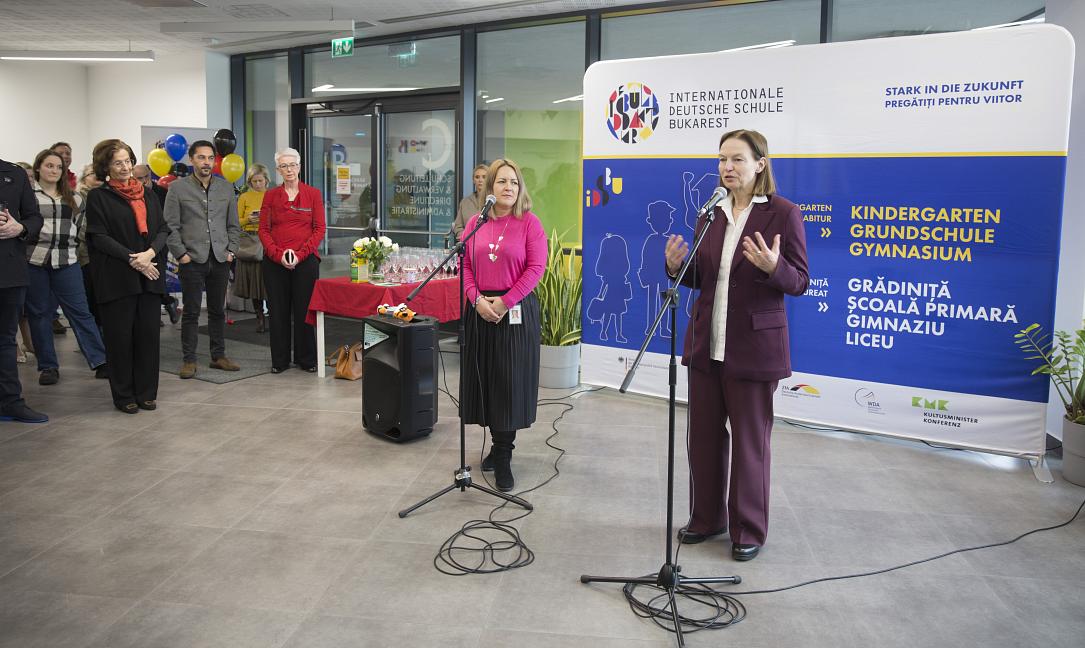
At the beginning of the year, the International German School of Bucharest (iDSBU) hosted a New Year’s Reception that went beyond a purely ceremonial framework, opening a broader dialogue on the role of education in a society undergoing rapid transformation. The event brought a key issue into focus: education can no longer be viewed solely through the lens of academic performance but must be understood as a pillar of social cohesion and long-term responsibility.

The event took place within an extended diplomatic framework. The dialogue was supported by the presence of European diplomatic representatives, highlighting the close link between education, culture and shared European values. Among those present were Angela Ganninger, Ambassador of the Federal Republic of Germany, Ulla Krauss-Nussbaumer, Ambassador of the Republic of Austria, as well as the Embassy of Hungary in Bucharest, represented by Dr. Sáska Zoltán Attila.

Discussions centered on the conviction that modern education must rest on a solid foundation, providing young people with clear reference points for understanding the world in which they live. A well-grounded education implies rigor, continuity and the capacity to integrate technological developments, including artificial intelligence, without diminishing intellectual depth or human sensitivity.

In this context, contemporary education carries the responsibility of approaching students from the perspective of equal opportunities, respecting different stages of development and maintaining a clear focus on the formation of the future adult. The emphasis lies on building comprehensive competencies that enable young people to respond to both personal and professional challenges with discernment and balance.

An important element of the dialogue was equitable access to education. Social scholarship programs represent a core component of an inclusive educational model, allowing the identification and support of students with potential from diverse social backgrounds and contributing to educational pathways that can fundamentally change life trajectories.

At the same time, the discussion was anchored in a realistic understanding of the current economic and social context. Educating well-prepared individuals is not a short-term benefit for contemporary economic structures, but an essential condition for the functioning and long-term development of society as a whole.

Within this framework, the role of the school as an international educational institution was also emphasized. iDSBU offers a globally oriented education, and its graduates are eligible for admission to universities across Europe and the United States, without being limited to a purely German-speaking academic pathway. The German International Abitur (DIA) is internationally recognized and competes on an equal footing with other established international qualifications such as the International Baccalaureate (IB).

Conclusion

The New Year’s Reception highlighted the importance of education as a space of coherence and responsibility in a time of profound change. Beyond academic training, education serves as a bridge between individual development and the real needs of society.

*This is partner content
Normal
Partner Content

iDSBU – Education, Responsibility and Dialogue in a Changing European Context

27 January 2026

At the beginning of the year, the International German School of Bucharest (iDSBU) hosted a New Year’s Reception that went beyond a purely ceremonial framework, opening a broader dialogue on the role of education in a society undergoing rapid transformation. The event brought a key issue into focus: education can no longer be viewed solely through the lens of academic performance but must be understood as a pillar of social cohesion and long-term responsibility.

The event took place within an extended diplomatic framework. The dialogue was supported by the presence of European diplomatic representatives, highlighting the close link between education, culture and shared European values. Among those present were Angela Ganninger, Ambassador of the Federal Republic of Germany, Ulla Krauss-Nussbaumer, Ambassador of the Republic of Austria, as well as the Embassy of Hungary in Bucharest, represented by Dr. Sáska Zoltán Attila.

Discussions centered on the conviction that modern education must rest on a solid foundation, providing young people with clear reference points for understanding the world in which they live. A well-grounded education implies rigor, continuity and the capacity to integrate technological developments, including artificial intelligence, without diminishing intellectual depth or human sensitivity.

In this context, contemporary education carries the responsibility of approaching students from the perspective of equal opportunities, respecting different stages of development and maintaining a clear focus on the formation of the future adult. The emphasis lies on building comprehensive competencies that enable young people to respond to both personal and professional challenges with discernment and balance.

An important element of the dialogue was equitable access to education. Social scholarship programs represent a core component of an inclusive educational model, allowing the identification and support of students with potential from diverse social backgrounds and contributing to educational pathways that can fundamentally change life trajectories.

At the same time, the discussion was anchored in a realistic understanding of the current economic and social context. Educating well-prepared individuals is not a short-term benefit for contemporary economic structures, but an essential condition for the functioning and long-term development of society as a whole.

Within this framework, the role of the school as an international educational institution was also emphasized. iDSBU offers a globally oriented education, and its graduates are eligible for admission to universities across Europe and the United States, without being limited to a purely German-speaking academic pathway. The German International Abitur (DIA) is internationally recognized and competes on an equal footing with other established international qualifications such as the International Baccalaureate (IB).

Conclusion

The New Year’s Reception highlighted the importance of education as a space of coherence and responsibility in a time of profound change. Beyond academic training, education serves as a bridge between individual development and the real needs of society.

*This is partner content

Normal

Romania Insider Free Newsletters