How can unified cybersecurity help Romanian companies grow?
In every company’s history, there comes a time when technology stops being just a tool and becomes critical infrastructure. The accelerated digitalization of the economy has brought clear benefits for companies, but also an unprecedented level of exposure to cyber risks. As IT infrastructures become more complex, distributed across networks, cloud, applications, and devices, security can no longer be treated in a fragmented way. Because cyber threats and improper or fragmented protection against them can lead not only to business disruption, but to stagnation or even falling behind the rest of the business sector.
In this context, cybersecurity can no longer be treated as a purely technical function, but as a management-level decision with direct impact on business continuity and growth.
A few months ago, we talked about a new strategic initiative of Orange Romania – a novel unified cybersecurity company called SCUT that will offer a unique mix of services in our country, alongside Orange Cyberdefense, the European leader in the field.
In a business environment increasingly dependent on technology, cyberattacks are no longer isolated events, but recurring risks with direct effects on operations, reputation, and financial performance. Against this backdrop, because cybersecurity has become a business decision, it helps said business not only protect itself, but also grow, by integrating cyber into its core strategy. SCUT proposes a mature and integrated approach in which control, clarity, and rapid response become part of the digital foundation of companies.
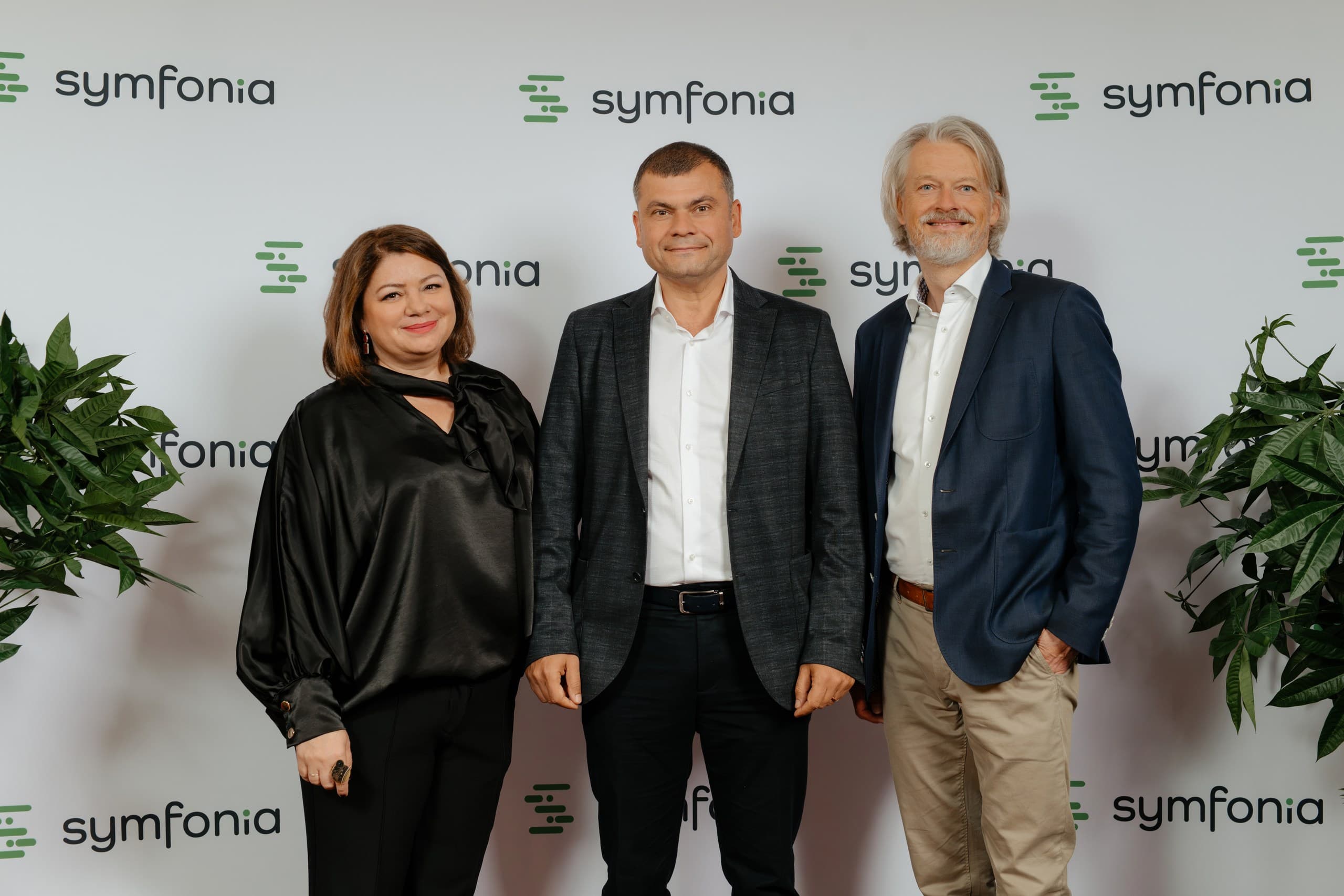
“Unified cybersecurity is becoming essential in an increasingly complex digital environment. Without a coherent approach, companies lose visibility and end up making critical business decisions without real control over digital risk,” says Mădălin Dumitru, CEO of SCUT.
Why fragmentation leads to stagnation
Many companies have invested, over time, in various security technologies—antivirus software, firewalls, cloud solutions, active monitoring. The problem is not their absence, but the fact that they are not part of a unified strategy and solution. When these systems don’t “talk” to each other, blind spots appear and the detection of attacks becomes slow or incomplete.
The complexity of attacks today cannot just cause major disruptions in business continuity, but can slow down or even block growth on the medium and long term. This is often caused by the lack of clear visibility, ownership, and prioritization of cyber risks at management level. This may even cause loss of business, if the competition already has a competitive advantage on prevention and recovery.
This is true for businesses of all sizes, although SMEs are especially at risk, because traditionally they have not had access to integrated, enterprise-grade cybersecurity approaches.
SCUT starts precisely from this fragmentation and addresses it directly. Rather than adding yet another layer of technology, SCUT connects existing security systems into a coherent framework, offering real visibility over what is happening, where risks exist, and what actions are required next.
Security starts before the attack
A cyberattack doesn’t come out of nowhere. Most of the time, it exploits known weaknesses—ignored, postponed, or poorly prioritized. SCUT focuses precisely on this area: assessment and prevention.
Through Cyber Risk Assessment, Vulnerability Management, and Threat Hunting services, companies receive not just lists of issues, but a clear understanding of which risks can directly affect operations, data, or customer trust. Industry statistics show that most attacks exploit known vulnerabilities, some of them years old. SCUT addresses this challenge through intelligent prioritization, supported by automation and AI, allowing organizations to focus on what truly matters, instead of reacting to an overwhelming volume of alerts.
How does active protection work?
No matter how strong prevention measures are, the question is no longer if an incident will occur, but when. That is why a core component of SCUT’s model is Managed Detection & Response (MDR)—a service that ensures continuous monitoring, advanced detection, and rapid response when threats emerge.
This capability is delivered in partnership with Orange Cyberdefense, the European leader in cybersecurity, with over 50,000 customers and annual revenues of 1.6 billion euros. Through this partnership, SCUT benefits from international best practices, proven technologies, and this allows the company to combine local business-level orchestration with European-scale cybersecurity expertise, offering organizations both proximity and industrial strength.
EDR (Endpoint Detection & Response) and XDR (Extended Detection & Response) technologies are central to MDR. EDR focuses on securing individual devices, while XDR correlates signals across endpoints, networks, cloud, and email to provide a complete, contextual view of threats. These technologies are supported by experienced security professionals who analyze incidents and act decisively.
“The difference between a manageable incident and one with major business impact is often response time. Through SCUT, we’ve built a model that combines visibility, automation, and human expertise, so organizations don’t face critical situations alone,” explains Valentin Popa, CTO of SCUT.
What happens after the attack
When an incident occurs, improvisation is costly in terms of time, money, and trust. That is why SCUT includes dedicated post-incident assistance services covering everything that follows the critical moment: investigation, remediation, and reassessment of cyber risks.
Regardless of incident size, the objectives remain consistent: rapid recovery, protection of interconnected systems, reduction of financial losses, and preservation of customer and partner trust. All of this is supported by the same unified operational framework.
Simplified compliance in an increasingly strict regulatory framework
New European regulations, such as NIS2, alongside GDPR and ISO standards, add pressure on organizations. SCUT treats compliance as an integrated process, not a checkbox exercise.
Through the Virtual BISO model, which you could call a digital consultant for cybersecurity, companies gain access to ongoing guidance on regulatory requirements, policy alignment, supplier assessments, and incident support, without overloading internal teams or losing focus on core business priorities.
A scalable solution for businesses of all sizes
SCUT is not a one-size-fits-all solution. It is modular, scalable, and adaptable—from small companies to large enterprises and public institutions. Services are calibrated based on industry, digital maturity, and business objectives, allowing organizations to grow securely and sustainably. We were saying earlier that SMEs do not usually have access to solutions of this complexity. Now, they can, for the first time, envision a more strategic approach to cyber protection and prevention.
Security strategy equals growth strategy
In an economy where technology has become the backbone of business operations, cybersecurity is no longer just the responsibility of IT departments. It is a strategic business decision.
Through SCUT, Orange Romania supports a mature and unified cybersecurity approach in which security becomes a continuous, clear, and controllable process—an active shield that enables innovation and growth.
Ultimately, the key question for management is no longer whether to invest in cybersecurity, but who has real visibility and control over digital risk.
Implementing a prevention and active protection strategy can foster growth, because it gives local businesses more room for innovation. And if more and more companies begin to adopt this unified approach to cybersecurity, digital resilience can increase enormously at a national-level.
*This is partner content.