The "Shaping Romania's Future" editorial series is powered by the British School of Bucharest.


British School of Bucharest

'What if they learned to listen to music?' Young audiences meet classical music in project touring schools in Romania

30 January 2026

Classic for Kids, an educational project founded by pianist Bogdan Vaida, travels to schools in rural areas and small towns to show young audiences that classical music can be accessible and full of possibilities.

Bogdan Vaida has performed for the most diverse audiences, from babies to the regular classical music crowd. In 2015, while living in Germany, he started Klassik Mittendrin, which grew from an initial concert in a motorcycle workshop to numerous performances in bookshops, company headquarters, plants, vet clinics, and other venues in Germany and Switzerland. In 2017, the project was replicated in Romania as Classic Unlimited and, by 2023, the offshoot Classic for Kids was born.
Since the Classic Unlimited concerts were too complicated for kids, the team devised a project tailored to younger audiences, unfamiliar with classical music. "We try to show kids what classical music is about, and for me, this is to show them what I personally find so fantastic in classical music," Vaida says.

"We sort of jumped into it," he recalls on how things started. "We just thought, 'let's just try it to see what happens'. Each concert was a big surprise for us. There were many things that we hadn't thought of before we started, so we adapted. We learned from each one of the concerts that we did from 2023 until now."

The project's main public comprises children aged six to ten who have limited access to concerts and cultural events, enrolled in schools in rural areas and small towns. The first concert, held at a school in Năsăud, was the first learning and fine-tuning opportunity. The teachers had brought around 200 children of all ages into a sports hall, which made it extremely noisy and almost impossible to get their attention focused on the explanations prepared. "We always try to tell them the stories behind the music, but the stories are very different for small children than for teenagers." Hence, the decision to not have too many children at one event and not mix different age groups.

There were also logistical details to sort out. The Classic for Kids project used the same concert piano as the other Classic Unlimited projects, but school sites can rarely accommodate it. Several concerts had to be postponed because the piano simply wouldn't fit into small rooms. To avoid these issues, the team now uses a smaller, digital piano that is easier to transport and still closely resembles a real piano in both sound and appearance, he explains.

Each Classic for Kids session has two parts. First, there is a concert where the pianist performs several pieces and talks to the children about them. For the second part, composer Anamaria Meza takes on the role of  conductor and works directly with the children. They guide them through making music using their bodies and simple instruments, and eventually introduce them to small pianos, which are always the highlight of the workshop. "We have to be careful so that the children can't see the little pianos at the beginning because they have no patience [e.n. to get to the playing part]." None of the schools the project has visited had any of their own instruments, so having them there is part of the draw.

The format of the project is one event per school every year, but some schools take part in more than one edition. When this happens, as was the case with the school in Suciu de Sus, in Maramures, it is a chance "to see how the children react differently, what sticks from the previous year, what they learned, and how these concerts changed them." After delivering close to 20 events last year's season, the team is preparing this year for a similar number, again focused on areas with limited access to classical music concerts.

.
Making music: Anamaria Meza conducts the children

Mozart and new music

At its first edition, the project presented a program the organizers believed would appeal to children, including music from cartoons and very evocative works. One constant throughout every edition was the music of Mozart. "We always start with a piece by Mozart. I think the music he wrote is very interesting for the children. And he wrote the pieces that I play when he was about the same age as they are, so they can relate. It's always a good beginning for the concerts."

What came as a surprise was that the children consistently associated each piece with an animal, even in the case of works that had not been themed as such. This is why, the organizers commissioned several composers to write animal-themed pieces for the project, something that will happen for this year's edition as well. "Because last year it went so well with contemporary music, this year we will also have five pieces. The composers just choose an animal and write a two-minute piece about an animal that you could find on a farm."

The team has also developed several resources that they made available on their YouTube channel. They are meant for educators and parents, but are also there for kids who want to stay engaged with music beyond concerts or events throughout the year. "My colleague, Anamaria Meza, is great with this kind of things. […] On the internet nowadays, you can find so many things that can be useful for learning all sorts of things, and music is no exception. Ours is just a little drop in the ocean," he says, pointing to the wider goal of developing an interest in music. "It's very important that the children learn this interest in music, and then they'll find the resources."

Going beyond labels

Children approach music without preconceptions or labels, he notes. "For them, there's no classical music or pop music; it's just music, and if it's good, interesting, and they can relate to it, then it's perfect."

Moments like these are incredibly rewarding and serve to remind the professional musician what passion for music means. "For these children, it's always very sincere. If you see that they are impressed by music, then you know it's true. They don't lie. Sometimes it's very impressive how open they are and how big their capacity for joy and for absorbing music is."

At first, he wondered whether one or two hours would be enough to leave a lasting impression, but returning to the same schools for various editions of the project has provided a different perspective, one where the difference is visible over time.

"The most important thing I would like the children to learn from this is that classical music is also for them. That classical music is not too complicated for them to understand, and that they can also listen to and make it: they can play music. Because if they understand that, then what they do in the future is open for them."

Maybe some of the children who have their first encounter with classical music through the project will decide to start playing an instrument. Others might not play themselves, but they may begin attending concerts or listening to music in a more thoughtful way. More than anything else, they will be able to engage with music more discerningly, he hopes. "Maybe when they listen to music, they will think about what we talked about in our events, and they will listen a bit differently, or they will have a bit of critical thinking about what they listen to."

He points to the local gap between people who study music in depth and those who have almost no musical knowledge. In general, in non-specialized schools, music classes are often seen as unimportant, which he says is a mistake. Beyond its well-documented benefits, music also teaches deeper values, such as freedom, ideas, and principles, he argues. "Children and also, adults, everybody can learn from music what, for example, freedom means. We can learn what ideas and principles mean. If you learn to live with music, to listen to music, or to play music, then your life will become much richer, and you can better understand a lot of things that you meet in your life."

While he can understand the perspective of parents who think children should study disciplines that can earn them a good living, he says "no discipline brings so many things together in one" the way music does. 

At the same time, not introducing children to music or help them understand it - not by labeling things as good or bad, but by giving them the chance to explore and connect with music meaningfully - means limiting their opportunities, he argues. "To really listen to music, to select what they want to hear or to have a bit of judgment on what it is, and to understand what it would mean for their imagination. To learn how to listen to a piece by Mozart, just to stay there and to dream about it, to imagine things." When children are confronted with constant digital distractions or music with explicit lyrics, this becomes even more important, he says.

Even when children have music lessons as part of their general education, they are often taught rules and directions without knowing why they matter or how they are supposed to use them, he points out. "What if, instead of these lessons, they learned to listen to music? This would be a much bigger benefit for them."

The topic has turned personal for Vaida since starting the project, which has been not only a learning opportunity but also an occasion to see how open and easy to influence children can be, he says. He contrasts activities done just to check boxes with the impact he sees when people get involved purposefully. In Răchițele, one of the villages the project stopped in, the teacher convinced them to hold a concert for around 100 children at once, despite the rule they had set for an audience of 40 to 50 kids. The teacher argued she couldn't exclude anyone and promised the children would be quiet and disciplined.

"They were so crowded. I had concerts for adults where it was not so silent. The kids just listened, and you could see they didn't do it because they were afraid of the teacher. They did it partly for the teacher because they trusted her. And it was one of the best concerts we had, because it had an effect on the kids."

Last year, another project was added to the Classic Unlimited family, namely Classic for Babies, designed specifically for infants. "I read so many studies about the effect of music on babies, but to see it is something completely different. […] It's a cliché that babies like Mozart, but to see it, it's something incredible."

The program covered a selection of pieces he felt would suit such a young audience. He expected babies would become silent when hearing Brahms, whose music feels warm and familiar to the pianist, but the opposite happened. With Mozart, however, the reaction was completely different. "With Mozart, it was just silence. They were just listening. I couldn't believe it the first time. And the second time it happened, the same thing. But the most interesting thing, whatever the reaction, there was a reaction, and the mood and the noise level changed when the music changed."

Reaching a wider audience is a common thread across all Classic Unlimited projects. The initial program tours small towns and villages, where he often performs in community buildings, churches, and other places that don't usually host concerts. Sometimes the venues are less than ideal, but the goal is always the same: to bring music directly to the people. "I can see that people are interested, they want to listen, they want to understand, they like it, and I don't know if they know why, but they can sense how music can change their lives. Classic Unlimited has a clearer social part now than in the beginning, but the ideas are the same. For me, it's a big privilege to go to play in so many places."

(Photos: Vlad Anca, Classic for Kids 2025)

simona@romania-insider.com

Normal

'What if they learned to listen to music?' Young audiences meet classical music in project touring schools in Romania

30 January 2026

Classic for Kids, an educational project founded by pianist Bogdan Vaida, travels to schools in rural areas and small towns to show young audiences that classical music can be accessible and full of possibilities.

Bogdan Vaida has performed for the most diverse audiences, from babies to the regular classical music crowd. In 2015, while living in Germany, he started Klassik Mittendrin, which grew from an initial concert in a motorcycle workshop to numerous performances in bookshops, company headquarters, plants, vet clinics, and other venues in Germany and Switzerland. In 2017, the project was replicated in Romania as Classic Unlimited and, by 2023, the offshoot Classic for Kids was born.
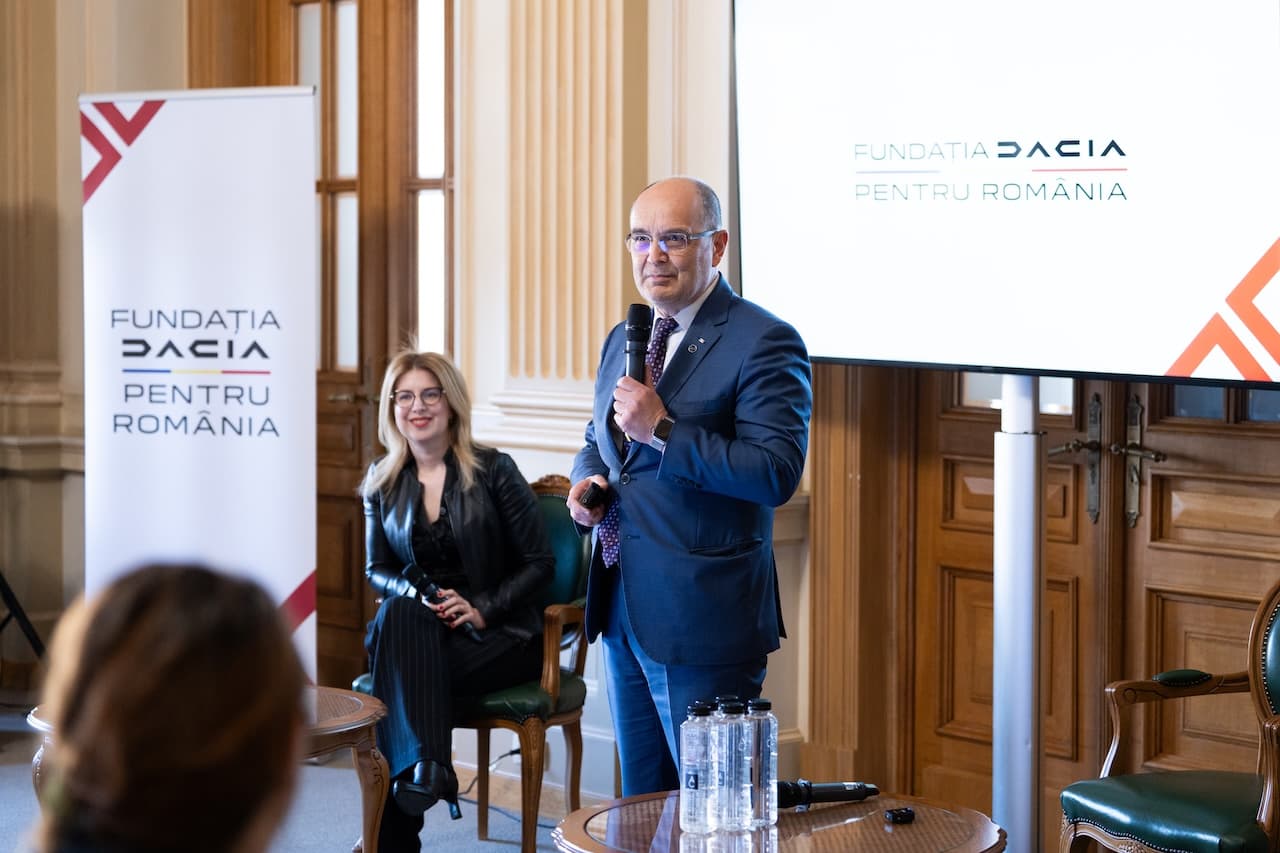
Since the Classic Unlimited concerts were too complicated for kids, the team devised a project tailored to younger audiences, unfamiliar with classical music. "We try to show kids what classical music is about, and for me, this is to show them what I personally find so fantastic in classical music," Vaida says.

"We sort of jumped into it," he recalls on how things started. "We just thought, 'let's just try it to see what happens'. Each concert was a big surprise for us. There were many things that we hadn't thought of before we started, so we adapted. We learned from each one of the concerts that we did from 2023 until now."

The project's main public comprises children aged six to ten who have limited access to concerts and cultural events, enrolled in schools in rural areas and small towns. The first concert, held at a school in Năsăud, was the first learning and fine-tuning opportunity. The teachers had brought around 200 children of all ages into a sports hall, which made it extremely noisy and almost impossible to get their attention focused on the explanations prepared. "We always try to tell them the stories behind the music, but the stories are very different for small children than for teenagers." Hence, the decision to not have too many children at one event and not mix different age groups.

There were also logistical details to sort out. The Classic for Kids project used the same concert piano as the other Classic Unlimited projects, but school sites can rarely accommodate it. Several concerts had to be postponed because the piano simply wouldn't fit into small rooms. To avoid these issues, the team now uses a smaller, digital piano that is easier to transport and still closely resembles a real piano in both sound and appearance, he explains.

Each Classic for Kids session has two parts. First, there is a concert where the pianist performs several pieces and talks to the children about them. For the second part, composer Anamaria Meza takes on the role of  conductor and works directly with the children. They guide them through making music using their bodies and simple instruments, and eventually introduce them to small pianos, which are always the highlight of the workshop. "We have to be careful so that the children can't see the little pianos at the beginning because they have no patience [e.n. to get to the playing part]." None of the schools the project has visited had any of their own instruments, so having them there is part of the draw.

The format of the project is one event per school every year, but some schools take part in more than one edition. When this happens, as was the case with the school in Suciu de Sus, in Maramures, it is a chance "to see how the children react differently, what sticks from the previous year, what they learned, and how these concerts changed them." After delivering close to 20 events last year's season, the team is preparing this year for a similar number, again focused on areas with limited access to classical music concerts.

.
Making music: Anamaria Meza conducts the children

Mozart and new music

At its first edition, the project presented a program the organizers believed would appeal to children, including music from cartoons and very evocative works. One constant throughout every edition was the music of Mozart. "We always start with a piece by Mozart. I think the music he wrote is very interesting for the children. And he wrote the pieces that I play when he was about the same age as they are, so they can relate. It's always a good beginning for the concerts."

What came as a surprise was that the children consistently associated each piece with an animal, even in the case of works that had not been themed as such. This is why, the organizers commissioned several composers to write animal-themed pieces for the project, something that will happen for this year's edition as well. "Because last year it went so well with contemporary music, this year we will also have five pieces. The composers just choose an animal and write a two-minute piece about an animal that you could find on a farm."

The team has also developed several resources that they made available on their YouTube channel. They are meant for educators and parents, but are also there for kids who want to stay engaged with music beyond concerts or events throughout the year. "My colleague, Anamaria Meza, is great with this kind of things. […] On the internet nowadays, you can find so many things that can be useful for learning all sorts of things, and music is no exception. Ours is just a little drop in the ocean," he says, pointing to the wider goal of developing an interest in music. "It's very important that the children learn this interest in music, and then they'll find the resources."

Going beyond labels

Children approach music without preconceptions or labels, he notes. "For them, there's no classical music or pop music; it's just music, and if it's good, interesting, and they can relate to it, then it's perfect."

Moments like these are incredibly rewarding and serve to remind the professional musician what passion for music means. "For these children, it's always very sincere. If you see that they are impressed by music, then you know it's true. They don't lie. Sometimes it's very impressive how open they are and how big their capacity for joy and for absorbing music is."

At first, he wondered whether one or two hours would be enough to leave a lasting impression, but returning to the same schools for various editions of the project has provided a different perspective, one where the difference is visible over time.

"The most important thing I would like the children to learn from this is that classical music is also for them. That classical music is not too complicated for them to understand, and that they can also listen to and make it: they can play music. Because if they understand that, then what they do in the future is open for them."

Maybe some of the children who have their first encounter with classical music through the project will decide to start playing an instrument. Others might not play themselves, but they may begin attending concerts or listening to music in a more thoughtful way. More than anything else, they will be able to engage with music more discerningly, he hopes. "Maybe when they listen to music, they will think about what we talked about in our events, and they will listen a bit differently, or they will have a bit of critical thinking about what they listen to."

He points to the local gap between people who study music in depth and those who have almost no musical knowledge. In general, in non-specialized schools, music classes are often seen as unimportant, which he says is a mistake. Beyond its well-documented benefits, music also teaches deeper values, such as freedom, ideas, and principles, he argues. "Children and also, adults, everybody can learn from music what, for example, freedom means. We can learn what ideas and principles mean. If you learn to live with music, to listen to music, or to play music, then your life will become much richer, and you can better understand a lot of things that you meet in your life."

While he can understand the perspective of parents who think children should study disciplines that can earn them a good living, he says "no discipline brings so many things together in one" the way music does. 

At the same time, not introducing children to music or help them understand it - not by labeling things as good or bad, but by giving them the chance to explore and connect with music meaningfully - means limiting their opportunities, he argues. "To really listen to music, to select what they want to hear or to have a bit of judgment on what it is, and to understand what it would mean for their imagination. To learn how to listen to a piece by Mozart, just to stay there and to dream about it, to imagine things." When children are confronted with constant digital distractions or music with explicit lyrics, this becomes even more important, he says.

Even when children have music lessons as part of their general education, they are often taught rules and directions without knowing why they matter or how they are supposed to use them, he points out. "What if, instead of these lessons, they learned to listen to music? This would be a much bigger benefit for them."

The topic has turned personal for Vaida since starting the project, which has been not only a learning opportunity but also an occasion to see how open and easy to influence children can be, he says. He contrasts activities done just to check boxes with the impact he sees when people get involved purposefully. In Răchițele, one of the villages the project stopped in, the teacher convinced them to hold a concert for around 100 children at once, despite the rule they had set for an audience of 40 to 50 kids. The teacher argued she couldn't exclude anyone and promised the children would be quiet and disciplined.

"They were so crowded. I had concerts for adults where it was not so silent. The kids just listened, and you could see they didn't do it because they were afraid of the teacher. They did it partly for the teacher because they trusted her. And it was one of the best concerts we had, because it had an effect on the kids."

Last year, another project was added to the Classic Unlimited family, namely Classic for Babies, designed specifically for infants. "I read so many studies about the effect of music on babies, but to see it is something completely different. […] It's a cliché that babies like Mozart, but to see it, it's something incredible."

The program covered a selection of pieces he felt would suit such a young audience. He expected babies would become silent when hearing Brahms, whose music feels warm and familiar to the pianist, but the opposite happened. With Mozart, however, the reaction was completely different. "With Mozart, it was just silence. They were just listening. I couldn't believe it the first time. And the second time it happened, the same thing. But the most interesting thing, whatever the reaction, there was a reaction, and the mood and the noise level changed when the music changed."

Reaching a wider audience is a common thread across all Classic Unlimited projects. The initial program tours small towns and villages, where he often performs in community buildings, churches, and other places that don't usually host concerts. Sometimes the venues are less than ideal, but the goal is always the same: to bring music directly to the people. "I can see that people are interested, they want to listen, they want to understand, they like it, and I don't know if they know why, but they can sense how music can change their lives. Classic Unlimited has a clearer social part now than in the beginning, but the ideas are the same. For me, it's a big privilege to go to play in so many places."

(Photos: Vlad Anca, Classic for Kids 2025)

simona@romania-insider.com

Normal

Romania Insider Free Newsletters