Wave of BESS projects in Romania driven by high yield expectations

23 March 2026

Only the latest two large deals announced for BESS plans in Romania sum up to 3.5 GWh – the equivalent of 1.75 GW given the average power-to-capacity ratio of the projects – which is more than double the current 1.5 GWh in operation at this moment. The driver remains the expected strong revenues – estimated by Nuvve and Omnia Global, which announced a joint 60 MW/120 MWh project, at USD 500,000 per MW per year in Romania – a yield that the investors admit is high by global standards, due to the high reliance of intermittent renewable energy sources. 

The American company Nuvve Holding, specialised in renewable energy technologies, and the Swiss investment company Omnia Global will build a 60 MW independent battery energy storage system - BESS in Romania, as part of a partnership initiated to develop a portfolio of BESS projects of over 1 GW in Europe, Profit.ro reported.

Nuvve estimates potential revenues from European BESS projects ranging from USD 250,000 per MW per year (in countries with well-defined prices for ancillary services) to USD 500,000 per MW per year in higher-yield markets, such as Romania, where premiums for grid balancing services remain high relative to Western European benchmarks.

Existing data, however, indicate significantly smaller profits generated by BESS installations derived from arbitraging the differential of intra-day prices. At EUR 200 per MWh, this arbitrage would generate no more than EUR 150,000 per MW installed BESS per year, while the balancing market is around EUR 1 million per day. Expert Cosmin Gabriel Pacuraru, in a column published by Contributors.ro, separately argued against the common belief that the BESS investments would eventually result in lower end-user prices. 

And yet, large BESS projects are announced, yet the projects implemented remain more prudent.

Romanian energy services company Alive Capital has signed a memorandum of understanding (MoU) with Chinese energy equipment provider Sieyuan Electric to deploy up to 2.5 GWh of battery energy storage systems (BESS) over the next four years. The agreement covers both stand-alone and co-located configurations, across multiple power classes. This will encompass Alive Capital’s own investments as well as projects developed for affiliated companies and clients.

Separately, Sungrow and ENEVO signed a 1 GWh BESS energy storage agreement for Romania. Initially, the work schedule establishes the delivery of 440 MWh by the end of this year, according to Inspenet.com.

iulian@romania-insider.com

(Photo source: Malpetr/Dreamstime.com)

Normal

Wave of BESS projects in Romania driven by high yield expectations
23 March 2026

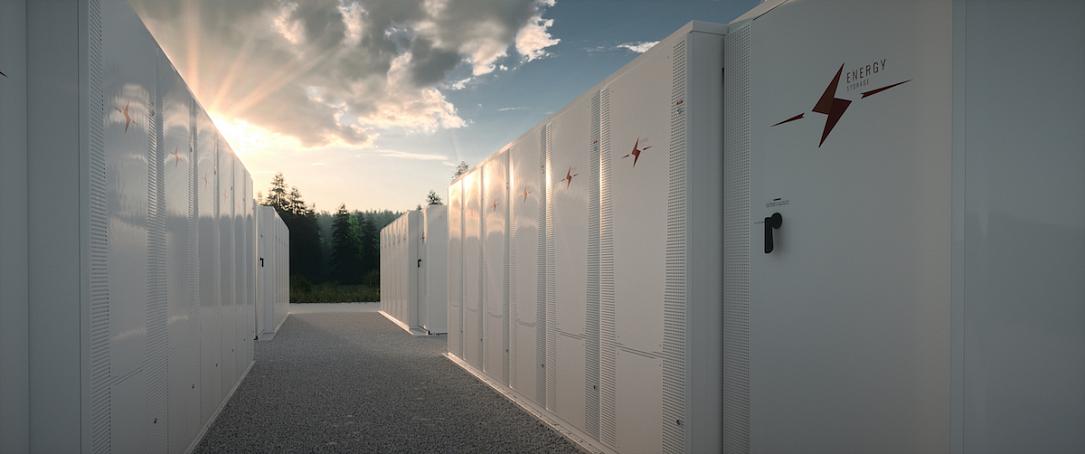
Only the latest two large deals announced for BESS plans in Romania sum up to 3.5 GWh – the equivalent of 1.75 GW given the average power-to-capacity ratio of the projects – which is more than double the current 1.5 GWh in operation at this moment. The driver remains the expected strong revenues – estimated by Nuvve and Omnia Global, which announced a joint 60 MW/120 MWh project, at USD 500,000 per MW per year in Romania – a yield that the investors admit is high by global standards, due to the high reliance of intermittent renewable energy sources. 

The American company Nuvve Holding, specialised in renewable energy technologies, and the Swiss investment company Omnia Global will build a 60 MW independent battery energy storage system - BESS in Romania, as part of a partnership initiated to develop a portfolio of BESS projects of over 1 GW in Europe, Profit.ro reported.

Nuvve estimates potential revenues from European BESS projects ranging from USD 250,000 per MW per year (in countries with well-defined prices for ancillary services) to USD 500,000 per MW per year in higher-yield markets, such as Romania, where premiums for grid balancing services remain high relative to Western European benchmarks.

Existing data, however, indicate significantly smaller profits generated by BESS installations derived from arbitraging the differential of intra-day prices. At EUR 200 per MWh, this arbitrage would generate no more than EUR 150,000 per MW installed BESS per year, while the balancing market is around EUR 1 million per day. Expert Cosmin Gabriel Pacuraru, in a column published by Contributors.ro, separately argued against the common belief that the BESS investments would eventually result in lower end-user prices. 

And yet, large BESS projects are announced, yet the projects implemented remain more prudent.

Romanian energy services company Alive Capital has signed a memorandum of understanding (MoU) with Chinese energy equipment provider Sieyuan Electric to deploy up to 2.5 GWh of battery energy storage systems (BESS) over the next four years. The agreement covers both stand-alone and co-located configurations, across multiple power classes. This will encompass Alive Capital’s own investments as well as projects developed for affiliated companies and clients.

Separately, Sungrow and ENEVO signed a 1 GWh BESS energy storage agreement for Romania. Initially, the work schedule establishes the delivery of 440 MWh by the end of this year, according to Inspenet.com.

iulian@romania-insider.com

(Photo source: Malpetr/Dreamstime.com)

Normal

Romania Insider Free Newsletters