Romania's Cultural Consumption Barometer: Difficult access, cost hamper participation in cultural education activities
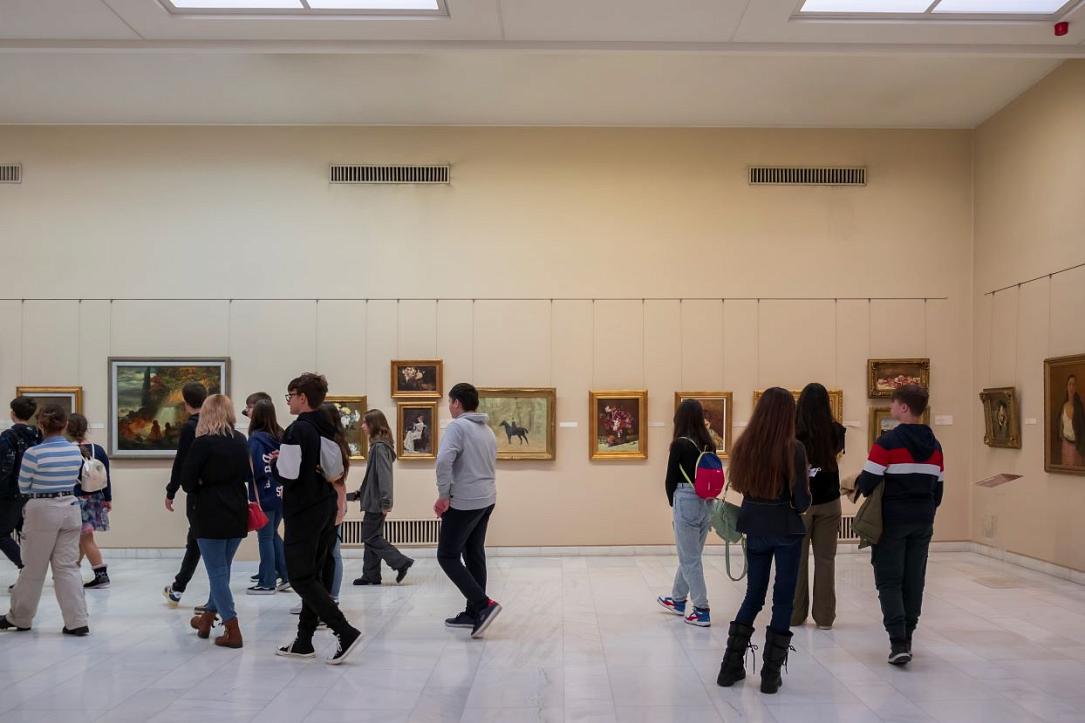
Participation in cultural education activities continues to be limited, with the main barriers being difficult access, insufficient knowledge, and cost, the recently released Cultural Consumption Barometer 2024 shows.
The report showed that many Romanians still associate culture with entertainment rather than with personal development or furthering their knowledge. The need for relaxation dominates in cultural consumption, at the expense of educational experiences.
The survey showed that, in 2024, 67% of the respondents and their children did not attend any cultural education activities, despite high awareness of their importance.
Among the respondents who took part in cultural education events, 78% reported that the main benefit was learning, having new information and notions about art and culture. Moreover, for 70%, the wish to learn more led to greater involvement in various cultural initiatives, and for 42%, cultural education led to an increase in their children's school performance.
Although the potential public, namely people who do not reject cultural events but cannot access them, is numerous, cultural infrastructure remains a major issue, especially in rural areas, where 44% of Romanians live. The survey showed that the lack of attendance is connected to infrequent cultural offerings, such as festivals and fairs, or to specific infrastructure and educational barriers, as the consumption of classical music.
According to the survey, interest in heritage sites remains high, with 66% of respondents reporting having visited historical monuments and archaeological sites at least once a year, and 42% reporting visiting museums, exhibitions, or art galleries.
At the same time, 38% saw a film at the cinema at least once in 2024, while 23% went to the theater at least once, similar to 2023 levels.
The survey also revealed that attendance at events with a community element, such as celebrations, local events, religious sermons or churchgoing, and meeting relatives and friends, continues to attract a significant share of respondents.
The report showed that those aged 18 to 35 are increasing their cultural consumption, especially in the digital environment, while those aged 36 to 50 are attending fewer cultural events, due to intense work demands, leading to a break in the cultural connection between generations, the authors of the report note.
Furthermore, the report points to the internet's growing role locally in cultural consumption and to two main groups: elite cultural consumption and mass, entertainment-driven consumption.
When it comes to cultural consumption in the private sphere, the survey notes increases in music consumption and online media, and decreases in reading, including audiobooks, watching films and entertainment on cable TV, and TV programs in general.
Types of audience and activities
The report outlines four types of audience, depending on the frequency of their participation in cultural events: the stable/ regular public, who access the cultural product at least once a week/month; the potential public, who access a product at least once every six months; the occasional public – at least once a year; and the non-public, who doesn’t access the product or have the interest to.
At the same time, it outlines distinct behaviors depending on the type of activity: activities with a cultural component, entertainment and relaxation activities, activities with a community dimension, and activities that entail an active lifestyle. The results of the study confirm a cultural change, highlighting the increase in the importance of friendship and ways of spending leisure time. Participation in community activities attracts the highest percentage of regular public: meetings with families and friends (79%) and going to church (50%).
When it comes to entertainment and relaxation activities, the stable public reports the highest percentages for going to the mall (59%) and the restaurant (45%). In what concerns activities that involve an active lifestyle, walks in the park have a stable public of 61% of the respondents, unlike practicing a sport, which has only 34%.
In the non-public sphere, data show a strong orientation of the public towards accessible cultural consumption forms. A total of 88% of the respondents said they listen to music at least once a week, and 84% watch news or other current affairs shows on TV with the same frequency.
Regarding reading habits, 26% said they read books, 7% said they listened to audiobooks, and 45% said they read newspapers or magazines, either in print or online, weekly.
A total of 89% of the survey respondents said they accessed social networks at least once in the past year, 71% said they used the internet for professional purposes, and 59% said they watched films or other programs online.
The study, conducted by the National Institute for Cultural Research and Training (INCFC), surveyed 1,064 people. It has a maximum error margin of +/-3.1%, and a confidence level of 95%.
(Photo: Elenaphotos | Dreamstime.com)
simona@romania-insider.com