News from Companies

DRS in Romania: from implementation to a European benchmark for the circular economy
10 December 2025

Romania, which for years ranked last in the EU for packaging waste recycling, now stands at the forefront of Europe’s circular economy, proving that a country with initially fragile infrastructure can implement, in record time, one of the most effective collection and recycling systems in Europe.

This rapid transformation is taking place in a European landscape where many deposit-return systems have been operating for decades—such as Sweden, with a DRS running for more than forty years, or Norway, Denmark and Germany, which introduced theirs between 1999 and 2003—according to public data analyzed by the BUCHAREST CENTER FOR ECONOMY & SOCIETY (CES Bucharest).

18 countries in Europe have implemented a Deposit–Return System to date, the most recent including Romania, Austria, Slovakia, Hungary and Ireland.

Two years after its launch, Romania’s Deposit–Return System - DRS - operated by RetuRO, is no longer just a national environmental initiative but a strategic infrastructure that has become a European benchmark.

Romania’s DRS: the largest fully integrated system in the world

In terms of volumes handled and market size, Romania’s DRS is the third largest in the European Union, after Germany and Poland, in a country of nearly 19 million inhabitants with a significantly rural demographic structure, according to recent RetuRO data analyzed by CES Bucharest.

Moreover, the Romanian model is currently considered the largest fully integrated deposit-return system in the world, because it operates under a single central administration, with a standardized national operational framework, and covers three material types simultaneously—PET, metal, and glass.

The system was implemented through an initial €4 million loan from beverage producers, followed by an €86 million green loan contracted by RetuRO, guaranteed through corporate guarantees from producers. Additional investments of €70 million are planned by 2029.

A driver of the circular economy

The rapid increase in return rates is one of the clearest indicators of the system’s maturation. In 2024, 3.36 billion containers were collected out of a total of 6.1 billion placed on the market. The first ten months of 2025 show a major leap: 4.5 billion returned containers out of 5.3 billion placed on the market. This represents an approximate 62% increase in the volume collected.

In 2024, Romania—together with the other 14 EU countries that have implemented a DRS—managed to collect 88% of packaging waste (PET, glass and aluminium).*

Romanians return containers at collection points for different reasons: young people combine the refund incentive with environmental care; families with children see it as an educational and moral tool; and seniors feel useful and engaged in their community. The system also creates economic opportunities for vulnerable groups, generating stable income and basic financial security.

Massive investments and multiplier effects

The operational performance of the DRS is supported by substantial investments in infrastructure and technology. In 2025 alone, RetuRO budgeted investments of 33.7 million lei, generating a notable multiplier effect in the economy: every leu invested produces approximately 0.57 lei in added value, according to data analyzed by CES Bucharest.

The DRS lifts a financial burden off local administrations

By fully separating DRS packaging from municipal waste streams, local administrations avoid a significant portion of traditional collection, transport and disposal costs. Between January and August 2025 alone, estimated savings for local authorities range between 112.2 and 160.7 million lei, according to the RetuRO study.

“Romania’s Deposit–Return System - DRS - is the country’s largest circular-economy initiative, consistently delivering collection rates above 80%. In less than two years, it has become a European benchmark, demonstrating that waste can be transformed into a valuable resource through cooperation, data and evidence-based governance. Romania is ready to contribute real operational expertise to Europe’s circularity agenda, offering transparent information that supports efficient, scalable policies. RetuRO and its shareholders remain committed to partnership, stability and the promotion of a genuine circular economy across the European Union,” stated Gemma Webb, CEO of RetuRO DRS.

The system was designed to enable closed-loop recycling, in which collected materials are transformed back into the same type of packaging.

This approach reduces dependence on virgin resources and directly supports European goals for sustainable materials management.

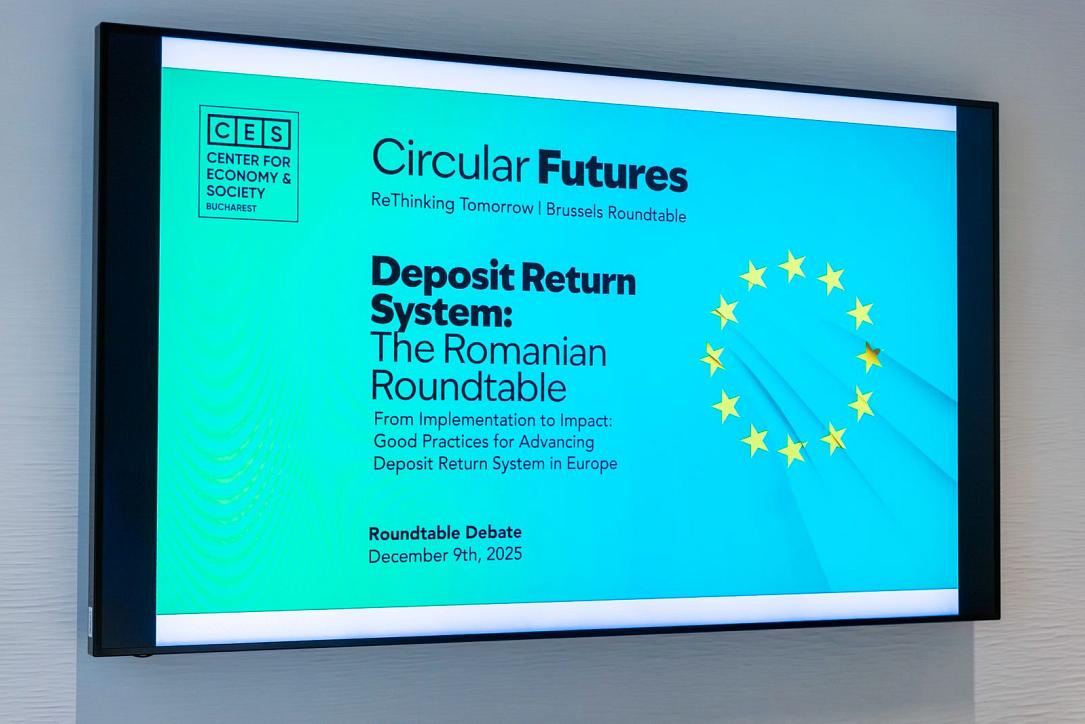
Romania’s DRS experience presented in Brussels. Yesterday, CES Bucharest organized at the European Parliament a roundtable titled “The Deposit–Return System. Romania’s Journey: From Implementation to European Impact”, an event dedicated to discussing how Romania’s DRS experience is beginning to attract growing interest and relevance at European level.

Cooperation between authorities, producers, retailers and consumers, as well as clear legislation and the digital transparency of the RetuRO DRS model, were the main topics discussed. Participants emphasized that the system’s success stems not only from measurable results but also from how it has changed consumer behavior, encouraged civic responsibility, and demonstrated that a well-governed model can be scalable and replicable in other Member States.

*UNESDA

*This is a press release.
Normal
News from Companies

DRS in Romania: from implementation to a European benchmark for the circular economy

10 December 2025

Romania, which for years ranked last in the EU for packaging waste recycling, now stands at the forefront of Europe’s circular economy, proving that a country with initially fragile infrastructure can implement, in record time, one of the most effective collection and recycling systems in Europe.

This rapid transformation is taking place in a European landscape where many deposit-return systems have been operating for decades—such as Sweden, with a DRS running for more than forty years, or Norway, Denmark and Germany, which introduced theirs between 1999 and 2003—according to public data analyzed by the BUCHAREST CENTER FOR ECONOMY & SOCIETY (CES Bucharest).

18 countries in Europe have implemented a Deposit–Return System to date, the most recent including Romania, Austria, Slovakia, Hungary and Ireland.

Two years after its launch, Romania’s Deposit–Return System - DRS - operated by RetuRO, is no longer just a national environmental initiative but a strategic infrastructure that has become a European benchmark.

Romania’s DRS: the largest fully integrated system in the world

In terms of volumes handled and market size, Romania’s DRS is the third largest in the European Union, after Germany and Poland, in a country of nearly 19 million inhabitants with a significantly rural demographic structure, according to recent RetuRO data analyzed by CES Bucharest.

Moreover, the Romanian model is currently considered the largest fully integrated deposit-return system in the world, because it operates under a single central administration, with a standardized national operational framework, and covers three material types simultaneously—PET, metal, and glass.

The system was implemented through an initial €4 million loan from beverage producers, followed by an €86 million green loan contracted by RetuRO, guaranteed through corporate guarantees from producers. Additional investments of €70 million are planned by 2029.

A driver of the circular economy

The rapid increase in return rates is one of the clearest indicators of the system’s maturation. In 2024, 3.36 billion containers were collected out of a total of 6.1 billion placed on the market. The first ten months of 2025 show a major leap: 4.5 billion returned containers out of 5.3 billion placed on the market. This represents an approximate 62% increase in the volume collected.

In 2024, Romania—together with the other 14 EU countries that have implemented a DRS—managed to collect 88% of packaging waste (PET, glass and aluminium).*

Romanians return containers at collection points for different reasons: young people combine the refund incentive with environmental care; families with children see it as an educational and moral tool; and seniors feel useful and engaged in their community. The system also creates economic opportunities for vulnerable groups, generating stable income and basic financial security.

Massive investments and multiplier effects

The operational performance of the DRS is supported by substantial investments in infrastructure and technology. In 2025 alone, RetuRO budgeted investments of 33.7 million lei, generating a notable multiplier effect in the economy: every leu invested produces approximately 0.57 lei in added value, according to data analyzed by CES Bucharest.

The DRS lifts a financial burden off local administrations

By fully separating DRS packaging from municipal waste streams, local administrations avoid a significant portion of traditional collection, transport and disposal costs. Between January and August 2025 alone, estimated savings for local authorities range between 112.2 and 160.7 million lei, according to the RetuRO study.

“Romania’s Deposit–Return System - DRS - is the country’s largest circular-economy initiative, consistently delivering collection rates above 80%. In less than two years, it has become a European benchmark, demonstrating that waste can be transformed into a valuable resource through cooperation, data and evidence-based governance. Romania is ready to contribute real operational expertise to Europe’s circularity agenda, offering transparent information that supports efficient, scalable policies. RetuRO and its shareholders remain committed to partnership, stability and the promotion of a genuine circular economy across the European Union,” stated Gemma Webb, CEO of RetuRO DRS.

The system was designed to enable closed-loop recycling, in which collected materials are transformed back into the same type of packaging.

This approach reduces dependence on virgin resources and directly supports European goals for sustainable materials management.

Romania’s DRS experience presented in Brussels. Yesterday, CES Bucharest organized at the European Parliament a roundtable titled “The Deposit–Return System. Romania’s Journey: From Implementation to European Impact”, an event dedicated to discussing how Romania’s DRS experience is beginning to attract growing interest and relevance at European level.

Cooperation between authorities, producers, retailers and consumers, as well as clear legislation and the digital transparency of the RetuRO DRS model, were the main topics discussed. Participants emphasized that the system’s success stems not only from measurable results but also from how it has changed consumer behavior, encouraged civic responsibility, and demonstrated that a well-governed model can be scalable and replicable in other Member States.

*UNESDA

*This is a press release.

Normal

Romania Insider Free Newsletters