New herbivorous dinosaur species discovered in Romania’s Hațeg UNESCO Geopark

11 March 2026

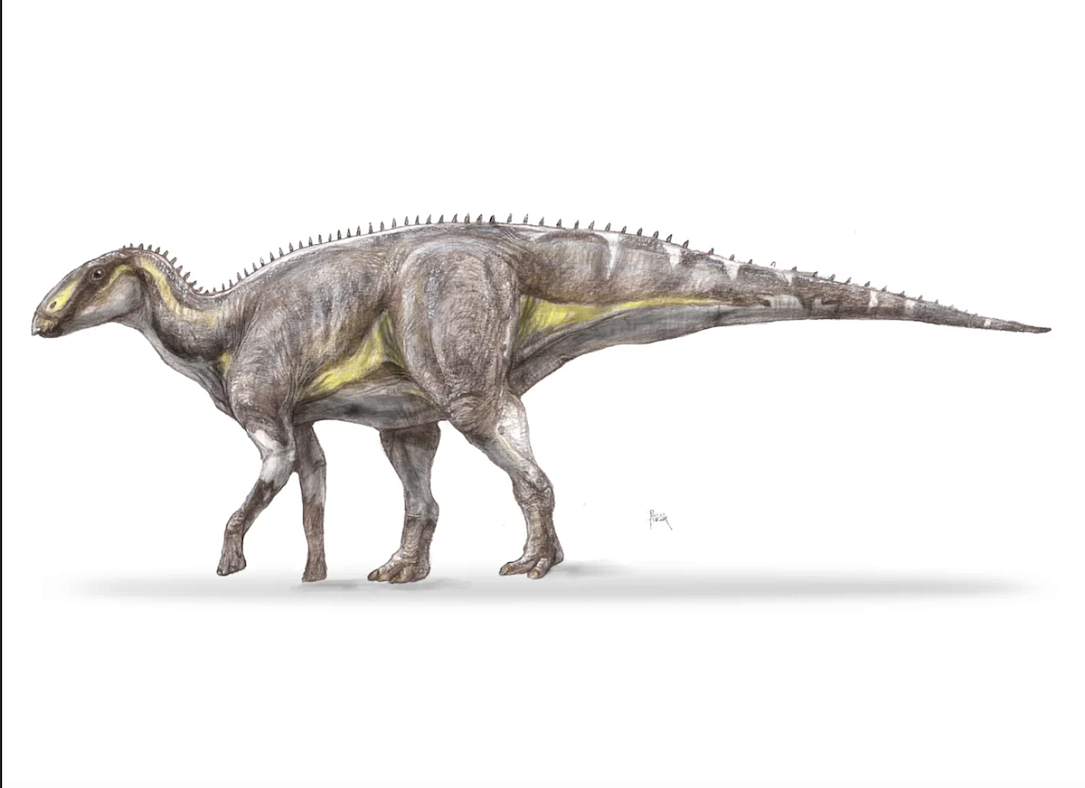
Paleontologists from the University of Bucharest and Eötvös Loránd University in Budapest have discovered a new species of herbivorous dinosaur in Romania’s Hațeg Country UNESCO Global Geopark. The dinosaur, which lived around 70 million years ago, has been named Kryptohadros kallaiae.

Researchers said the species was related to other dinosaurs discovered in southeastern Europe, including Telmatosaurus from Romania and Tethyshadros from Italy, the University of Bucharest announced. Together, these species form a distinct group of hadrosauroids called Telmatosauridae, which evolved on islands that made up southeastern Europe during the Late Cretaceous period.

“Around 70 million years ago, Europe was not a single compact continent, but a mosaic of islands separated by seas of varying depths. These conditions favored the emergence of unique animal communities adapted to different island environments,” reads the university’s press release. 

Zoltán Csiki-Sava, a researcher at the University of Bucharest and coordinator of the Romanian research team, explained: “Based on phylogenetic analyses, it appears that hadrosauroids that initially evolved in Asia reached Europe in several distinct waves of migration. One of these events brought the ancestors of Kryptohadros to southeastern Europe. The discovery confirms that the faunas living on the European islands at that time were far more dynamic and diverse than previously thought.”

The discovery is based on fossils found near the village of Vălioara in the western part of the Hațeg Basin in Hunedoara County. Researchers uncovered several fossil fragments belonging to a partial skeleton of a hadrosauroid, a group of herbivorous dinosaurs commonly known as “duck-billed dinosaurs.” The fossils were preserved in geological deposits of the Densuș-Ciula Formation dating to the end of the Cretaceous period.

According to the research team, the site was first identified in 2022 after forestry road works exposed rock layers containing fossil fragments. Further excavations revealed that the remains belonged not to isolated fossils but to parts of the same dinosaur skeleton.

For more than a century, most hadrosauroid fossils found in the Hațeg region had been attributed to Telmatosaurus transsylvanicus, a species described in the early 20th century by paleontologist Franz Nopcsa, the university explained. However, detailed analysis of the newly discovered fossils showed that some remains - including those from the Vălioara site - belong to a different, though related, species.

According to the same source, the name Kryptohadros refers to the fact that the dinosaur remained “hidden” for nearly 130 years among fossils previously assigned to Telmatosaurus and near already known fossil sites. The species name kallaiae honors the mother of the study’s lead author, János Magyar, recognizing her support for his early interest in natural sciences.

Scientists say the Hațeg Basin remains one of Europe’s most important regions for studying Late Cretaceous dinosaurs. Discoveries such as Kryptohadros kallaiae help researchers better understand the evolution of prehistoric ecosystems that once existed on Europe’s ancient island landscapes.

irina.marica@romania-insider.com

(Photo source: Unibuc.ro, by Magyar János)

Normal

New herbivorous dinosaur species discovered in Romania’s Hațeg UNESCO Geopark
11 March 2026

Paleontologists from the University of Bucharest and Eötvös Loránd University in Budapest have discovered a new species of herbivorous dinosaur in Romania’s Hațeg Country UNESCO Global Geopark. The dinosaur, which lived around 70 million years ago, has been named Kryptohadros kallaiae.

Researchers said the species was related to other dinosaurs discovered in southeastern Europe, including Telmatosaurus from Romania and Tethyshadros from Italy, the University of Bucharest announced. Together, these species form a distinct group of hadrosauroids called Telmatosauridae, which evolved on islands that made up southeastern Europe during the Late Cretaceous period.

“Around 70 million years ago, Europe was not a single compact continent, but a mosaic of islands separated by seas of varying depths. These conditions favored the emergence of unique animal communities adapted to different island environments,” reads the university’s press release. 

Zoltán Csiki-Sava, a researcher at the University of Bucharest and coordinator of the Romanian research team, explained: “Based on phylogenetic analyses, it appears that hadrosauroids that initially evolved in Asia reached Europe in several distinct waves of migration. One of these events brought the ancestors of Kryptohadros to southeastern Europe. The discovery confirms that the faunas living on the European islands at that time were far more dynamic and diverse than previously thought.”

The discovery is based on fossils found near the village of Vălioara in the western part of the Hațeg Basin in Hunedoara County. Researchers uncovered several fossil fragments belonging to a partial skeleton of a hadrosauroid, a group of herbivorous dinosaurs commonly known as “duck-billed dinosaurs.” The fossils were preserved in geological deposits of the Densuș-Ciula Formation dating to the end of the Cretaceous period.

According to the research team, the site was first identified in 2022 after forestry road works exposed rock layers containing fossil fragments. Further excavations revealed that the remains belonged not to isolated fossils but to parts of the same dinosaur skeleton.

For more than a century, most hadrosauroid fossils found in the Hațeg region had been attributed to Telmatosaurus transsylvanicus, a species described in the early 20th century by paleontologist Franz Nopcsa, the university explained. However, detailed analysis of the newly discovered fossils showed that some remains - including those from the Vălioara site - belong to a different, though related, species.

According to the same source, the name Kryptohadros refers to the fact that the dinosaur remained “hidden” for nearly 130 years among fossils previously assigned to Telmatosaurus and near already known fossil sites. The species name kallaiae honors the mother of the study’s lead author, János Magyar, recognizing her support for his early interest in natural sciences.

Scientists say the Hațeg Basin remains one of Europe’s most important regions for studying Late Cretaceous dinosaurs. Discoveries such as Kryptohadros kallaiae help researchers better understand the evolution of prehistoric ecosystems that once existed on Europe’s ancient island landscapes.

irina.marica@romania-insider.com

(Photo source: Unibuc.ro, by Magyar János)
Normal

Romania Insider Free Newsletters