RePatriot survey: 40% of Romanians abroad want to invest in Romania
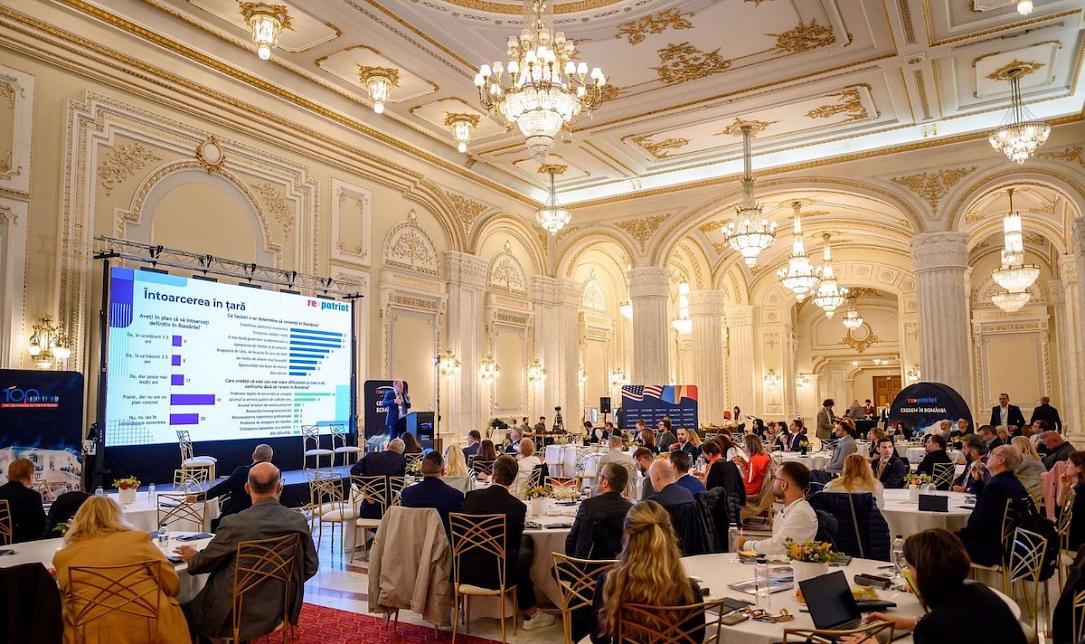
Around 40% of Romanians living abroad want to invest in Romania, according to a new survey conducted by RePatriot, highlighting a significant potential for economic development driven by the diaspora.
The research, carried out in October–November 2025 among Romanians from more than 20 countries, showed that interest in investing in the home country remains high despite ongoing challenges in the relationship between the diaspora and Romanian state institutions. The study indicated that four in ten respondents are interested in investing, particularly in sectors with strong growth potential and global relevance.
Romanians living in Israel, Ireland, Italy, Spain, Portugal, the Netherlands, and the United Kingdom are among the most open to the idea of returning home, while those in the United States, Canada, France, and Switzerland are more reserved, citing professional and administrative stability in their host countries, the survey found.
“Although the share of those intending to return permanently has fallen to 29%, a growing number consider Romania’s standard of living a realistic reason for returning. This figure rose to 52% in 2025, three times higher than in 2015, indicating a consistent shift in perceptions about the country’s development,” reads the press release.
At the same time, 52% of Romanians in the United States, Switzerland, Germany, and Ireland view Romania’s evolution as positive, helping to create a climate of confidence that could support investment and community involvement in the coming years. The data also show a growing polarization of views depending on host country, reflecting different integration experiences and expectations.
According to the same source, the sectors attracting the strongest investment interest include agriculture, technology - particularly AI and IT - healthcare, tourism, education, real estate, and creative industries. These preferences point to an interest in both traditional sectors and emerging fields such as artificial intelligence and scientific research.
“There is also a clear appetite for entrepreneurial investments with local impact, including food processing, hospitality services, cultural activities, and social initiatives, indicating that many Romanians in the diaspora see Romania as a place where they can contribute concretely to the development of communities,” reads the press release.
At the same time, survey participants reported persistent difficulties in their relationship with Romanian institutions, with bureaucracy, a lack of coherent information, and administrative distance frequently cited as barriers to maintaining consistent contact with Romania.
“Interaction with Romanian authorities tends to be occasional, although many respondents would like it to be more frequent, recognizing that such engagement supports better integration and the preservation of Romanian identity. Most participants expressed the need for genuine relationships with state institutions based on respect, involvement, and real representation, rather than electoral promises alone,” the same source said.
Despite these challenges, Romanians in the diaspora continue to maintain strong cultural and family ties. Some 73% send money home, and consumption of Romanian products remains high in countries such as Ireland, the United Kingdom, Canada, and Spain.
Cultural events, traditions, and holidays remain important reference points for community life, reflecting the diaspora’s emotional connection to Romania and their desire to see it strengthened over time, RePatriot said.
irina.marica@romania-insider.com
(Photo source: press release)