The "Shaping Romania's Future" editorial series is powered by the British School of Bucharest.


British School of Bucharest

Doobeegood: Passion for learning fuels work of education non-profit founded by Romanian-Ukrainian duo
22 August 2025

Romanian Diana Murguleţ and Ukrainian Viktoriia Oliinyk, two young data scientists based in London, co-founded Doobeegood, a non-profit that started by offering summer camps for Ukrainian children displaced in Romania. Since its establishment, the NGO has introduced a tutoring program and summer camps for underprivileged children in two communities in Sibiu county. Co-founder Diana Murguleţ told Romania Insider more about the work of Doobeegood and what drives its mission.

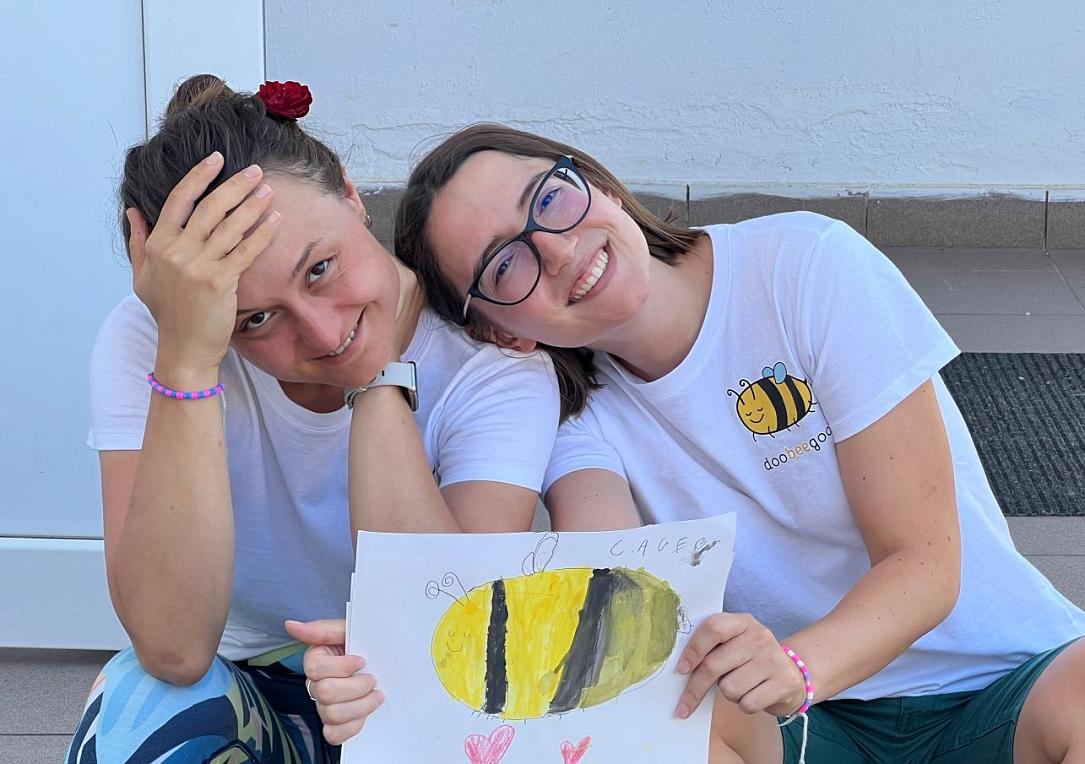
Diana (pictured right in opening photo) grew up in Mediaș, a town in Sibiu county, where she attended both middle school and high school in the public system.

"Growing up in a small town gives you a lot of freedom. I got to grow up in a space where I was surrounded by a lot of love and support," she says. "Some of my middle school and high school teachers were also my dad's teachers as he was growing up, so I definitely caught the tail end of an old generation. They had a very different style to some of the teaching methods that we employ in camps these days, but I was still very lucky."

After graduating from high school and feeling torn between her interests in the humanities and the sciences, she enrolled in an undergraduate program at the University of Birmingham that allowed her to study both English literature and computer science, as part of the first cohort to trial the course. A year in, she chose to focus on computer science, a decision she credits to encountering the right teacher.

"There's an underlying thread in my life of incredible teachers who just pulled me along with them. I had a great lecturer in computing at the time, so I said, 'Okay, I think I want to do this for a living.' And that became the rest of my journey."

Meanwhile, some of her middle school and high school teachers, figures she says were also essential to her development, now participate in the camps organized by Doobeegood.

Her educational path progressed through a computer science degree at the University of Birmingham, a master's in machine learning at Imperial College London, and an MBA from the University of Oxford. "I still don't think I'm done," she says as she emphasizes the value of engaging teaching that sparks children's interest in a subject.

"I loved a lot of subjects, but I mostly loved the ones that were taught well, which is no coincidence. That also is what inspires me to bring cool teaching to some of these disciplines and these kids because I know it makes such a difference in how a kid starts loving the topic if it gets taught well."

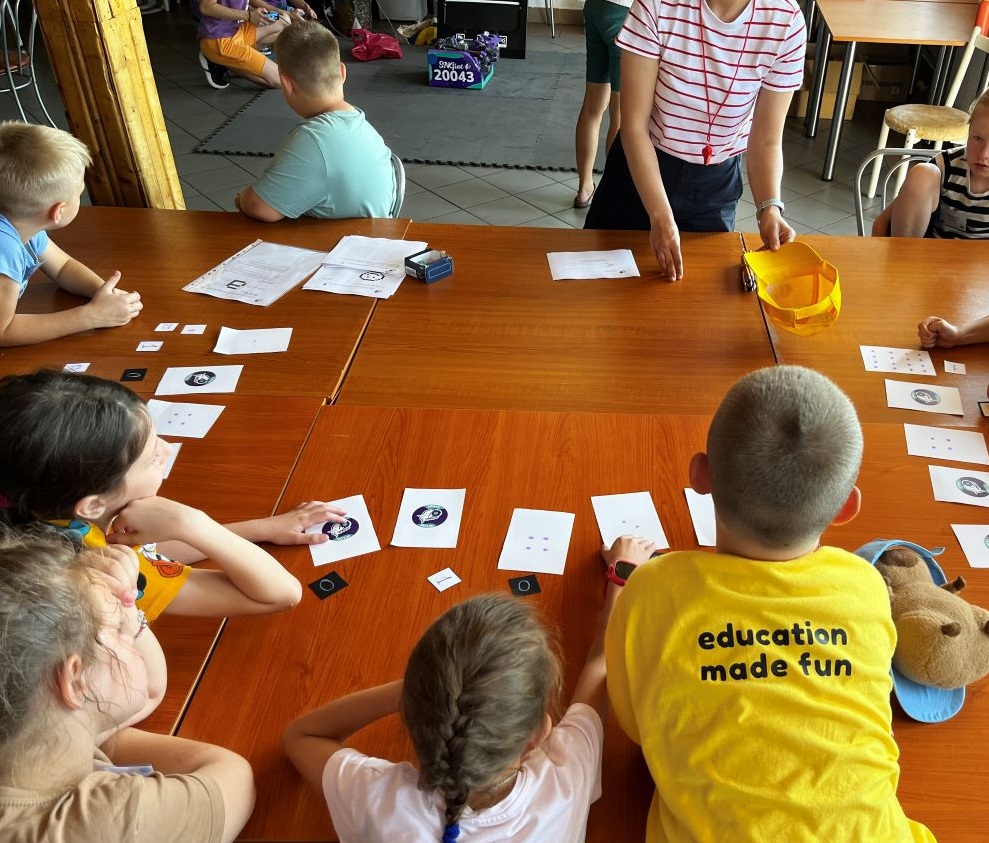
This passion for learning is at the heart of Doobeegood's mission. "We have it printed on our t-shirts. It says, 'Education made fun.' I truly hope that that's what we can make it be for these kids."
BSB

Pandemic opportunities

During the first wave of the COVID-19 pandemic, Diana and her then-colleague and flatmate, Viiktoria, were both working as data scientists at a major consulting firm in London. In conversations about what they might do outside of their careers, the idea of giving back through education cropped up. They began exploring the idea of launching a small initiative in the form of summer camps for children. However, with the uncertainty of the pandemic, the chances of parents sending their children to camp were slim. Another question they faced was where to run the project: Romania or Ukraine.

"Then the war in Ukraine started, and it was almost as if the decision was made for us. There were already refugees in Romania, so we started with refugee children."

Doobeegood's first project, which ran in 2022, focused on Ukrainian refugee children, aiming to provide them with a summer camp that would "lift a bit their spirits, give them a bit of safety and the chance to be kids."

For the two founders, it entailed a period of adjustment to the logistics of such a project. "Surprisingly, things played out incredibly well. The community of Ukrainians in Romania is very tight-knit, and people trusted each other very deeply." That summer, they hosted two series of 40 children who were displaced in Romania.

Since the non-profit had been established as a legal entity, they thought about doing more. As they both live in London, they relied in the beginning on support from "a good network at home in the very conventional sense." Now, a team in Romania helps run things, especially the tutoring program, which spans the duration of the school year. A lot of remote logistics and collaborating with established providers are also part of the modus operandi.

In 2023, the non-profit welcomed both Ukrainian children who were still living in Romania and added a Romanian summer camp, primarily for children from communities in Sibiu.

"The Romanian summer camp was a day camp where we placed ourselves in the middle of the community. Kids came to school and they attended an identical curriculum [e.n. to the Ukrainian camp] but we made sure, especially as we were starting to build trust in that community, that we were in the middle of it, people could see us, and the kids were still in their environment."

Last year, Doobeegood hosted children from Ukraine who still lived in the war-torn country. "It was very intense because the kids that have lived through the war had a very different experience from those who left early. It just goes to show that three years of war on minds that young are really traumatic."

It also organized two camps for children in Iacobeni and Brăteiu, two underprivileged communities in Sibiu county. For the three summer camps it organized in 2024, the team worked with more than 120 children.

A variety of subjects are taught in the summer camps, with the aim of providing children with a well-rounded experience. Physics, Chemistry, Math, or computer science are all delivered "in a fun way to capture their attention and interest." Music and literature are also covered, and children receive books at the end of each program. Sports are also a key part of the experience.

"Our original mission was to expose these kids to how education is done in a privileged environment. I see so many of my friends who are in love with certain school subjects because they were taught well: Chemistry was taught through experiments, Physics was taught in a fun way, Drama also, and I'm thinking 'Wonderful, but in Iacobeni they don't have any of this'. "

The camps rely on the help of volunteers, not just from Romania but also from abroad. Many of them are friends from the two founders' networks, so the children have, so far, had the opportunity to experience activities alongside volunteers from Europe, China, Japan, or India.

"It takes an army of volunteers that come together in the summer and deliver these programs. In the same way that we gathered them, my hope is that they'll continue to show up for the NGO in the next few years. Then a lot of other great things will happen as a consequence."
.
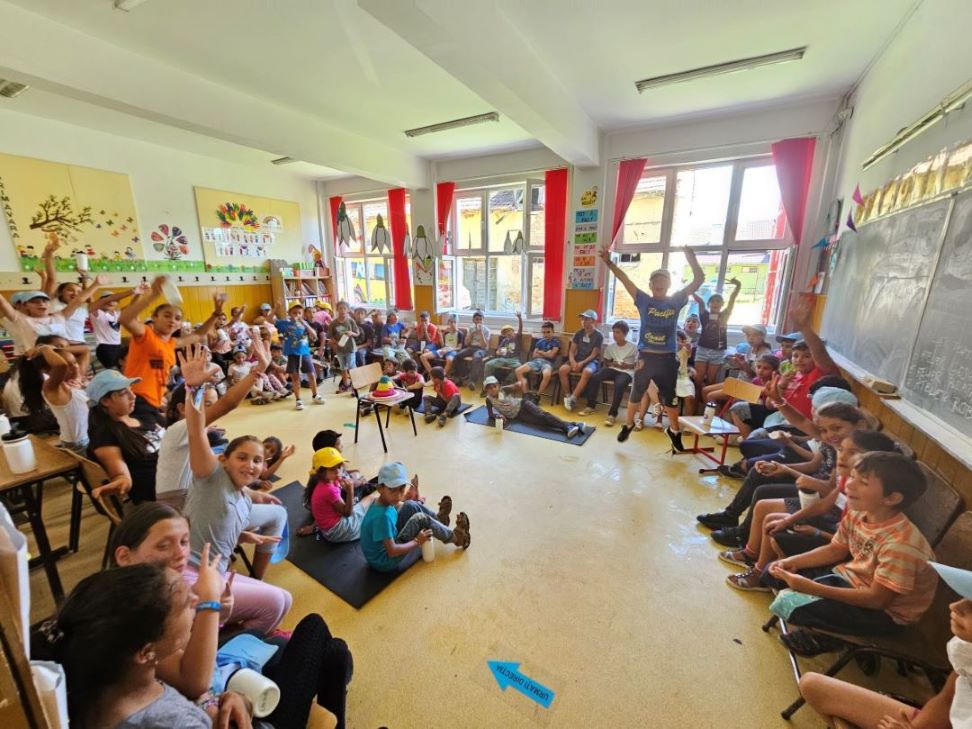
A group of children in Iacobeni, one of the communities where the non-profit has organized camps

‘Showing up and showing up often’

In addition to the summer camps, the non-profit has introduced a tutoring program to have a more lasting impact. The idea for it emerged after the team noticed that many of the children attending the Romanian camps were significantly behind what their school level should have been.

"It was really hard to accept that a fourth grader would struggle with reading and basic Math. Poverty in those communities goes hand in hand with a bunch of other issues. Until you go and look at it front on, it's hard to understand how complicated these issues are. It mostly grew out of my frustration with the fact that we were only dropping into these communities in the summer. It didn't feel, as an intervention, like it had enough of the impact we wanted it to have."

Inspired by the work of the Romanian non-profit Casa Bună, where she had previously volunteered, she came up with the idea of a tutoring program delivered online.

The program pairs high school students with younger children from underprivileged communities for weekly online mentoring sessions. Rather than following a fixed curriculum, the sessions are tailored to the specific needs of each child. The program is meant to show the children "that there is support, that someone has their back and cares about their development. What we noticed is that very few of these kids had that level of individualized attention that we grew up with in more privileged families."

Following a successful pilot, in which five students from Diana's former high school in Mediaș mentored children in Iacobeni, the non-profit decided to make the program a permanent part of its work.

"Success here is always a little bit of an exercise in adjustment. It was working great, but that doesn't mean it was frictionless. It always takes time for us to find our feet, for the kids to understand what we're trying to do. But it worked."

The program now enrolls more than 40 volunteers who tutor children for a year. "Many of them stay and do this for three to four years. The high schoolers that we work with and the level of commitment they have for giving back is truly magical." The main criterion for selecting the high schoolers who tutor is their commitment to consistently showing up for the younger children.

For now, the program includes only students from Mediaș, although the organization is exploring the possibility of expanding it to other cities.

The program initially focused on third- and fourth-grade students but has since expanded to include second graders, aiming to intervene as early as possible to close learning gaps, with a particular focus on literacy and numeracy.

"The Romanian curriculum, in a lot of ways, is unforgiving. In fifth grade, you're supposed to teach a second foreign language. If you've lost a kid along the way and they can't read, it just seeds so much frustration, this feeling of inadequacy, of being left behind and not understanding. Things get more complicated year on year, you keep adding subjects and complexity, but if those initial core skills were not settled properly, then it's a lost battle."

In addition to the online work, the team also goes into the villages where the children live several times a year. "Every time I go home - four or five times a year - we go in the community, and it's a very good reminder for us that being at the grassroots takes going in the community. You have to be there. That's one of the things that this army of high school volunteers does: showing up and showing up often."

Systemic failures and limited resources often cause them to fall behind early, sometimes as early as their first years in school, she explains. "The narrative around this is that these kids either don't want to or can't learn. But once you go there and you interact with them, it becomes obvious that's not the case. This is a systemic flaw in the game that leaves them behind. They want to learn, they're curious and playful, but they just don't have those resources, and they get lost, they just flow through the cracks."

Although it's often disconcerting to see how behind these children are, there is also a reward from witnessing them make progress. "It's heartwarming when we get sweet messages. The parents will message us and thank us. The kids will text their volunteers, and they'll say, 'I've done really well in this test.’ There is that feedback, and we see them grow."

While the tutoring program meets a critical need, it's only a temporary fix for a much larger systemic problem, she says.

"It's just that the problem is much bigger than us. I have an infinite wait list of kids who want to join the tutoring program. I also know that this just can't be the answer. This is a patch fix, and you need to fix some of the core issues there. And until this happens, we, along with thousands of other NGOs, do great work to patch these holes, but it's never enough. We're not a whole system. We don't have the resources to cover up for more systemic failure. If there's one thing that I could fix, it's to start giving these kids a very honest chance through the systems that are meant to help them succeed."

Since tutoring takes place online, the non-profit also provides phones or other devices to children who need them. "Every time I leave the UK, I leave with a stack of old devices. All of the old devices of my community and my friend group end up in Romania, in Iacobeni." A collaboration with a telecom company or electronics firm to help cover the existing needs is one of the goals the non-profit envisions.

Meanwhile, all available resources are employed, as has been the case from the very beginning.

"The way a lot of things went with this NGO was that we started scrappily, and then we found more sustainable solutions. The way we funded this is the same story. We started with individual donations, all of our kind of friends, our community, and the companies we work for gave money and supported us. This is the first year that we have grant funding from Fundaţia Orange. It feels like a huge relief to finally go from scraping around money to make this work to having a more sustainable approach to funding."
.
'Education made fun' - the motto capturing the non-profit's mission

A lot of rewarding work

The non-profit plans to maintain constant support for the communities it serves, while working to expand its tutoring program in the coming years.

"When we started, this felt like a pretty crazy idea to have two people who work in technology start an NGO and then see it grow. Every year, we made it a bit bigger and better. My big hope is that we continue to do exactly that. I'm not hoping for some sort of big bang moment. I know that every year we'll continue to show up […] go back in these communities, pick up new generations, and reinforce our commitment. Through continuing to show up, a lot of amazing people do come into our lives that help us make this bigger, better, stronger."

While the work is demanding, it's deeply rewarding, she points out, as she outlines a strong belief in giving back.

"If there's one call to action that I would make, it's 'get involved.' Sitting on the sidelines and saying things don't work is pretty easy. Making the change takes a lot of work, but it is very rewarding. Whether you join us or any other NGO that does incredible work, there's just so much work to do to make the world around you a better place. […] I love seeing how much this work doesn't just give back, but changes the people who go into it. We're different people as a result of the NGO. I think our volunteers are different people as a result of their interactions. That's my big wish: that people go back and give back to their communities. "

(All photos courtesy of Doobeegood)

simona@romania-insider.com

Tags
Normal

Doobeegood: Passion for learning fuels work of education non-profit founded by Romanian-Ukrainian duo

22 August 2025

Romanian Diana Murguleţ and Ukrainian Viktoriia Oliinyk, two young data scientists based in London, co-founded Doobeegood, a non-profit that started by offering summer camps for Ukrainian children displaced in Romania. Since its establishment, the NGO has introduced a tutoring program and summer camps for underprivileged children in two communities in Sibiu county. Co-founder Diana Murguleţ told Romania Insider more about the work of Doobeegood and what drives its mission.

Diana (pictured right in opening photo) grew up in Mediaș, a town in Sibiu county, where she attended both middle school and high school in the public system.

"Growing up in a small town gives you a lot of freedom. I got to grow up in a space where I was surrounded by a lot of love and support," she says. "Some of my middle school and high school teachers were also my dad's teachers as he was growing up, so I definitely caught the tail end of an old generation. They had a very different style to some of the teaching methods that we employ in camps these days, but I was still very lucky."

After graduating from high school and feeling torn between her interests in the humanities and the sciences, she enrolled in an undergraduate program at the University of Birmingham that allowed her to study both English literature and computer science, as part of the first cohort to trial the course. A year in, she chose to focus on computer science, a decision she credits to encountering the right teacher.

"There's an underlying thread in my life of incredible teachers who just pulled me along with them. I had a great lecturer in computing at the time, so I said, 'Okay, I think I want to do this for a living.' And that became the rest of my journey."

Meanwhile, some of her middle school and high school teachers, figures she says were also essential to her development, now participate in the camps organized by Doobeegood.

Her educational path progressed through a computer science degree at the University of Birmingham, a master's in machine learning at Imperial College London, and an MBA from the University of Oxford. "I still don't think I'm done," she says as she emphasizes the value of engaging teaching that sparks children's interest in a subject.

"I loved a lot of subjects, but I mostly loved the ones that were taught well, which is no coincidence. That also is what inspires me to bring cool teaching to some of these disciplines and these kids because I know it makes such a difference in how a kid starts loving the topic if it gets taught well."

This passion for learning is at the heart of Doobeegood's mission. "We have it printed on our t-shirts. It says, 'Education made fun.' I truly hope that that's what we can make it be for these kids."

BSB

Pandemic opportunities

During the first wave of the COVID-19 pandemic, Diana and her then-colleague and flatmate, Viiktoria, were both working as data scientists at a major consulting firm in London. In conversations about what they might do outside of their careers, the idea of giving back through education cropped up. They began exploring the idea of launching a small initiative in the form of summer camps for children. However, with the uncertainty of the pandemic, the chances of parents sending their children to camp were slim. Another question they faced was where to run the project: Romania or Ukraine.

"Then the war in Ukraine started, and it was almost as if the decision was made for us. There were already refugees in Romania, so we started with refugee children."

Doobeegood's first project, which ran in 2022, focused on Ukrainian refugee children, aiming to provide them with a summer camp that would "lift a bit their spirits, give them a bit of safety and the chance to be kids."

For the two founders, it entailed a period of adjustment to the logistics of such a project. "Surprisingly, things played out incredibly well. The community of Ukrainians in Romania is very tight-knit, and people trusted each other very deeply." That summer, they hosted two series of 40 children who were displaced in Romania.

Since the non-profit had been established as a legal entity, they thought about doing more. As they both live in London, they relied in the beginning on support from "a good network at home in the very conventional sense." Now, a team in Romania helps run things, especially the tutoring program, which spans the duration of the school year. A lot of remote logistics and collaborating with established providers are also part of the modus operandi.

In 2023, the non-profit welcomed both Ukrainian children who were still living in Romania and added a Romanian summer camp, primarily for children from communities in Sibiu.

"The Romanian summer camp was a day camp where we placed ourselves in the middle of the community. Kids came to school and they attended an identical curriculum [e.n. to the Ukrainian camp] but we made sure, especially as we were starting to build trust in that community, that we were in the middle of it, people could see us, and the kids were still in their environment."

Last year, Doobeegood hosted children from Ukraine who still lived in the war-torn country. "It was very intense because the kids that have lived through the war had a very different experience from those who left early. It just goes to show that three years of war on minds that young are really traumatic."

It also organized two camps for children in Iacobeni and Brăteiu, two underprivileged communities in Sibiu county. For the three summer camps it organized in 2024, the team worked with more than 120 children.

A variety of subjects are taught in the summer camps, with the aim of providing children with a well-rounded experience. Physics, Chemistry, Math, or computer science are all delivered "in a fun way to capture their attention and interest." Music and literature are also covered, and children receive books at the end of each program. Sports are also a key part of the experience.

"Our original mission was to expose these kids to how education is done in a privileged environment. I see so many of my friends who are in love with certain school subjects because they were taught well: Chemistry was taught through experiments, Physics was taught in a fun way, Drama also, and I'm thinking 'Wonderful, but in Iacobeni they don't have any of this'. "

The camps rely on the help of volunteers, not just from Romania but also from abroad. Many of them are friends from the two founders' networks, so the children have, so far, had the opportunity to experience activities alongside volunteers from Europe, China, Japan, or India.

"It takes an army of volunteers that come together in the summer and deliver these programs. In the same way that we gathered them, my hope is that they'll continue to show up for the NGO in the next few years. Then a lot of other great things will happen as a consequence."

.
A group of children in Iacobeni, one of the communities where the non-profit has organized camps

‘Showing up and showing up often’

In addition to the summer camps, the non-profit has introduced a tutoring program to have a more lasting impact. The idea for it emerged after the team noticed that many of the children attending the Romanian camps were significantly behind what their school level should have been.

"It was really hard to accept that a fourth grader would struggle with reading and basic Math. Poverty in those communities goes hand in hand with a bunch of other issues. Until you go and look at it front on, it's hard to understand how complicated these issues are. It mostly grew out of my frustration with the fact that we were only dropping into these communities in the summer. It didn't feel, as an intervention, like it had enough of the impact we wanted it to have."

Inspired by the work of the Romanian non-profit Casa Bună, where she had previously volunteered, she came up with the idea of a tutoring program delivered online.

The program pairs high school students with younger children from underprivileged communities for weekly online mentoring sessions. Rather than following a fixed curriculum, the sessions are tailored to the specific needs of each child. The program is meant to show the children "that there is support, that someone has their back and cares about their development. What we noticed is that very few of these kids had that level of individualized attention that we grew up with in more privileged families."

Following a successful pilot, in which five students from Diana's former high school in Mediaș mentored children in Iacobeni, the non-profit decided to make the program a permanent part of its work.

"Success here is always a little bit of an exercise in adjustment. It was working great, but that doesn't mean it was frictionless. It always takes time for us to find our feet, for the kids to understand what we're trying to do. But it worked."

The program now enrolls more than 40 volunteers who tutor children for a year. "Many of them stay and do this for three to four years. The high schoolers that we work with and the level of commitment they have for giving back is truly magical." The main criterion for selecting the high schoolers who tutor is their commitment to consistently showing up for the younger children.

For now, the program includes only students from Mediaș, although the organization is exploring the possibility of expanding it to other cities.

The program initially focused on third- and fourth-grade students but has since expanded to include second graders, aiming to intervene as early as possible to close learning gaps, with a particular focus on literacy and numeracy.

"The Romanian curriculum, in a lot of ways, is unforgiving. In fifth grade, you're supposed to teach a second foreign language. If you've lost a kid along the way and they can't read, it just seeds so much frustration, this feeling of inadequacy, of being left behind and not understanding. Things get more complicated year on year, you keep adding subjects and complexity, but if those initial core skills were not settled properly, then it's a lost battle."

In addition to the online work, the team also goes into the villages where the children live several times a year. "Every time I go home - four or five times a year - we go in the community, and it's a very good reminder for us that being at the grassroots takes going in the community. You have to be there. That's one of the things that this army of high school volunteers does: showing up and showing up often."

Systemic failures and limited resources often cause them to fall behind early, sometimes as early as their first years in school, she explains. "The narrative around this is that these kids either don't want to or can't learn. But once you go there and you interact with them, it becomes obvious that's not the case. This is a systemic flaw in the game that leaves them behind. They want to learn, they're curious and playful, but they just don't have those resources, and they get lost, they just flow through the cracks."

Although it's often disconcerting to see how behind these children are, there is also a reward from witnessing them make progress. "It's heartwarming when we get sweet messages. The parents will message us and thank us. The kids will text their volunteers, and they'll say, 'I've done really well in this test.’ There is that feedback, and we see them grow."

While the tutoring program meets a critical need, it's only a temporary fix for a much larger systemic problem, she says.

"It's just that the problem is much bigger than us. I have an infinite wait list of kids who want to join the tutoring program. I also know that this just can't be the answer. This is a patch fix, and you need to fix some of the core issues there. And until this happens, we, along with thousands of other NGOs, do great work to patch these holes, but it's never enough. We're not a whole system. We don't have the resources to cover up for more systemic failure. If there's one thing that I could fix, it's to start giving these kids a very honest chance through the systems that are meant to help them succeed."

Since tutoring takes place online, the non-profit also provides phones or other devices to children who need them. "Every time I leave the UK, I leave with a stack of old devices. All of the old devices of my community and my friend group end up in Romania, in Iacobeni." A collaboration with a telecom company or electronics firm to help cover the existing needs is one of the goals the non-profit envisions.

Meanwhile, all available resources are employed, as has been the case from the very beginning.

"The way a lot of things went with this NGO was that we started scrappily, and then we found more sustainable solutions. The way we funded this is the same story. We started with individual donations, all of our kind of friends, our community, and the companies we work for gave money and supported us. This is the first year that we have grant funding from Fundaţia Orange. It feels like a huge relief to finally go from scraping around money to make this work to having a more sustainable approach to funding."

.
'Education made fun' - the motto capturing the non-profit's mission

A lot of rewarding work

The non-profit plans to maintain constant support for the communities it serves, while working to expand its tutoring program in the coming years.

"When we started, this felt like a pretty crazy idea to have two people who work in technology start an NGO and then see it grow. Every year, we made it a bit bigger and better. My big hope is that we continue to do exactly that. I'm not hoping for some sort of big bang moment. I know that every year we'll continue to show up […] go back in these communities, pick up new generations, and reinforce our commitment. Through continuing to show up, a lot of amazing people do come into our lives that help us make this bigger, better, stronger."

While the work is demanding, it's deeply rewarding, she points out, as she outlines a strong belief in giving back.

"If there's one call to action that I would make, it's 'get involved.' Sitting on the sidelines and saying things don't work is pretty easy. Making the change takes a lot of work, but it is very rewarding. Whether you join us or any other NGO that does incredible work, there's just so much work to do to make the world around you a better place. […] I love seeing how much this work doesn't just give back, but changes the people who go into it. We're different people as a result of the NGO. I think our volunteers are different people as a result of their interactions. That's my big wish: that people go back and give back to their communities. "

(All photos courtesy of Doobeegood)

simona@romania-insider.com

Tags
Normal

Romania Insider Free Newsletters