Christmas in Romania: traditions and festive foods
In Romania, Christmas is more than holiday markets, decorated trees, and wrapped gifts. It's a season filled with old customs, lively rituals, and dishes that bring families together.
One of the most popular Christmas traditions is caroling. Although traditions vary depending on the area, the ritual of going from house to house and singing carols has survived in most of the country, despite the variations in songs, costumes, and rewards for carolers.
Children and adults go from house to house on Christmas Eve, singing carols and bringing holiday cheer. In big cities like Bucharest, carolers often start earlier, trying to visit as many homes as possible. Those living in apartment blocks usually hear the first knocks on the door well before Christmas Eve.
In exchange for their songs, carolers receive small treats such as fruit, nuts, cookies, or, if they're adults, maybe a glass of wine. Money has also become a common gift, with the amount depending on the size of the group.
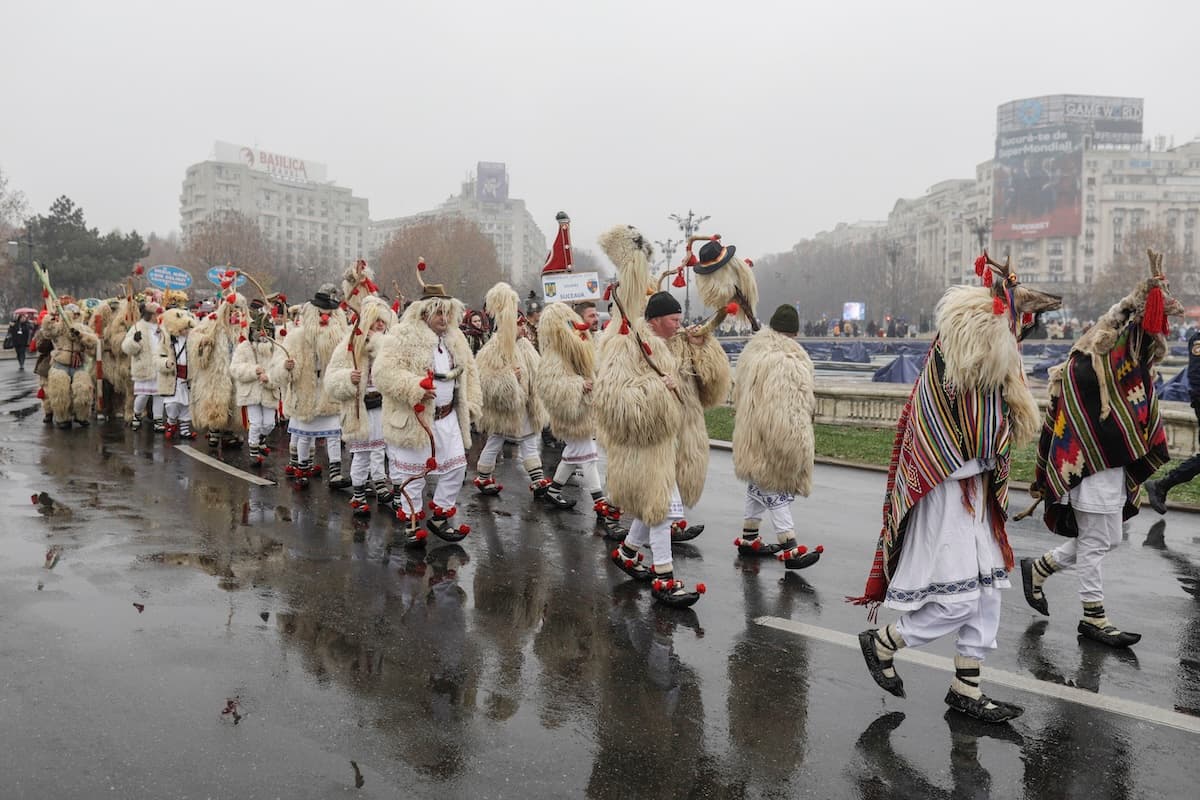
Traditional caroling can get loud. Many carolers carry bells, drums, or whips to "chase away evil spirits." Some dress in masks representing animals like bears, goats, or horses. In rural areas, these performances are often more elaborate, with full costumes, dancing, and staged rituals. Masked groups usually appear around New Year's Eve as well.
One of the most impressive winter customs on Christmas and New Year's is the Bear's Dance, preserved mainly in Moldova and Bucovina. Young men dress in heavy bear costumes, led by drummers and characters with specific roles. The performance shows the symbolic death and rebirth of the bear - an image of the old year ending and a new one beginning.
Another famous tradition is Capra, or The Goat. A performer wears a colorful goat costume with a wooden mouth that snaps open and shut. The goat "dances" through the village, accompanied by singers and musicians who try to startle the hosts. In many villages, the Bear and the Goat appear together in lively, noisy groups.
Food is another major part of Romanian Christmas. Some families, especially in rural areas, still follow the custom of slaughtering a pig on December 20, known as Ignat Day. Pork becomes the centerpiece of most Christmas meals: sausages, steaks, piftie (meat in gelatin), and soups are all staples.
No holiday table is complete without sarmale. These cabbage rolls filled with minced meat are served with sour cream, hot peppers, or garlic - depending on family tradition.
For dessert, Romanians enjoy cozonac, a sweet bread often filled with cocoa, walnuts, or Turkish delight. And for a toast, many prefer țuica or pălincă, the country's strong fruit brandy.
Many households cook their festive dishes on Christmas Eve, while others finish their holiday shopping, but some preparations can start up to a week before.
In the evening, tradition says not to throw away the garbage, as it may bring misfortune. Chimneys are cleaned, and ashes are spread on vineyards to ensure a good harvest. Children return home with small gifts or money earned from caroling and wait eagerly for Santa Claus.
For Romanians, Christmas is a celebration of peace, joy, and togetherness. Families gather after church services, share a festive meal, and keep alive the traditions passed down through generations.
Crǎciun fericit!
Merry Christmas!
newsroom@romania-insider.com
(Opening photo: carolers in traditional costumes; by Cristina Alexe Pfa Alexe Cristina/Dreamstime.com