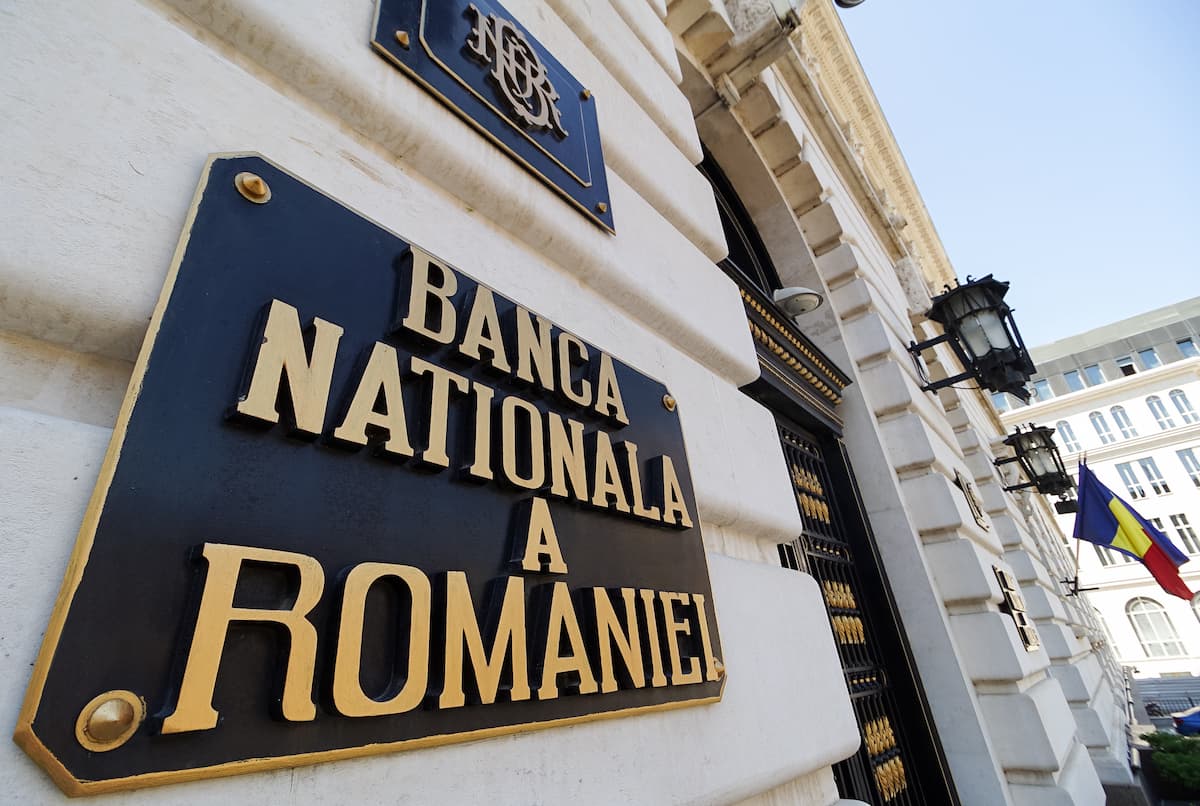
Romania’s central bank spends up to EUR 2 bln to steady RON amid political turmoil

05 May 2026

Romania’s central bank is estimated to have spent between EUR 1.5 billion and EUR 2 billion in April to stabilise the local currency RON and manage capital outflows triggered by mounting political uncertainty, Economica.net reported, citing calculations based on official reserve data published by the National Bank of Romania (BNR). The interventions must have continued during the first days of May, when the local currency witnessed further weakening to record lows.

The bulk of the intervention in April appears to have been concentrated at the end of the month, when foreign investors reportedly reduced exposure to Romanian government bonds and equities. Pressure on the currency intensified sharply in the final days of April, coinciding with the announcement of a no-confidence motion against the government, which unsettled markets.

BNR data showed foreign exchange reserves fell by EUR 2.2 billion over the month to EUR 64.8 billion as of April 30. During this period, inflows totalled about EUR 1.8 billion, while nearly EUR 4 billion exited reserves. External debt repayments accounted for just EUR 365 million, indicating that most of the outflows were linked to market operations rather than scheduled obligations.

For most of April, the exchange rate remained relatively stable, suggesting only limited central bank activity, estimated at around EUR 300 million. The situation shifted abruptly in the final two days, when the official rate weakened from RON 5.1004 to EUR 1 on April 29 to RON 5.1417 on April 30, while interbank trades briefly exceeded RON 5.18–5.20.

These movements point to heavy intervention by BNR in a short time frame, likely aimed at preventing a disorderly depreciation rather than defending a specific level. The scale and timing of the estimated interventions highlight the sensitivity of Romania’s financial markets to political risk, particularly when combined with already fragile investor sentiment.

While reserves remain relatively robust, the episode signals that sustained instability could translate quickly into financial pressure, forcing the central bank to balance currency stability against the depletion of its foreign exchange buffers.

iulian@romania-insider.com

(Photo source: Lcva/Dreamstime.com)

Normal

Romania’s central bank spends up to EUR 2 bln to steady RON amid political turmoil

05 May 2026

Romania’s central bank is estimated to have spent between EUR 1.5 billion and EUR 2 billion in April to stabilise the local currency RON and manage capital outflows triggered by mounting political uncertainty, Economica.net reported, citing calculations based on official reserve data published by the National Bank of Romania (BNR). The interventions must have continued during the first days of May, when the local currency witnessed further weakening to record lows.

The bulk of the intervention in April appears to have been concentrated at the end of the month, when foreign investors reportedly reduced exposure to Romanian government bonds and equities. Pressure on the currency intensified sharply in the final days of April, coinciding with the announcement of a no-confidence motion against the government, which unsettled markets.

BNR data showed foreign exchange reserves fell by EUR 2.2 billion over the month to EUR 64.8 billion as of April 30. During this period, inflows totalled about EUR 1.8 billion, while nearly EUR 4 billion exited reserves. External debt repayments accounted for just EUR 365 million, indicating that most of the outflows were linked to market operations rather than scheduled obligations.

For most of April, the exchange rate remained relatively stable, suggesting only limited central bank activity, estimated at around EUR 300 million. The situation shifted abruptly in the final two days, when the official rate weakened from RON 5.1004 to EUR 1 on April 29 to RON 5.1417 on April 30, while interbank trades briefly exceeded RON 5.18–5.20.

These movements point to heavy intervention by BNR in a short time frame, likely aimed at preventing a disorderly depreciation rather than defending a specific level. The scale and timing of the estimated interventions highlight the sensitivity of Romania’s financial markets to political risk, particularly when combined with already fragile investor sentiment.

While reserves remain relatively robust, the episode signals that sustained instability could translate quickly into financial pressure, forcing the central bank to balance currency stability against the depletion of its foreign exchange buffers.

iulian@romania-insider.com

(Photo source: Lcva/Dreamstime.com)

Normal

Romania Insider Free Newsletters