American scientists study extreme microbial life in Romania’s Buzău Land UNESCO Geopark

11 December 2025

The Buzău Land UNESCO Global Geopark in Romania has become a “living laboratory” this week as a team of American researchers arrived to study microorganisms capable of surviving in extreme environments. The scientists, part of the interdisciplinary research organisation The Two Frontiers Project, are examining methane seeps, sulfur and petroleum springs, saline sources, and other unusual geological features that mirror conditions on other planets.

The project’s long-term goal is to contribute to climate crisis solutions by studying microorganisms capable of capturing methane and carbon dioxide, while also supporting research into sustaining life in environments beyond Earth, according to the press release.

The current study, funded by Seed Health, builds on earlier research conducted this summer in the Tyrrhenian Sea, where the team analysed microbial communities near mud volcanoes. 

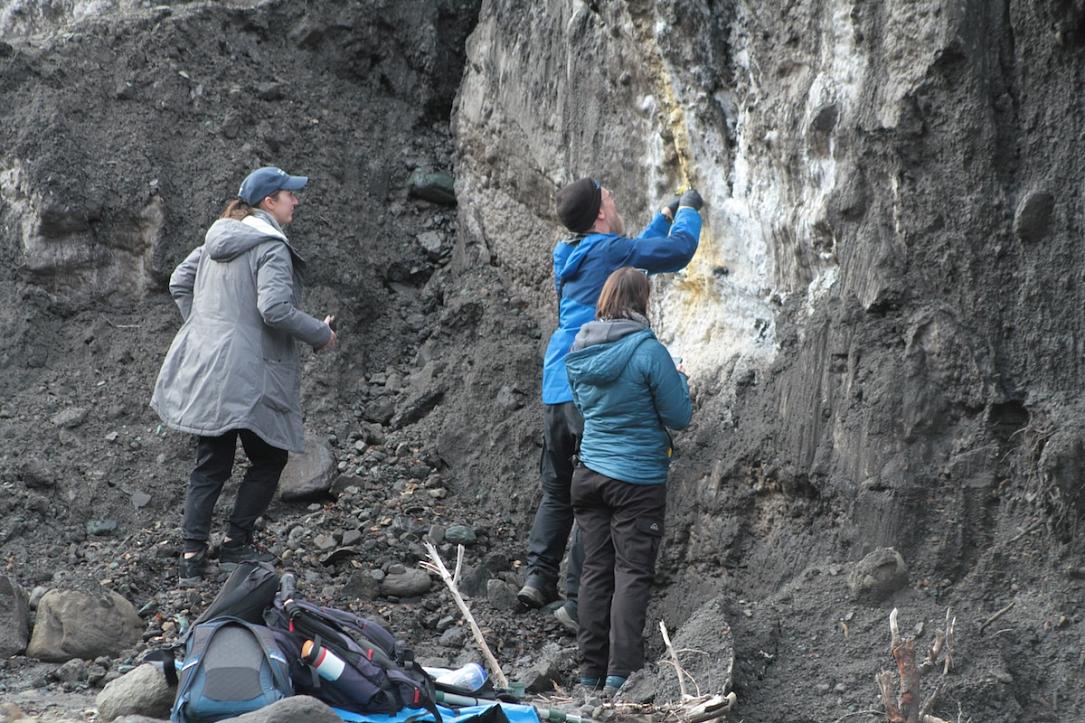
The group now in Romania includes four researchers and a documentary photographer. They will collect samples from the Mud Volcanoes, the Salt River Valley, and sites near the village of Colți, processing all materials in a mobile laboratory installed at the GeoGate visitor centre, the Geopark’s headquarters.

“Microbes have an extraordinary ability to reshape the environments they live in to ensure their survival,” explained Braden Tierney, microbiologist with a Ph.D. from Harvard Medical School and the Executive Director of the Two Frontiers Project. 

“They thrive in some of the most inhospitable places on Earth, from extreme cold or high pressure to areas with high salinity, where they manage to use compounds we would consider useless or even toxic. In doing so, they constantly rewrite the rules of survival,” he added.

Only a few places on Earth contain so much environmental diversity as the Buzău Geopark, he noted, expressing confidence that the region will reveal unique microbial communities.

In turn, Răzvan-Gabriel Popa, General Manager of the Buzău Land UNESCO Global Geopark, said the collaboration highlights the region’s growing scientific relevance. “We’re pleased that the experts from Two Frontiers have chosen to work here, in a territory with rare and highly relevant natural conditions.”

Popa added that interest from geologists, biologists, and other specialists has increased since Buzău Land received its UNESCO designation in 2022, and he expects the area’s distinct features to support discoveries with global impact.

irina.marica@romania-insider.com

(Photo source: press release)

Normal

American scientists study extreme microbial life in Romania’s Buzău Land UNESCO Geopark
11 December 2025

The Buzău Land UNESCO Global Geopark in Romania has become a “living laboratory” this week as a team of American researchers arrived to study microorganisms capable of surviving in extreme environments. The scientists, part of the interdisciplinary research organisation The Two Frontiers Project, are examining methane seeps, sulfur and petroleum springs, saline sources, and other unusual geological features that mirror conditions on other planets.

The project’s long-term goal is to contribute to climate crisis solutions by studying microorganisms capable of capturing methane and carbon dioxide, while also supporting research into sustaining life in environments beyond Earth, according to the press release.

The current study, funded by Seed Health, builds on earlier research conducted this summer in the Tyrrhenian Sea, where the team analysed microbial communities near mud volcanoes. 

The group now in Romania includes four researchers and a documentary photographer. They will collect samples from the Mud Volcanoes, the Salt River Valley, and sites near the village of Colți, processing all materials in a mobile laboratory installed at the GeoGate visitor centre, the Geopark’s headquarters.

“Microbes have an extraordinary ability to reshape the environments they live in to ensure their survival,” explained Braden Tierney, microbiologist with a Ph.D. from Harvard Medical School and the Executive Director of the Two Frontiers Project. 

“They thrive in some of the most inhospitable places on Earth, from extreme cold or high pressure to areas with high salinity, where they manage to use compounds we would consider useless or even toxic. In doing so, they constantly rewrite the rules of survival,” he added.

Only a few places on Earth contain so much environmental diversity as the Buzău Geopark, he noted, expressing confidence that the region will reveal unique microbial communities.

In turn, Răzvan-Gabriel Popa, General Manager of the Buzău Land UNESCO Global Geopark, said the collaboration highlights the region’s growing scientific relevance. “We’re pleased that the experts from Two Frontiers have chosen to work here, in a territory with rare and highly relevant natural conditions.”

Popa added that interest from geologists, biologists, and other specialists has increased since Buzău Land received its UNESCO designation in 2022, and he expects the area’s distinct features to support discoveries with global impact.

irina.marica@romania-insider.com

(Photo source: press release)
Normal

Romania Insider Free Newsletters