National University of Arts in Bucharest opens its collection to the public

30 June 2026

The National University of Arts (UNArte) in Bucharest is opening its Pinacotheca to the public beginning July 1.

The opening is in line with a vision outlined since the founding of the educational institution 162 years ago, and is part of a wider project to expand and refurbish the UNArte headquarters.

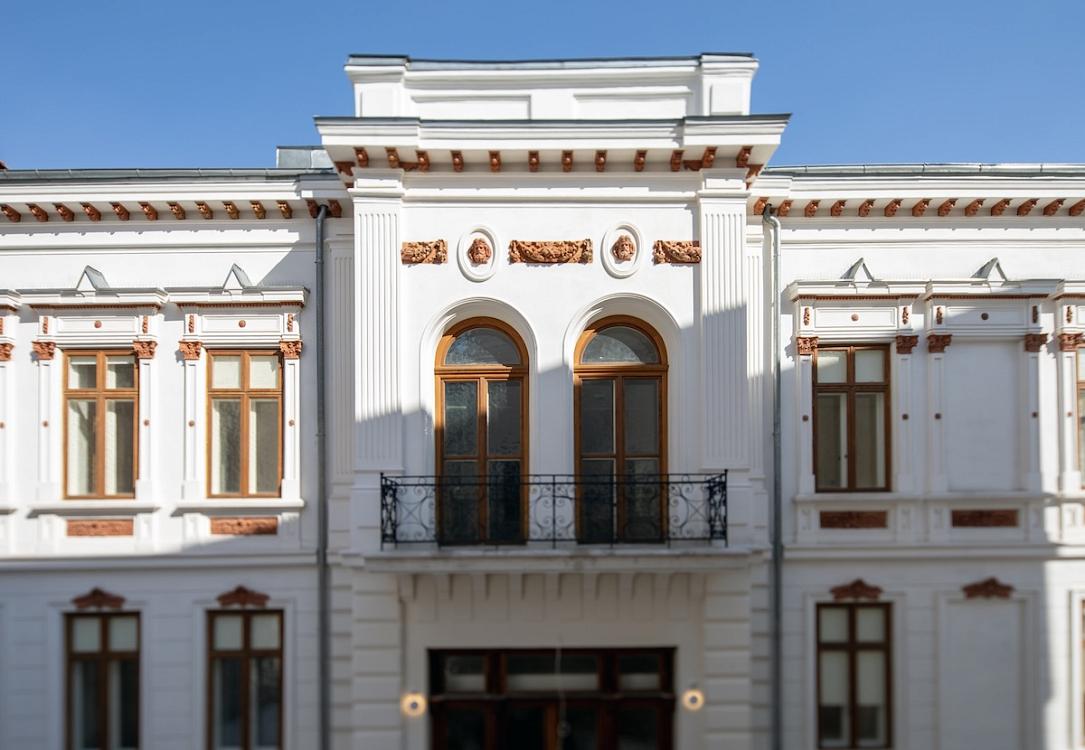
The Pinacotheca is housed in the renovated Scarlat‐Ghica (Robescu) House, in the vicinity of the Saint Joseph Cathedral. Alongside its art collection, UNArte has also reopened its revamped Library, which houses various historical documents and more than 60,000 volumes on visual arts and culture.

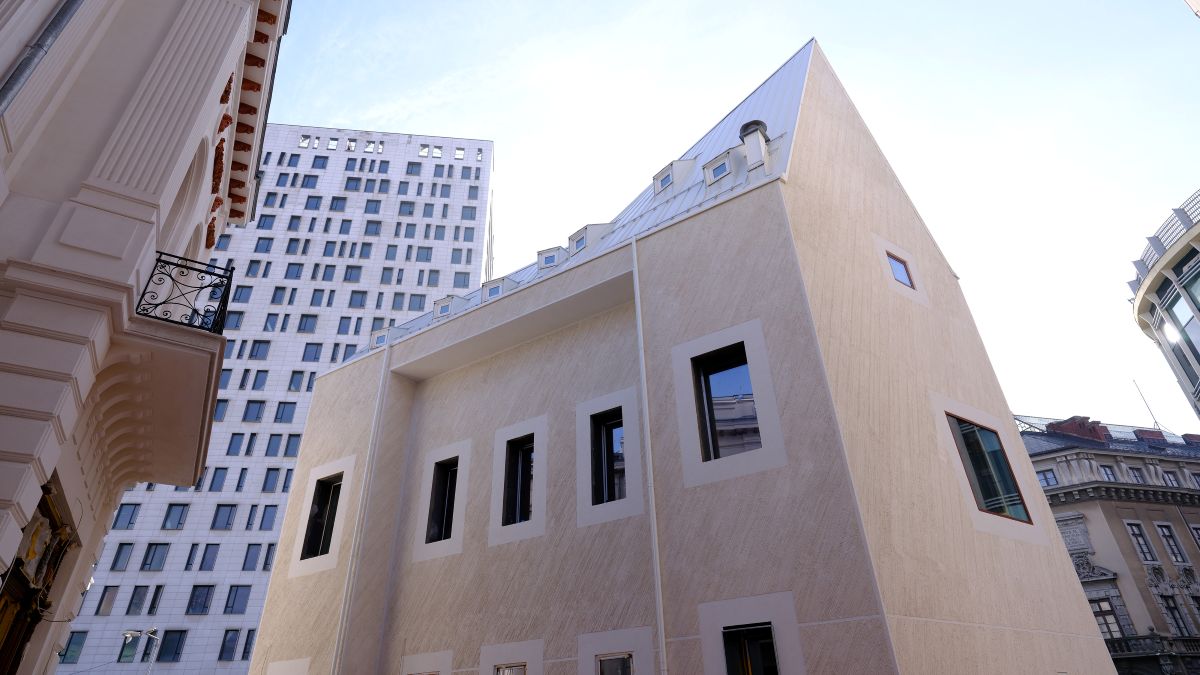
The opening marks the completion of the initial phase of a project that began in 2008, when ADN Birou de Arhitectură was awarded the First Prize in a competition covering the extension and rehabilitation of UNArte. UNArte organized the competition in collaboration with the Romanian Order of Architects. The work completed so far focuses on the transformation of the existing buildings into new cultural and educational spaces. An extension will be developed in a future phase.

.
The UNArte Library

“An art university's gallery is the hallmark of its field, academic programs, and artistic heritage. In our case, it reflects a tradition of more than 160 years, which we celebrate. The Pinacotheca and the Library are fundamental components of the academic environment, reflecting a leading European school, the largest university of art and design in the country, that has seen approximately 90% of the artists represented in the national gallery,” professor Cătălin Bălescu, the rector of UNArte, said.

.
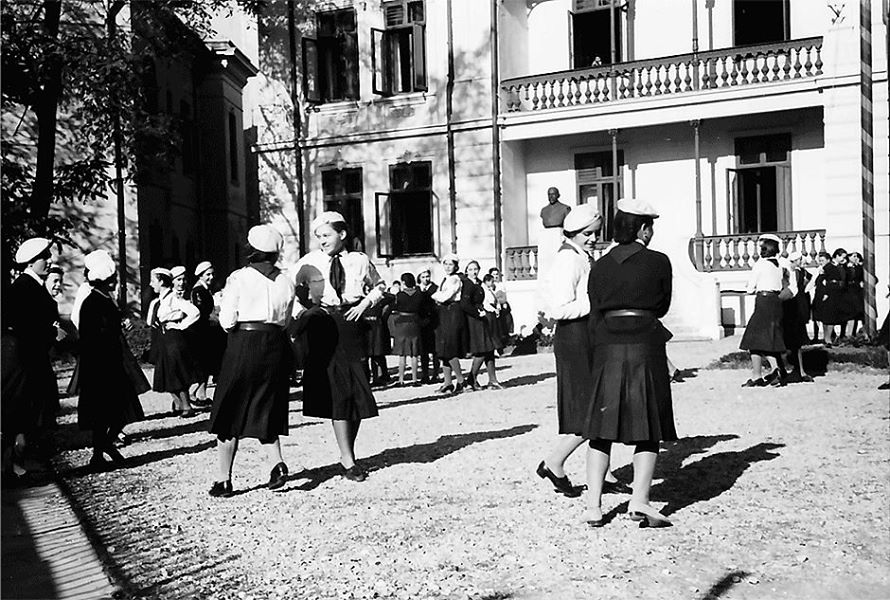
The Robescu House in 1939 Photo by Willy Pragher 

What is on view

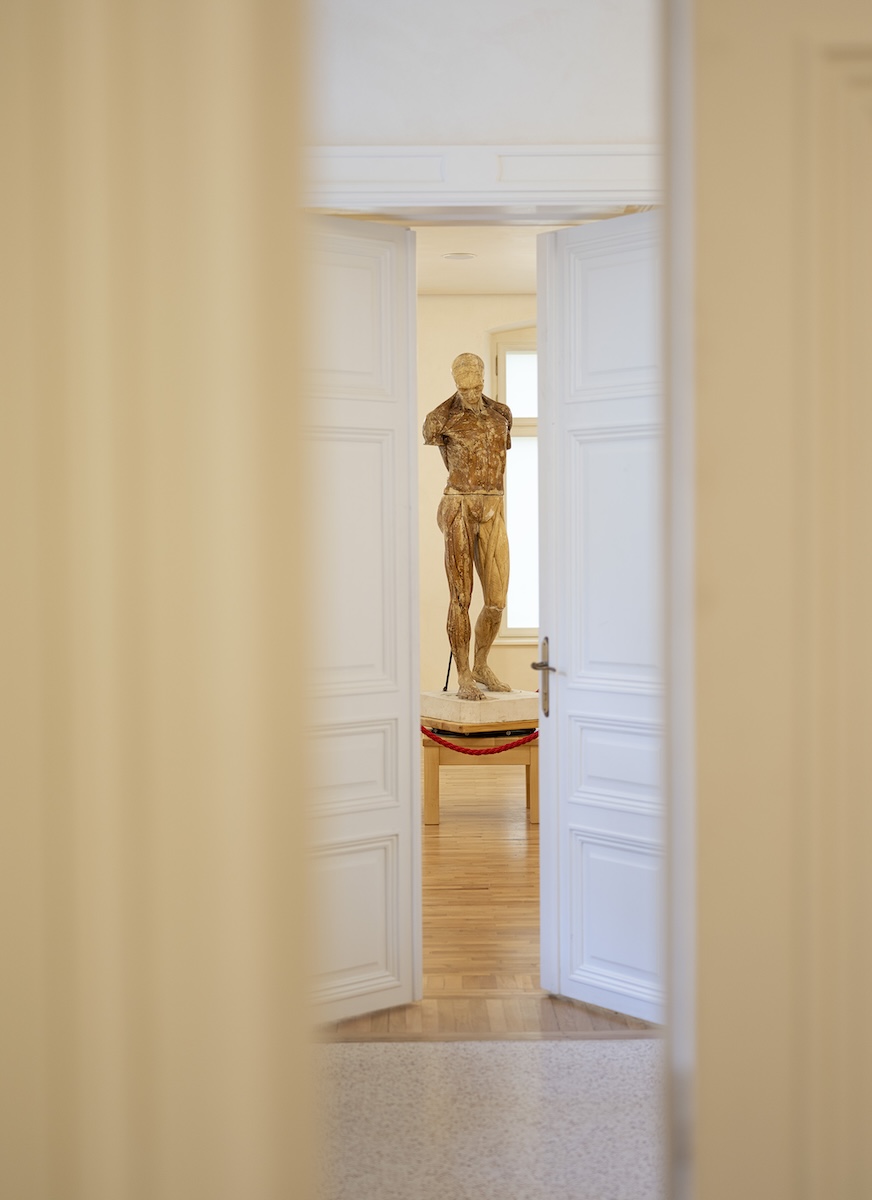
The Pinacotheca will be a permanent exhibition space dedicated to the university’s collection, covering paintings and sculptures, historical engravings, drawings, and paintings. These include 19th-century academic drawings, sculptural pieces from the Kalinderu Collection, the group portrait of Ștefan Luchian’s class by Alexandru Bănulescu, and works by key figures of Romanian art. A central piece of the collection is the Écorché by Constantin Brâncuși and Dr. Dimitrie Gerota. They are displayed on the ground level.

The upper floor of the venue hosts a temporary contemporary art exhibition with works by artists teaching at UNArte. There, the institution plans to host in the future exhibitions of video art, photography, and other media.

Among the documentary highlights in the library are the academic records of personalities such as Constantin Brâncuși, Ștefan Luchian, Victor Brauner, and Sofian Boghiu.

The principle guiding the entire display was a curatorial vision based on the criterion of dynamism, UNArte lecturer Luigi Bambulea explains.

“It is an extremely versatile gallery, reflecting the work of successive generations of professors and graduates of the university. It also includes works by major artists who were not members of our academic community but whose works were donated to us.”

Artists who are part of the local art history’s canon will be displayed for longer, while recent generations will be featured in temporary exhibitions.

“Artists belonging to what we might call the classical period of Romanian art will remain on permanent or long-term display, while works by more recent generations of professors and alumni, many of whom are still active today, will be presented on a rotating basis. […] In this way, the exhibition remains dynamic and continually renewed. This principle of rotation allows us to make the fullest possible use of our exhibition space by regularly drawing from our collections, particularly the modern and contemporary holdings. It also enables us to present the collection in an equitable manner,” he said.

Different artistic approaches and creative periods are displayed on site.

“Another organizing principle of the collection is the dialogue between different artistic languages and media. More specifically, I’m referring to diverse artistic disciplines and stylistic approaches. The works explore different aspects of reality, employ distinct creative methods, and originate from different historical periods or draw inspiration from models belonging to different eras,” Bambulea explains.

“Some works clearly reference classical antiquity: Greek, Roman, or Hellenistic traditions. Others belong to the Neoclassical tradition, look to the Renaissance and the art of classical antiquity. Alongside these are works rooted in modernity, particularly the great modernist tradition of the late nineteenth and twentieth centuries, as well as more recent works created during the second half of the twentieth century and after 2000.”

.
The Écorché 

Aesthetics and education

The selection on view also presents works that have primarily an educational rather than aesthetic relevance, the lecturer says.

“Visitors should keep this in mind and not judge the works solely by the gratification they provide. They will often see works that serve a different purpose: they clearly illustrate to students a particular style, artistic method, compositional approach, or aspect of artistic anatomy. A work that may not immediately stand out for its aesthetic impact can be a very good lesson in perspective, technique, and so on.”

The UNArte Pinacotheca (G-ral C-tin Budișteanu 19 St) is open to the public beginning June 1. Access is free.

*The quotes were recorded in Romanian and translated by Romania Insider.

(Photos: UNArte)

simona@romania-insider.com

Normal

National University of Arts in Bucharest opens its collection to the public
30 June 2026

The National University of Arts (UNArte) in Bucharest is opening its Pinacotheca to the public beginning July 1.

The opening is in line with a vision outlined since the founding of the educational institution 162 years ago, and is part of a wider project to expand and refurbish the UNArte headquarters.

The Pinacotheca is housed in the renovated Scarlat‐Ghica (Robescu) House, in the vicinity of the Saint Joseph Cathedral. Alongside its art collection, UNArte has also reopened its revamped Library, which houses various historical documents and more than 60,000 volumes on visual arts and culture.

The opening marks the completion of the initial phase of a project that began in 2008, when ADN Birou de Arhitectură was awarded the First Prize in a competition covering the extension and rehabilitation of UNArte. UNArte organized the competition in collaboration with the Romanian Order of Architects. The work completed so far focuses on the transformation of the existing buildings into new cultural and educational spaces. An extension will be developed in a future phase.
.
The UNArte Library

“An art university's gallery is the hallmark of its field, academic programs, and artistic heritage. In our case, it reflects a tradition of more than 160 years, which we celebrate. The Pinacotheca and the Library are fundamental components of the academic environment, reflecting a leading European school, the largest university of art and design in the country, that has seen approximately 90% of the artists represented in the national gallery,” professor Cătălin Bălescu, the rector of UNArte, said.
.
The Robescu House in 1939 Photo by Willy Pragher 

What is on view

The Pinacotheca will be a permanent exhibition space dedicated to the university’s collection, covering paintings and sculptures, historical engravings, drawings, and paintings. These include 19th-century academic drawings, sculptural pieces from the Kalinderu Collection, the group portrait of Ștefan Luchian’s class by Alexandru Bănulescu, and works by key figures of Romanian art. A central piece of the collection is the Écorché by Constantin Brâncuși and Dr. Dimitrie Gerota. They are displayed on the ground level.

The upper floor of the venue hosts a temporary contemporary art exhibition with works by artists teaching at UNArte. There, the institution plans to host in the future exhibitions of video art, photography, and other media.

Among the documentary highlights in the library are the academic records of personalities such as Constantin Brâncuși, Ștefan Luchian, Victor Brauner, and Sofian Boghiu.

The principle guiding the entire display was a curatorial vision based on the criterion of dynamism, UNArte lecturer Luigi Bambulea explains.

“It is an extremely versatile gallery, reflecting the work of successive generations of professors and graduates of the university. It also includes works by major artists who were not members of our academic community but whose works were donated to us.”

Artists who are part of the local art history’s canon will be displayed for longer, while recent generations will be featured in temporary exhibitions.

“Artists belonging to what we might call the classical period of Romanian art will remain on permanent or long-term display, while works by more recent generations of professors and alumni, many of whom are still active today, will be presented on a rotating basis. […] In this way, the exhibition remains dynamic and continually renewed. This principle of rotation allows us to make the fullest possible use of our exhibition space by regularly drawing from our collections, particularly the modern and contemporary holdings. It also enables us to present the collection in an equitable manner,” he said.

Different artistic approaches and creative periods are displayed on site.

“Another organizing principle of the collection is the dialogue between different artistic languages and media. More specifically, I’m referring to diverse artistic disciplines and stylistic approaches. The works explore different aspects of reality, employ distinct creative methods, and originate from different historical periods or draw inspiration from models belonging to different eras,” Bambulea explains.

“Some works clearly reference classical antiquity: Greek, Roman, or Hellenistic traditions. Others belong to the Neoclassical tradition, look to the Renaissance and the art of classical antiquity. Alongside these are works rooted in modernity, particularly the great modernist tradition of the late nineteenth and twentieth centuries, as well as more recent works created during the second half of the twentieth century and after 2000.”
.
The Écorché 

Aesthetics and education

The selection on view also presents works that have primarily an educational rather than aesthetic relevance, the lecturer says.

“Visitors should keep this in mind and not judge the works solely by the gratification they provide. They will often see works that serve a different purpose: they clearly illustrate to students a particular style, artistic method, compositional approach, or aspect of artistic anatomy. A work that may not immediately stand out for its aesthetic impact can be a very good lesson in perspective, technique, and so on.”

The UNArte Pinacotheca (G-ral C-tin Budișteanu 19 St) is open to the public beginning June 1. Access is free.

*The quotes were recorded in Romanian and translated by Romania Insider.

(Photos: UNArte)

simona@romania-insider.com

Normal

Romania Insider Free Newsletters