OECD urges Romania to reduce deficit, enact reforms in new pre-accession report
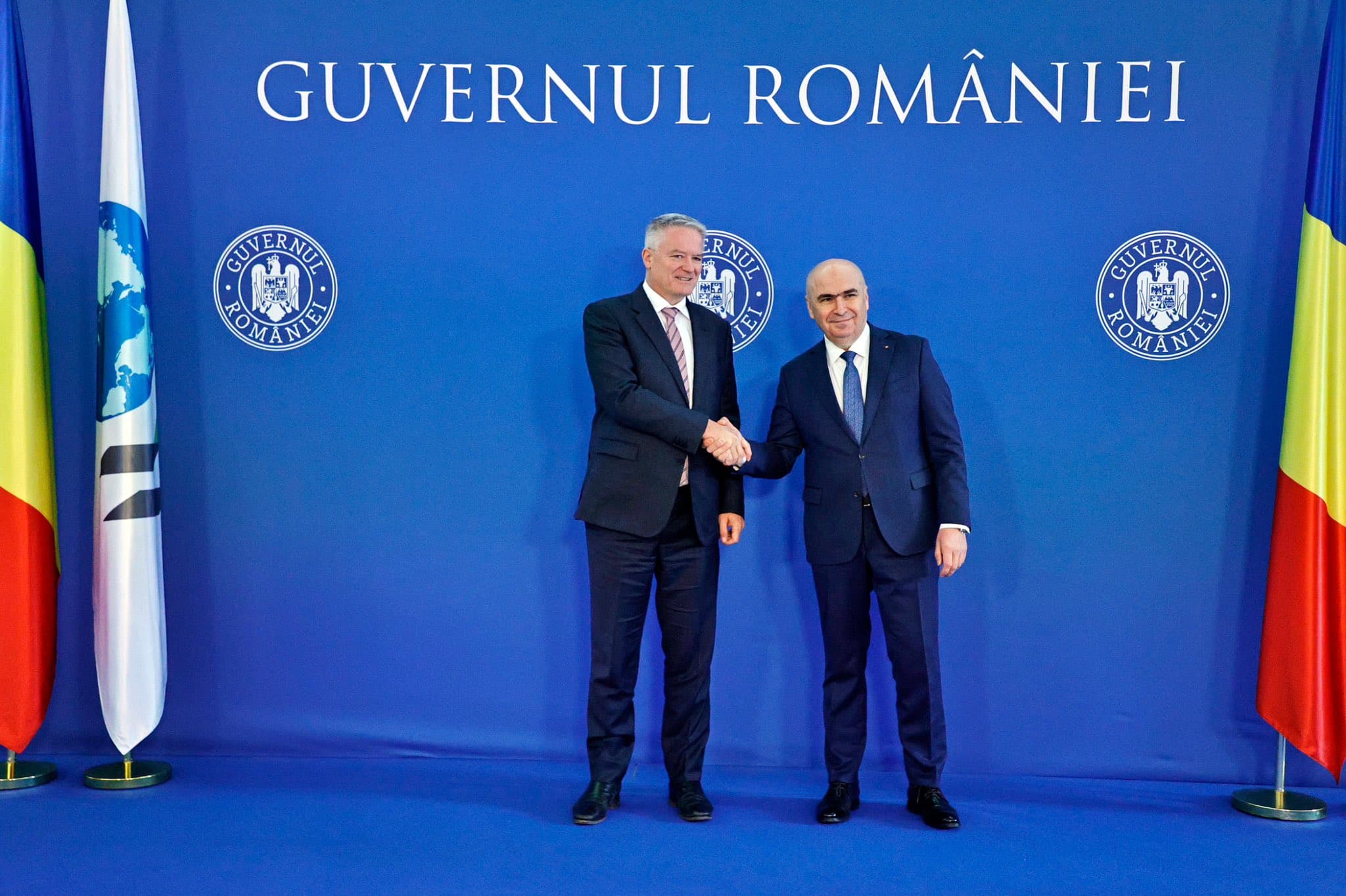
The Organization for Economic Cooperation and Development (OECD) released a report regarding Romania and its path to becoming a member on Monday, March 16, in an event attended by the organization's secretary general, Mathias Cormann, and prime minister Ilie Bolojan, among other officials.
The report underscores the need to improve the long-term sustainability of Romania’s public finances. It argues that the government should increase the efficiency of public spending, broaden the tax base, and improve tax compliance.
Furthermore, the OECD report shows that the recent pension reform, particularly through raising the retirement age for women, limiting special pensions, and introducing new indexing rules, is a positive step toward improving the sustainability of the pension system and encouraging labor force participation.
At the same time, Romania still faces increasing pressure to raise spending on health, education, social assistance, and innovation to support inclusive growth. In addition, public sector wages represent an increasing share of government spending, which requires stricter control.
Overall, the OECD Economic Survey of Romania projects a GDP growth of 1.0% this year before rising to 2.2% next year, after an increase of 0.7% last year. Inflation is expected to remain elevated at 6.6% in 2026 before declining to 3.0% in 2027 as the impact of past tax measures fades.
OECD economic studies are carried out every two years for member and partner states. They track the evolution of the economy, identify the main challenges, and provide concrete recommendations for public policies.
The report for Romania includes recommendations in four main areas: macroeconomic developments and economic policies, social policies, adaptation to climate change, and increasing the competitiveness of the economy. It also features measures to mitigate climate change directly. Key priorities include strengthening carbon pricing, expanding low-carbon electricity generation while gradually phasing out fossil fuels, greening transport through higher taxes on fuels and vehicles, and improving energy efficiency in urban mobility and buildings.
When it comes to competitiveness, the document shows that Romania has made significant progress integrating into the global market in recent decades; however, to maintain this momentum, it must address persistent structural challenges, particularly in innovation, digitalization, education, and business dynamism, which continue to limit productivity and economic potential.
"I had the opportunity to meet with president Dan, prime minister Bolojan, and with members of the government to discuss the final stages of Romania’s accession process to the OECD, and I also signed an agreement regarding OECD privileges in Romania, in accordance with the privileges that other member states grant to the OECD for the proper functioning of the organization," OECD secretary-general Mathias Cormann said, presenting the survey in Bucharest alongside prime minister Ilie Bolojan.
"In all our technical committees, the evaluation process has been completed, and significant progress has been recorded, especially over the last six months, regarding adoption, anti-corruption, fiscal and economic issues. Our team particularly appreciated the enthusiasm and commitment shown by Romanian leaders and political actors in support of the OECD accession process. I am convinced that Romania’s accession to the OECD will bring long-term benefits for Romanians, greater investments, better jobs, and stronger institutions," he added.
“Romania has achieved high income growth, driven by significant productivity gains. Looking ahead, strong fiscal discipline needs to remain a priority to address persistent inflation and rising spending pressures from population ageing," the OECD representative concluded.
Romania opened accession negotiations with the OECD in 2022. To become a member, the country must pass a series of evaluations regarding its policies and practices in public policy.
The prime minister stressed the importance of Romania's accession to the OECD. “Nearly two decades after two defining moments, accession to the European Union and NATO, Romania aims to reach a new goal in 2026: accession to the OECD,” he declared.
He also talked about the report. “The economic study dedicated to Romania, carried out by the OECD, provides important recommendations for reforms in the fiscal and budgetary domain, for the labor market, and for increasing the competitiveness of the economy; it is a reference point for economic stability and for the modernization of the state," stated Ilie Bolojan during the event.
He emphasized that Romania’s economic growth model must be based more on competitiveness and productivity.
“After a deficit of approximately 8.7% of GDP in 2024, 2025 ended with a deficit of 7.7%, below the 8.4% level estimated by the European Commission. We continue the reforms started last year, and the 2026 budget project is realistic so that we can reach the deficit target of 6.2% by the end of this year,” Bolojan said.
Aided by European funds and major public investments, Romania withstood the effects of the war in Ukraine, the head of the executive said. However, the country must take urgent steps to bring active people into the economy and face demographic pressures. At the same time, increasing the competitiveness of the economy remains a priority, he added.
Romanian president Nicușor Dan also met with the OECD secretary-general during his visit. After the talks, Dan referred to the OECD report in a post on social media and said that the country plans to join the organization this year.
“Membership in the organization that brings together the most developed economies globally will represent major progress for Romania, as it means attracting foreign investments, obtaining more favorable financing on international markets, modernizing public administration, and drafting policies based on reliable data. The OECD can provide Romania with technical assistance in drafting key policies, such as improving tax collection or reforming state-owned companies,” the president argued.
The Organization for Economic Cooperation and Development is an intergovernmental organization with 38 member countries, founded in 1961 to stimulate economic progress. Romania is in the process of joining the OECD.
(Photo source: Ilie Bolojan on X)