Education without borders: how international schooling shapes future careers
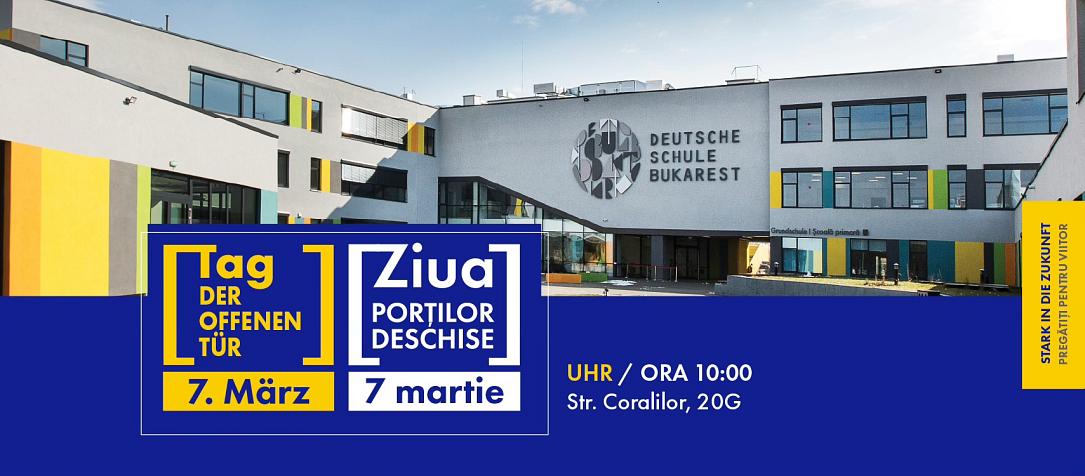
Open Day at Internationale Deutsche Schule Bukarest on 7 March, starting at 10:00
International schooling is increasingly shaped by structured cooperation between national education systems rather than by isolated local models. For families and institutions operating across borders, continuity of curriculum and assessment has become a defining criterion when evaluating educational pathways.
Within this framework, Internationale Deutsche Schule Bukarest belongs to the network of German international schools that follow the official German education system. Operating under shared academic standards and a common curricular framework, these schools allow students to continue their education within the same system when moving between countries, without discontinuities in learning or assessment.
This network-based model prepares students not only for examinations within a single national system, but for academic and professional pathways that may extend across multiple countries and labor markets.
From curriculum to career pathways
The German educational model is designed around continuity and transferability — two factors that have become increasingly relevant in a globalized academic and professional landscape. Within this framework, students follow a clearly structured academic trajectory that culminates in the Deutsches Internationales Abitur (DIA), an international university-qualifying diploma, placed at the same academic level as other globally recognized pre-university final examinations, including the International Baccalaureate and the Baccalauréat offered by international French schools.
The DIA assessment framework combines continuous academic performance with centralized examinations and is designed to evaluate advanced subject knowledge, high-level language proficiency, and structured analytical thinking across disciplines. Grades obtained during the final two years of study form an integral part of the final results, alongside written and oral examinations conducted over several months. The written component includes compulsory examinations in German and English, together with a scientific subject such as mathematics, chemistry, or physics. This is followed by oral examinations, as well as an interdisciplinary case-study project requiring students to develop, structure, and conclude complex arguments across subject areas. The diploma is awarded only to candidates who accumulate minimum 300 points from maximum 900 across all assessed components.
Rather than anchoring graduates to a single national system, this structure allows for academic progression across borders. Access to higher education in Europe, the United Kingdom, North America, and other international hubs is possible without equivalency procedures or transitional programs. In practical terms, educational decisions made early on do not restrict future academic or professional options.
Over time, this structural flexibility tends to translate into broader career mobility, as graduates move more easily between countries, sectors, and professional environments.
Conclusion
The German international education model illustrates how educational systems can function as long-term investments in human capital. By combining academic rigor, continuous assessment, and international recognition, it creates a framework that prepares students for complexity rather than predictability.
In a global economy where professional trajectories increasingly cross borders, sectors, and disciplines, the value of such an education lies in its durability. It equips graduates not only with knowledge, but with the intellectual structure and adaptability required to navigate changing academic and professional environments over time.
Open Day
Families and professionals interested in gaining a closer understanding of this educational model are invited to attend the Open Day at Internationale Deutsche Schule Bukarest on 7 March, starting at 10:00. The event offers the opportunity to explore the campus, engage with the academic team, and gain direct insight into the structure and expectations of the German international education system.
*This is a press release.