Brâncuşi. The Syndrome: Bucharest exhibition traces sculptor’s influence in Romanian art
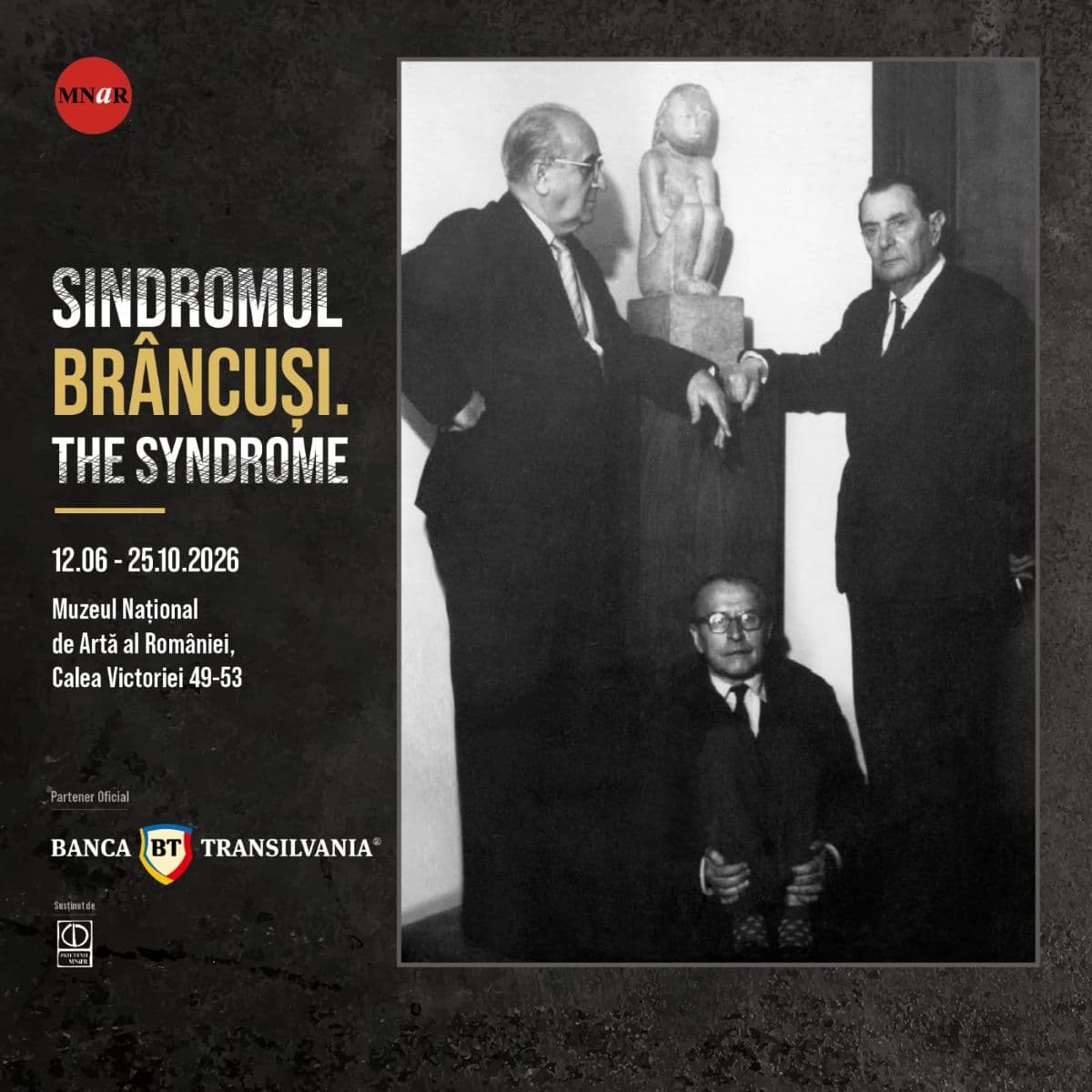
Brâncuşi. The Syndrome, an exhibition tracing the impact of Constantin Brâncuşi in local art, is set to open this week at the National Museum of Art of Romania (MNAR).
The show, marking the 150th anniversary of the birth of Brâncuși, is meant to offer the public a different perspective on the influence of his work. It examines the various forms of artistic discourse that have been constructed around both his work and his personality, from the interwar period to the present day.
On the one hand, the exhibition showcases the impactful and dominant influence of Brâncuși’s personality and oeuvre on modern and contemporary Romanian art. On the other hand, it explores how “the mythical figure of Brâncuși has been formed and propagated within Romania’s visual culture, becoming a national, cultural, and spiritual symbol.”
Visitors will be able to see, among other works, portraits of Brâncuși by M.H. Maxy, Theodor Pallady, and Milița Petrașcu; tribute works created by M.H. Maxy and Vasile Dobrian; sculptures by Milița Petrașcu, Irina Codreanu, Hans Mattis-Teutsch, Ion Irimescu, George Apostu, Ovidiu Maitec, and Vasile Gorduz; as well as contemporary reinterpretations of Brâncuși’s motifs, from Paul Neagu’s studies based on Bird in Space, Mademoiselle Pogany, and The Column, to works by Iosif Kiraly, Teodor Graur, Mircea Cantor, Vlad Nancă, Michele Bressan, and Dan Perjovschi.
Beginning in the 1990s, the phenomenon of “Brâncuși-mania” (Brâncușomania), which remained undiminished and even intensified with the political change, has been documented, analyzed, and critically examined by artists such as Iosif Kiraly, Teodor Graur, Dan Perjovschi, and Mircea Cantor.
The exhibition, curated by Judit Balint and Erwin Kessler, is open from June 12 to October 25.
At the same time, MNAR will host the exhibition The Museum of Museums, gathering more than 100 works from the collections of 16 museums in Romania, as well as from the permanent collections of the MNAR.
The exhibition, curated by Erwin Kessler, Emanuela Cernea, and Mălina Conțu, presents a map of masterpieces that visitors can discover throughout the country. “The curatorial project seeks to outline a national museum landscape with the potential to generate a significant impact on cultural tourism in Romania,” the organizers explain.
The exhibition is meant as a journey through diverse techniques, media, and historical periods, from Neolithic idols and ancient statues to painting and sculpture, manuscripts, liturgical objects, textiles, and embroideries.
Among the exhibition's highlights is the Glykon Snake, one of the most spectacular ancient sculptures preserved in Romanian museum collections, presented to the Bucharest public for the first time. Not seen since September 2024, following the closure of the Museum of National History and Archaeology in Constanța for renovation, the piece is deemed one of the exhibition's major attractions.
The exhibition showcases a group of prehistoric artefacts belonging to the Gumelnița Culture, “whose clay forms, strikingly modern in appearance, invite a fresh perspective on ancient art.”
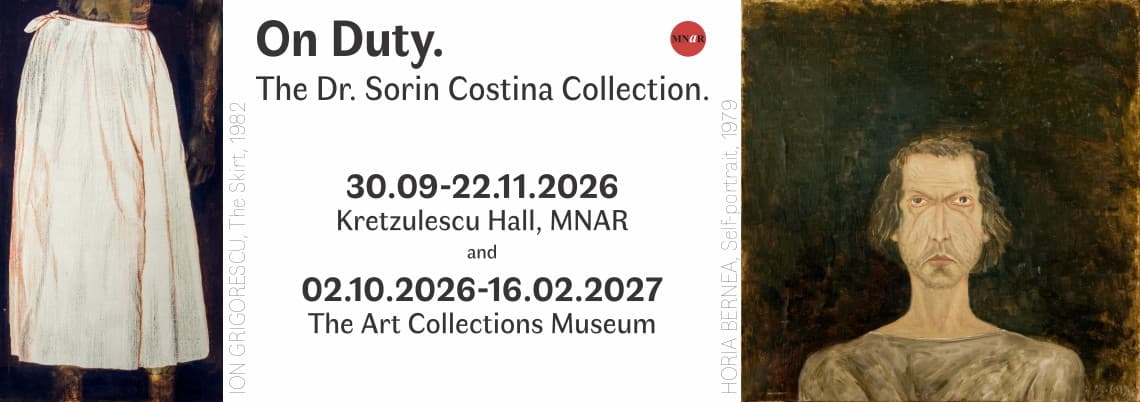
The public will also be able to discover rare manuscripts, medieval embroideries, icons, European painting and sculpture, modern Romanian art, and Asian art. Highlights include the Tetraevangelion of Gavril Uric; works by Rubens, Dürer, Mucha, Bonnard, Cézanne, Rodin, Bourdelle, Gustav Klimt, Camille Claudel, and Henry Moore; highlights of Romanian art by Nicolae Grigorescu, Ioan Andreescu, Ștefan Luchian, Theodor Pallady, Nicolae Tonitza, Marcel Iancu, Victor Brauner, Horia Bernea, and Corneliu Baba; as well as Japanese woodblock prints by Kitagawa Utamaro and Katsushika Hokusai, including the image The Great Wave off Kanagawa.
The exhibition is open from June 12 to October 4.
(Illustration: MNAR)
simona@romania-insider.com