



23 January 2026
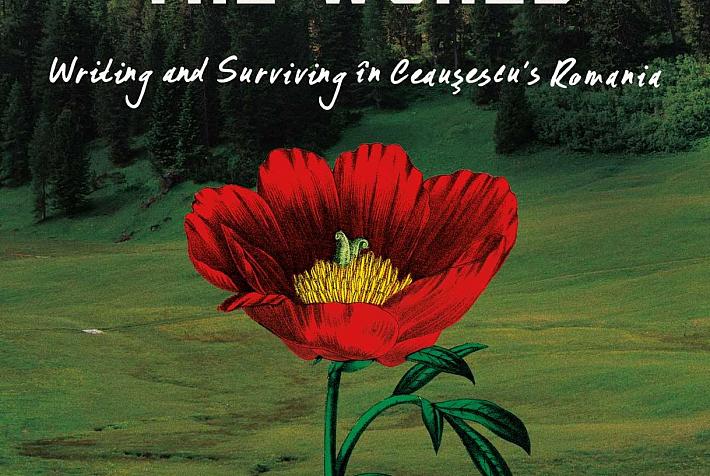
Herta Müller's The Village on the Edge of the World, a reflection on life behind the Iron Curtain, is due for release by...





n Romania in the 1960s and 1970s, Cioran was a mysterious, almost mythological, presence. One would hear that such a person existed, but it was impossible to read him. His French books were neither sold nor published in translation, and his Romanian books had disappeared without a trace. Although he had departed his homeland some ten years before the war and the communist takeover, he was as invisible as the most unspeakable, or un-nameable, of non-persons
Romanian writer Filip Florian will hold a reading session and present his debut novel at the International Literature Festival in Edinburgh on Thursday, August 19, according to Polirom publishing house.
Ben Lewis, who has won numerous international awards for his documentaries, and is also a television presenter and writer, who contributes regularly to “Prospect”, the “Evening Standard” and the “Sunday Telegraph”, has found and gathered “evidence that the jokes were linked to resistance not apathy. Communist jokes – albeit certain kinds – I now knew, accompanied the fall as well as the rise of Communism.”
This series of books explores the practice of thentieth-century Communism. Was the collapse inevitable? What actually happened in different parts of the world? And is there anything from that experience that can or should be rehabilitated? Why have so many heaven-stormers become submissive and gone over to the camp of reaction? With capitalism mired in a deep crisis, these questions become relevant once again.
 “Perhaps we should be in a revolutionary frame of mind all the time, never calming down, never admitting our personal...
They meet in the Posthuman Dada Guide, in the Dada spirit of self-contradiction. It is and it has always been foolish and self-destructive to lead a Dada life. . . . The Guide is an impractical handbook for practical living in our posthuman world, all by way of examining the imagined 1916 chess game between Tristan Tzara, the soul of Dada, and Lenin, who apparently gets to represent the Posthuman.
One of the early books, and for now, the first translated into English, of a wonderful Romanian writer, which was first published under the name “The Dream”- such a title as “Nostalgia” being unacceptable during Communism. The first edition also lacks an important short story, ”The Roulette Player”, for the same reasons of censorship. It also contains what is probably one of Cartarescu's best writings: REM.
 An image of the colorful and now vanished world of “Little Paris”, that was in fact closer to the Levant than many...
n Romania in the 1960s and 1970s, Cioran was a mysterious, almost mythological, presence. One would hear that such a person existed, but it was impossible to read him. His French books were neither sold nor published in translation, and his Romanian books had disappeared without a trace. Although he had departed his homeland some ten years before the war and the communist takeover, he was as invisible as the most unspeakable, or un-nameable, of non-persons
Romanian writer Filip Florian will hold a reading session and present his debut novel at the International Literature Festival in Edinburgh on Thursday, August 19, according to Polirom publishing house.
Ben Lewis, who has won numerous international awards for his documentaries, and is also a television presenter and writer, who contributes regularly to “Prospect”, the “Evening Standard” and the “Sunday Telegraph”, has found and gathered “evidence that the jokes were linked to resistance not apathy. Communist jokes – albeit certain kinds – I now knew, accompanied the fall as well as the rise of Communism.”
This series of books explores the practice of thentieth-century Communism. Was the collapse inevitable? What actually happened in different parts of the world? And is there anything from that experience that can or should be rehabilitated? Why have so many heaven-stormers become submissive and gone over to the camp of reaction? With capitalism mired in a deep crisis, these questions become relevant once again.
“Perhaps we should be in a revolutionary frame of mind all the time, never calming down, never admitting our personal...
They meet in the Posthuman Dada Guide, in the Dada spirit of self-contradiction. It is and it has always been foolish and self-destructive to lead a Dada life. . . . The Guide is an impractical handbook for practical living in our posthuman world, all by way of examining the imagined 1916 chess game between Tristan Tzara, the soul of Dada, and Lenin, who apparently gets to represent the Posthuman.
One of the early books, and for now, the first translated into English, of a wonderful Romanian writer, which was first published under the name “The Dream”- such a title as “Nostalgia” being unacceptable during Communism. The first edition also lacks an important short story, ”The Roulette Player”, for the same reasons of censorship. It also contains what is probably one of Cartarescu's best writings: REM.
An image of the colorful and now vanished world of “Little Paris”, that was in fact closer to the Levant than many...

 A teller of great stories and a natural-born storyteller, Blacker brings us Romania's never ending story, slowly but...