News from Companies

MerchantPro: Romania’s eCommerce market is set to reach €8.5 billion in 2026, under pressure from non-EU platforms, AI, and more cautious consumer behavior

19 March 2026

The expansion of global platforms is accelerating: in 2025, 1 in 4 Europeans shopped on Temu, while the platform reached 4.7 million monthly active users in Romania.

Romania’s eCommerce market reached approximately €8.1 billion in 2025 and could exceed €8.5 billion in 2026. However, growth is entering a more competitive and less predictable phase than in previous years. According to the MerchantPro eCommerce Insights 2026 report, inflation, pressure from international marketplaces, shifts in consumer behavior, and the growing impact of AI on product discovery and conversions are reshaping the rules of competition in the local online commerce sector.

MerchantPro’s analysis shows that the estimated market growth rate was around 6% in 2025, in a context where transaction volumes stagnated. For 2026, a 5% increase is expected, driven by more cautious consumption, declining consumer confidence, and structural transformations within the digital ecosystem.

Market growth this year could be supported by the increasing adoption of online shopping and the maturation of the customer experience offered by merchants, through investments in technology, personalization, and conversion optimization. At the same time, the introduction of taxes for non-EU platforms, both locally and at the European level, could reduce part of their cost-based competitive advantage.

On the other hand, risks remain significant: pressure on consumer budgets, socio-economic and political uncertainty, as well as the growing market share of external platforms may limit the pace of development of local eCommerce.

2025, a two-speed year for eCommerce

The MerchantPro Compass analysis, based on the evolution of stores active on the platform, confirms the same market dynamics in 2025. The data indicates an average order value growth of 6.3%, in line with the estimated market evolution of around 6%, while the number of transactions increased by only 0.8%. This suggests that growth was mainly driven by higher average basket value rather than a significant increase in order volumes. In the first half of the year, transaction volume decreased by 0.29%, while in the second half it recorded a modest increase of 1.66%.

At the same time, vertical analysis shows a market with different stages of development and dynamics: segments such as Electro & IT (+21%) or Pharma (+65%) recorded strong growth, while categories such as Fashion (-10.3%) or Children’s products (-12%) felt the pressure of external competition and changes in consumer behavior.

“The real stake is shifting from gross growth to value control and the ability of local players to remain competitive in an ecosystem increasingly dominated by marketplaces and AI. In 2026, the differentiators will be operational efficiency, data, and the ability to build loyalty,” said Arthur Rădulescu, CEO of MerchantPro.

AI, personalization, and marketplaces are reshaping competition in eCommerce in 2026

The digital foundation of Romania’s economy has expanded steadily, and with 95.1% internet penetration according to the National Institute of Statistics, access to the internet is no longer a barrier to online commerce. Trust in the eCommerce ecosystem is becoming a key factor for market development.

Data from the MerchantPro Insights 2026 report shows that artificial intelligence is starting to play an increasingly important role in product discovery and conversion optimization. According to global data, 65% of users say AI influences their purchasing decisions, as these technologies are integrated into search engines, product recommendations, and virtual assistants.

At the same time, the performance of traffic generated by AI-based tools is beginning to be reflected in the commercial indicators of online stores. Personalizing the experience with integrated AI solutions can generate conversion rates more than 4 times higher, according to case studies conducted on stores within the MerchantPro platform.

In parallel, marketplaces are strengthening their position as the main entry points into online commerce, concentrating increasing volumes of traffic and influencing how merchants build their distribution and digital marketing strategies.

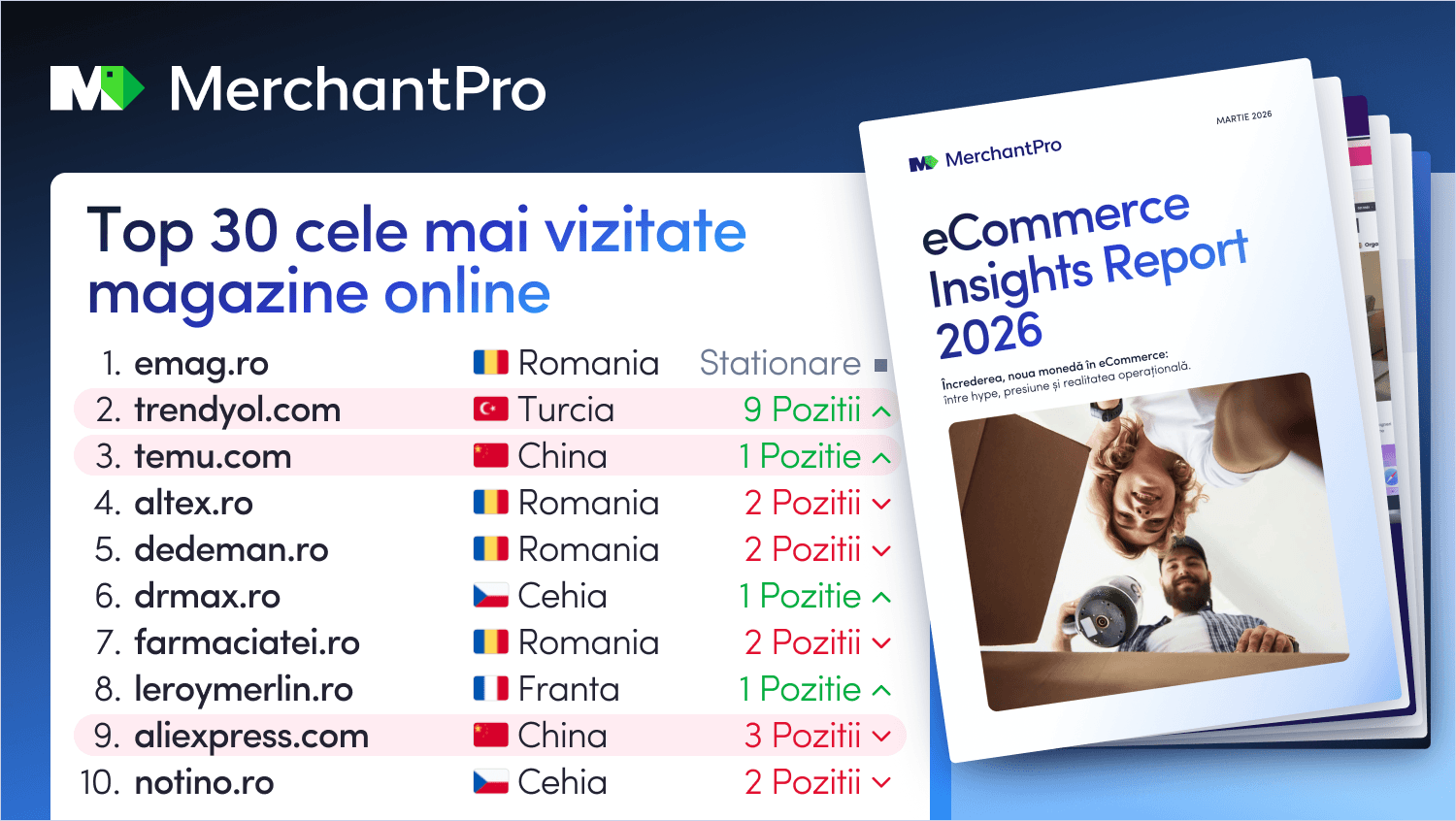
The MerchantPro Insights analysis shows that generalist marketplaces dominate traffic rankings in online commerce, with eMAG, Trendyol, and Temu among the platforms that capture the majority of user visits. The expansion of global platforms is also visible at the European level. In the first half of 2025, approximately 25% of consumers in the European Union made at least one purchase on Temu, according to data cited in the report. In Romania, the platform reached approximately 4.7 million monthly active users, while Trendyol surpassed around 1.3 million buyers, strengthening its presence in the local market and ranking 2nd among the most visited online stores in Romania.

“These developments reflect a structural shift in the digital ecosystem, where marketplaces are becoming the main entry points in the product discovery process. Today, marketplaces function as traffic hubs for online commerce. For merchants, this changes how distribution and digital marketing strategies must be designed. The integration of data-driven technologies and the optimization of the customer experience remain among the most important factors for the performance of online stores,” added Arthur Rădulescu.

The third edition of the MerchantPro eCommerce Insights report analyzes the evolution of the entire sector from the perspective of consumer behavior, market-defining trends, and the changes that will have a major impact in 2026.

*This is a press release.

Normal
News from Companies

MerchantPro: Romania’s eCommerce market is set to reach €8.5 billion in 2026, under pressure from non-EU platforms, AI, and more cautious consumer behavior

19 March 2026

The expansion of global platforms is accelerating: in 2025, 1 in 4 Europeans shopped on Temu, while the platform reached 4.7 million monthly active users in Romania.

Romania’s eCommerce market reached approximately €8.1 billion in 2025 and could exceed €8.5 billion in 2026. However, growth is entering a more competitive and less predictable phase than in previous years. According to the MerchantPro eCommerce Insights 2026 report, inflation, pressure from international marketplaces, shifts in consumer behavior, and the growing impact of AI on product discovery and conversions are reshaping the rules of competition in the local online commerce sector.

MerchantPro’s analysis shows that the estimated market growth rate was around 6% in 2025, in a context where transaction volumes stagnated. For 2026, a 5% increase is expected, driven by more cautious consumption, declining consumer confidence, and structural transformations within the digital ecosystem.

Market growth this year could be supported by the increasing adoption of online shopping and the maturation of the customer experience offered by merchants, through investments in technology, personalization, and conversion optimization. At the same time, the introduction of taxes for non-EU platforms, both locally and at the European level, could reduce part of their cost-based competitive advantage.

On the other hand, risks remain significant: pressure on consumer budgets, socio-economic and political uncertainty, as well as the growing market share of external platforms may limit the pace of development of local eCommerce.

2025, a two-speed year for eCommerce

The MerchantPro Compass analysis, based on the evolution of stores active on the platform, confirms the same market dynamics in 2025. The data indicates an average order value growth of 6.3%, in line with the estimated market evolution of around 6%, while the number of transactions increased by only 0.8%. This suggests that growth was mainly driven by higher average basket value rather than a significant increase in order volumes. In the first half of the year, transaction volume decreased by 0.29%, while in the second half it recorded a modest increase of 1.66%.

At the same time, vertical analysis shows a market with different stages of development and dynamics: segments such as Electro & IT (+21%) or Pharma (+65%) recorded strong growth, while categories such as Fashion (-10.3%) or Children’s products (-12%) felt the pressure of external competition and changes in consumer behavior.

“The real stake is shifting from gross growth to value control and the ability of local players to remain competitive in an ecosystem increasingly dominated by marketplaces and AI. In 2026, the differentiators will be operational efficiency, data, and the ability to build loyalty,” said Arthur Rădulescu, CEO of MerchantPro.

AI, personalization, and marketplaces are reshaping competition in eCommerce in 2026

The digital foundation of Romania’s economy has expanded steadily, and with 95.1% internet penetration according to the National Institute of Statistics, access to the internet is no longer a barrier to online commerce. Trust in the eCommerce ecosystem is becoming a key factor for market development.

Data from the MerchantPro Insights 2026 report shows that artificial intelligence is starting to play an increasingly important role in product discovery and conversion optimization. According to global data, 65% of users say AI influences their purchasing decisions, as these technologies are integrated into search engines, product recommendations, and virtual assistants.

At the same time, the performance of traffic generated by AI-based tools is beginning to be reflected in the commercial indicators of online stores. Personalizing the experience with integrated AI solutions can generate conversion rates more than 4 times higher, according to case studies conducted on stores within the MerchantPro platform.

In parallel, marketplaces are strengthening their position as the main entry points into online commerce, concentrating increasing volumes of traffic and influencing how merchants build their distribution and digital marketing strategies.

The MerchantPro Insights analysis shows that generalist marketplaces dominate traffic rankings in online commerce, with eMAG, Trendyol, and Temu among the platforms that capture the majority of user visits. The expansion of global platforms is also visible at the European level. In the first half of 2025, approximately 25% of consumers in the European Union made at least one purchase on Temu, according to data cited in the report. In Romania, the platform reached approximately 4.7 million monthly active users, while Trendyol surpassed around 1.3 million buyers, strengthening its presence in the local market and ranking 2nd among the most visited online stores in Romania.

“These developments reflect a structural shift in the digital ecosystem, where marketplaces are becoming the main entry points in the product discovery process. Today, marketplaces function as traffic hubs for online commerce. For merchants, this changes how distribution and digital marketing strategies must be designed. The integration of data-driven technologies and the optimization of the customer experience remain among the most important factors for the performance of online stores,” added Arthur Rădulescu.

The third edition of the MerchantPro eCommerce Insights report analyzes the evolution of the entire sector from the perspective of consumer behavior, market-defining trends, and the changes that will have a major impact in 2026.

*This is a press release.

Normal

Romania Insider Free Newsletters