Romania’s government drafts contingency plan to keep Cernavoda nuclear power plant safe

03 September 2026

After detonating a large rock and sinking several barges, the government of Romania has drafted a new plan to raise the level of the Danube near the Cernavodă nuclear power plant (NPP) in order to maintain the safety of the nuclear installations, which require a minimum amount of water even when not generating power.

The intervention is necessary as the flow of the Danube is forecast to decline further starting on September 10, the government announced.

At the current Danube level near the Cernavodă NPP (1.86 metres), both reactors are shut down, and all efforts to raise the water level have failed so far. The maximum flow of the Danube at the entrance to the country is expected to remain below multiannual averages in September, October and November, according to the three-month forecast published by the National Institute of Hydrology and Water Management (INHGA). Resuming power generation at least over the coming weeks therefore remains uncertain.

The National Emergency Committee, under the government’s supervision, has adopted a new decision establishing “a phased plan of measures to ensure the water flow necessary for the safe operation of the Cernavodă Nuclear Power Plant (CNE).” The term “operation” used in the official release refers, however, to the maintenance of the nuclear facility rather than to electricity generation.

The intervention plan will be triggered if the water level drops to 1.58 metres in the Cernavodă NPP water intake basin and provides for several stages, depending on how the situation evolves.

The government does not indicate the current water level in the Cernavodă NPP water intake basin. Public data indicate a level of 1.86 metres at the Cernavodă Canal, near the NPP. When the water level reached this value, the NPP shut down its second reactor.

Thus, in the first stage, several loaded ships and/or barges will be positioned along an alignment approximately 600 metres long, so that the flow in the Old Danube branch will direct a larger volume of water towards the entrance to the Danube-Black Sea Canal and, implicitly, towards the power plant’s water intake, the government said.

In the second stage, a modular closure using pontoons and dams will be installed along a section of approximately 170 metres in the area of the power plant’s connection canal. As a backup option, this system can be replaced with a temporary stone dam.

''If the intervention actions in the first two stages do not ensure the necessary effect, the National Administration 'Apele Române' and Nuclearelectrica will put into operation high-capacity pumps, which will ensure the pumping of additional water towards the water intake for cooling the power plant,'' the quoted source announced. 

iulian@romania-insider.com

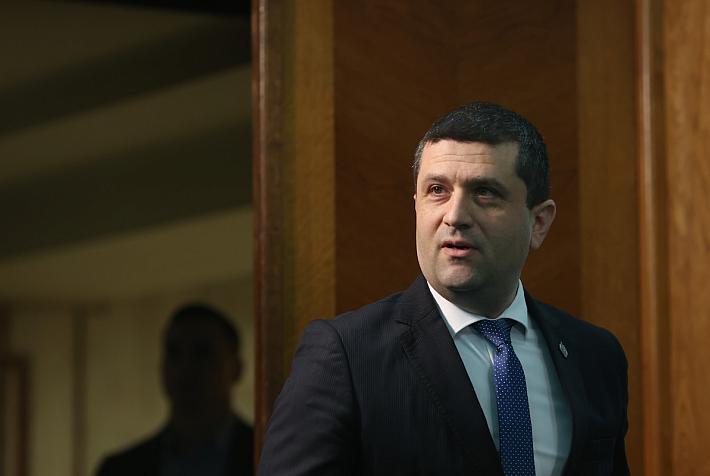
(Photo source: Inquam Photos/George Călin)

Normal

Romania’s government drafts contingency plan to keep Cernavoda nuclear power plant safe

03 September 2026

After detonating a large rock and sinking several barges, the government of Romania has drafted a new plan to raise the level of the Danube near the Cernavodă nuclear power plant (NPP) in order to maintain the safety of the nuclear installations, which require a minimum amount of water even when not generating power.

The intervention is necessary as the flow of the Danube is forecast to decline further starting on September 10, the government announced.

At the current Danube level near the Cernavodă NPP (1.86 metres), both reactors are shut down, and all efforts to raise the water level have failed so far. The maximum flow of the Danube at the entrance to the country is expected to remain below multiannual averages in September, October and November, according to the three-month forecast published by the National Institute of Hydrology and Water Management (INHGA). Resuming power generation at least over the coming weeks therefore remains uncertain.

The National Emergency Committee, under the government’s supervision, has adopted a new decision establishing “a phased plan of measures to ensure the water flow necessary for the safe operation of the Cernavodă Nuclear Power Plant (CNE).” The term “operation” used in the official release refers, however, to the maintenance of the nuclear facility rather than to electricity generation.

The intervention plan will be triggered if the water level drops to 1.58 metres in the Cernavodă NPP water intake basin and provides for several stages, depending on how the situation evolves.

The government does not indicate the current water level in the Cernavodă NPP water intake basin. Public data indicate a level of 1.86 metres at the Cernavodă Canal, near the NPP. When the water level reached this value, the NPP shut down its second reactor.

Thus, in the first stage, several loaded ships and/or barges will be positioned along an alignment approximately 600 metres long, so that the flow in the Old Danube branch will direct a larger volume of water towards the entrance to the Danube-Black Sea Canal and, implicitly, towards the power plant’s water intake, the government said.

In the second stage, a modular closure using pontoons and dams will be installed along a section of approximately 170 metres in the area of the power plant’s connection canal. As a backup option, this system can be replaced with a temporary stone dam.

''If the intervention actions in the first two stages do not ensure the necessary effect, the National Administration 'Apele Române' and Nuclearelectrica will put into operation high-capacity pumps, which will ensure the pumping of additional water towards the water intake for cooling the power plant,'' the quoted source announced. 

iulian@romania-insider.com

(Photo source: Inquam Photos/George Călin)

Normal

Romania Insider Free Newsletters