Business Views

Bogdan Purcherea, Envipco: “Romania’s DRS is already performing like a far more mature system”

18 May 2026

In Europe’s race to build more efficient circular economy systems, Romania has become one of the markets drawing the closest attention.
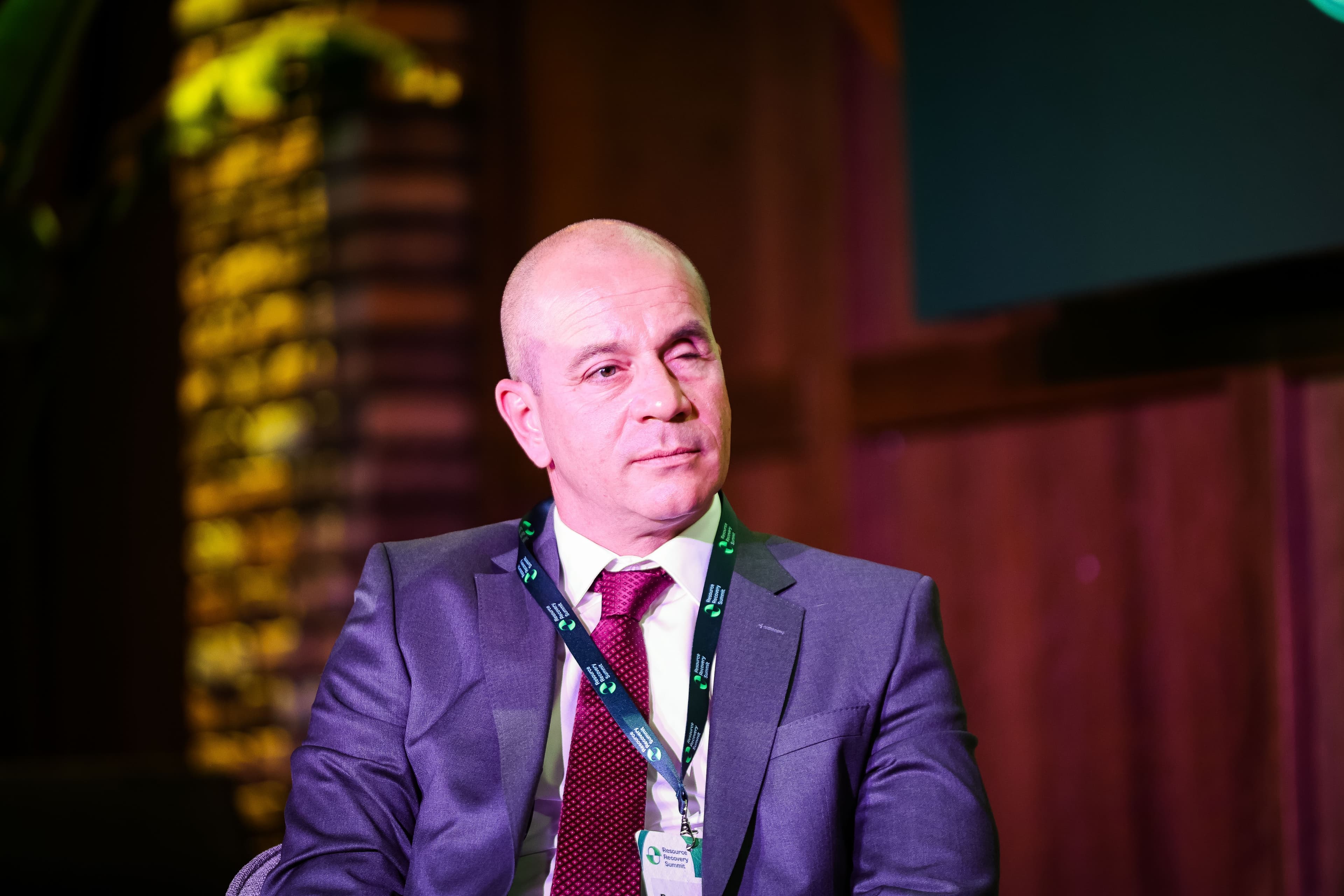
What began as an ambitious national rollout has quickly turned into a case study watched by policymakers, producers, retailers and technology providers across the region. At Resource Recovery Summit 2026 in Bucharest, Romania’s Deposit Return System stood at the center of a wider conversation about what makes these systems work, and what other countries can realistically learn from them.

For Envipco, a strategic partner of the Summit and an active player in multiple global markets, Romania’s experience matters not just because of the speed of implementation, but because it shows how performance can be achieved in a market that is far from simple.

Romania Insider spoke with Bogdan Purcherea, Managing Director of Envipco Romania and Business Development Director Europe, about what Romania has already achieved, what proved harder than expected, and why the next generation of DRS systems will need to be built around local realities, not templates.

What has Romania achieved so far, and why does it matter now in a wider European context?

What stands out most is the speed at which the system came together. Government, producers, retailers and solution providers moved relatively quickly from legislation to implementation, found workable solutions and delivered results faster than many expected.

Two years in, Romania’s DRS is already performing at a level usually associated with systems that have been running for much longer. That is a meaningful result in itself, but it also matters because other countries are now actively looking at Romania as a reference point.

That is part of what made the conversation at Resource Recovery Summit so relevant. Romania was not discussed as a country still trying to prove that DRS can work. It was discussed as a market already generating lessons that others can use.

Circular economy is often discussed in broad terms. In practical terms, what does a system like DRS actually deliver?

The collection rate is the most visible measure, and in Romania the system has already exceeded the 80% target set by law for 2025. At this scale, in a market as diverse as Romania’s, that is a real operational achievement.

But the real value goes beyond volume. A DRS produces cleaner, better sorted material than general recycling streams, which makes it much more useful for producers trying to secure reliable recycled content, including rPET. For recyclers, predictability and material quality matter as much as quantity.

There is also a very practical environmental gain: once a container is returned through DRS, it stays in the value chain instead of ending up as waste. That is where circular economy stops being an abstract concept and becomes an operational one.

What proved harder in rollout than expected, and what should other markets learn from Romania?

Consumer behavior was less difficult than many assumed. Romania has a longer history of bottle return than some markets, so the instinct was already there, and communication helped accelerate adoption.

The more difficult challenge was coverage. Romania has a large traditional retail segment, and many people live in rural or less accessible areas. In those places, recovering the deposit is not just a matter of awareness, but of real access to return infrastructure.

That is where implementation becomes more complex than it may look on paper. A small neighborhood store does not function like a supermarket, and a system that works in dense urban retail does not automatically work everywhere else. One of Romania’s clearest lessons is that performance depends not only on technology, but on how well the system adapts to the realities of each market.

Envipco is one of the technology companies active in Romania’s Deposit Return System and works across multiple global markets. In Romania, the company has been involved since the legislative phase, giving it a close view of how the system was designed, implemented and adjusted in practice.

What has Romania taught Envipco about how strong DRS systems need to be built?

Romania has confirmed that there is no standard model that can simply be copied from one market to another.

It is one of the more complex systems we have worked in, not least because it launched from the start with three material streams, PET, metal and glass, while also having to accommodate both modern and traditional retail, plus significant geographical variation.

What that shows is that high-performing DRS systems need to be built around local retail geography, consumer habits and infrastructure from the beginning. That takes more effort upfront, but it produces stronger outcomes over time.

Looking ahead, what comes next for Romania and for DRS in Europe more broadly?

At European level, the direction is becoming clearer. The Packaging and Packaging Waste Regulation is pushing more countries toward deposit return systems, while also increasing pressure for higher recycled content. That means the design choices being made now will have long-term consequences.

For Romania, the next frontier is not only about maintaining collection rates. It is about strengthening infrastructure, improving access, making the system financially sustainable and helping create a secondary materials market that producers and recyclers can plan around with confidence.

On the technology side, we also expect the market to evolve. In time, reverse vending infrastructure may move away from a pure equipment purchase model and more toward service-based arrangements linked to throughput. That could make participation easier for smaller retail formats and align incentives more closely with system performance.

For markets now entering this space, Romania offers something valuable: proof that ambitious implementation is possible, but also a reminder that the best systems are not the most standardized ones. They are the ones designed well for the realities of the market they serve.

*This interview was made in pratnership with Envipco.

Normal
Business Views

Bogdan Purcherea, Envipco: “Romania’s DRS is already performing like a far more mature system”

18 May 2026

In Europe’s race to build more efficient circular economy systems, Romania has become one of the markets drawing the closest attention.

What began as an ambitious national rollout has quickly turned into a case study watched by policymakers, producers, retailers and technology providers across the region. At Resource Recovery Summit 2026 in Bucharest, Romania’s Deposit Return System stood at the center of a wider conversation about what makes these systems work, and what other countries can realistically learn from them.

For Envipco, a strategic partner of the Summit and an active player in multiple global markets, Romania’s experience matters not just because of the speed of implementation, but because it shows how performance can be achieved in a market that is far from simple.

Romania Insider spoke with Bogdan Purcherea, Managing Director of Envipco Romania and Business Development Director Europe, about what Romania has already achieved, what proved harder than expected, and why the next generation of DRS systems will need to be built around local realities, not templates.

What has Romania achieved so far, and why does it matter now in a wider European context?

What stands out most is the speed at which the system came together. Government, producers, retailers and solution providers moved relatively quickly from legislation to implementation, found workable solutions and delivered results faster than many expected.

Two years in, Romania’s DRS is already performing at a level usually associated with systems that have been running for much longer. That is a meaningful result in itself, but it also matters because other countries are now actively looking at Romania as a reference point.

That is part of what made the conversation at Resource Recovery Summit so relevant. Romania was not discussed as a country still trying to prove that DRS can work. It was discussed as a market already generating lessons that others can use.

Circular economy is often discussed in broad terms. In practical terms, what does a system like DRS actually deliver?

The collection rate is the most visible measure, and in Romania the system has already exceeded the 80% target set by law for 2025. At this scale, in a market as diverse as Romania’s, that is a real operational achievement.

But the real value goes beyond volume. A DRS produces cleaner, better sorted material than general recycling streams, which makes it much more useful for producers trying to secure reliable recycled content, including rPET. For recyclers, predictability and material quality matter as much as quantity.

There is also a very practical environmental gain: once a container is returned through DRS, it stays in the value chain instead of ending up as waste. That is where circular economy stops being an abstract concept and becomes an operational one.

What proved harder in rollout than expected, and what should other markets learn from Romania?

Consumer behavior was less difficult than many assumed. Romania has a longer history of bottle return than some markets, so the instinct was already there, and communication helped accelerate adoption.

The more difficult challenge was coverage. Romania has a large traditional retail segment, and many people live in rural or less accessible areas. In those places, recovering the deposit is not just a matter of awareness, but of real access to return infrastructure.

That is where implementation becomes more complex than it may look on paper. A small neighborhood store does not function like a supermarket, and a system that works in dense urban retail does not automatically work everywhere else. One of Romania’s clearest lessons is that performance depends not only on technology, but on how well the system adapts to the realities of each market.

Envipco is one of the technology companies active in Romania’s Deposit Return System and works across multiple global markets. In Romania, the company has been involved since the legislative phase, giving it a close view of how the system was designed, implemented and adjusted in practice.

What has Romania taught Envipco about how strong DRS systems need to be built?

Romania has confirmed that there is no standard model that can simply be copied from one market to another.

It is one of the more complex systems we have worked in, not least because it launched from the start with three material streams, PET, metal and glass, while also having to accommodate both modern and traditional retail, plus significant geographical variation.

What that shows is that high-performing DRS systems need to be built around local retail geography, consumer habits and infrastructure from the beginning. That takes more effort upfront, but it produces stronger outcomes over time.

Looking ahead, what comes next for Romania and for DRS in Europe more broadly?

At European level, the direction is becoming clearer. The Packaging and Packaging Waste Regulation is pushing more countries toward deposit return systems, while also increasing pressure for higher recycled content. That means the design choices being made now will have long-term consequences.

For Romania, the next frontier is not only about maintaining collection rates. It is about strengthening infrastructure, improving access, making the system financially sustainable and helping create a secondary materials market that producers and recyclers can plan around with confidence.

On the technology side, we also expect the market to evolve. In time, reverse vending infrastructure may move away from a pure equipment purchase model and more toward service-based arrangements linked to throughput. That could make participation easier for smaller retail formats and align incentives more closely with system performance.

For markets now entering this space, Romania offers something valuable: proof that ambitious implementation is possible, but also a reminder that the best systems are not the most standardized ones. They are the ones designed well for the realities of the market they serve.

*This interview was made in pratnership with Envipco.

Normal

Romania Insider Free Newsletters