Romanian Transport Ministry approves Bucharest and Iași metropolitan trains

24 June 2026

Horațiu Cosma, state secretary in the Romanian Ministry of Transport, announced the approval of two new major railway infrastructure projects intended for the Bucharest–Ilfov and Iași metropolitan areas on Wednesday, June 24.

The new approvals come in continuation of similar initiatives already started for cities such as Brașov and Târgu Mureș.
“These are two important investments that will provide a modern, fast, and non-polluting alternative to road traffic around the two major urban centers,” Cosma said. “This is the direction in which all major European cities are heading, and Romania can no longer afford to lag,” the state secretary added.

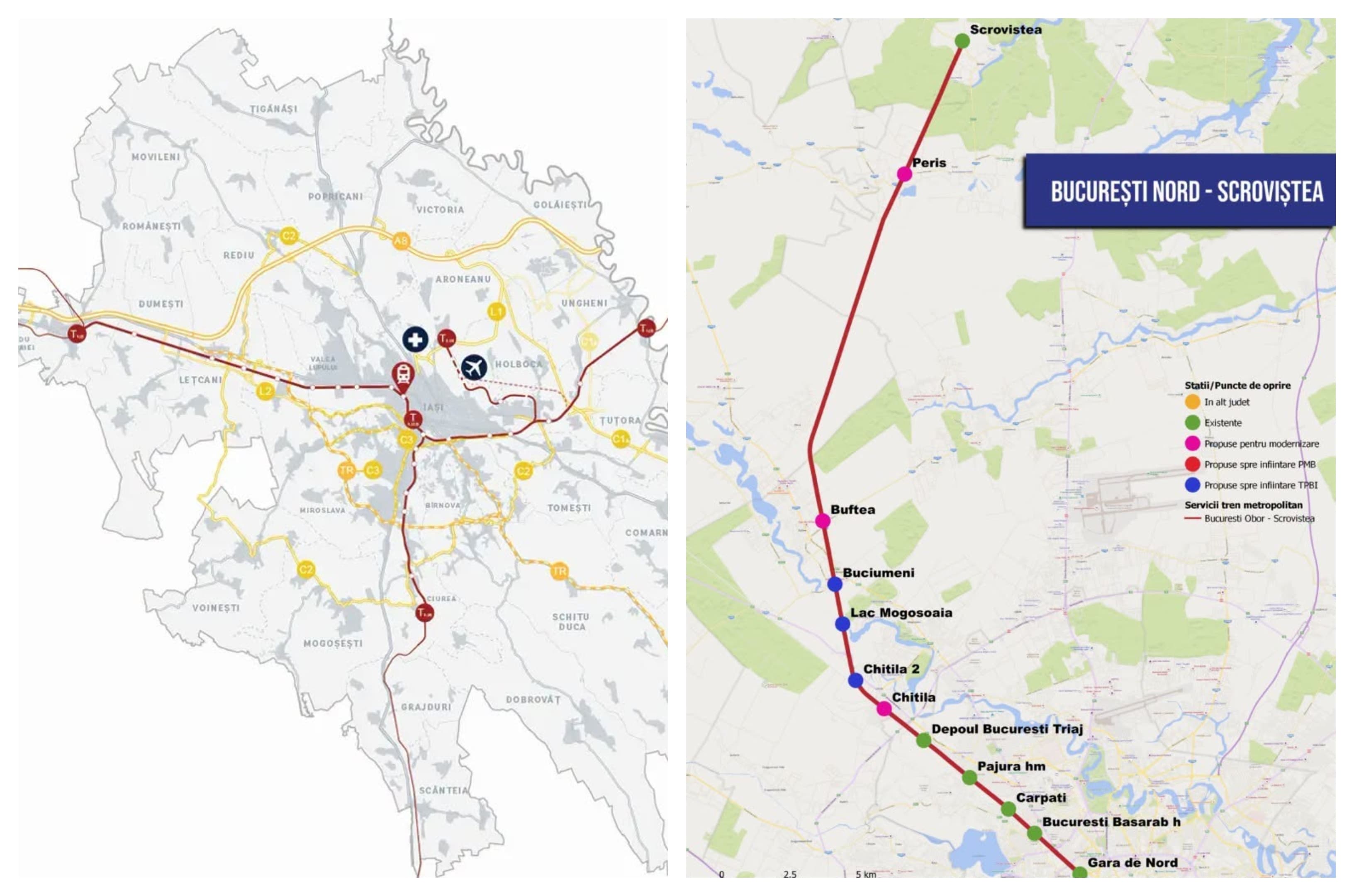
The project for Bucharest’s metropolitan train targets a deep modernization of the existing line and the acquisition of new rolling stock, specifically 5 modern electric trains. It also includes the construction of two new stops (Chitila 2 and Buciumeni) and the modernization of 10 existing stations and halts. 

Moreover, the project will require the construction of a grade-separated road crossing in the Scroviștea area, plus 5 underground pedestrian passages and 5 overpasses. Authorities also want to develop Park & Ride facilities, allowing drivers to safely leave their cars and continue their journey by train.

The metropolitan train project in Iasi, the most important city in the Moldova region, will also focus on increasing transport capacity, electrification, and railway safety. The project will need 16 new stops and the modernization of 7 existing stations, all of which will have modern and accessible platforms.

Aside from the electrification of the Socola–Holboca section, the project requires the renewal of infrastructure on key sections such as Nicolina – Bârnova, Ciurea, and Podu Iloaiei – Iași.

Moreover, the Iasi metropolitan train project requires the construction of 3 road crossings and 4 pedestrian passages, along with the modernization of level crossings and the installation of new signaling systems.

“These projects are not just investments in railways, but a paradigm shift in urban and metropolitan mobility. People must have the possibility to reach their workplace, school, or city center quickly, safely, and comfortably, without losing hours in traffic,” said Horațiu Cosma.

radu@romania-insider.com

(Photo source: Horatiu Cosma on Facebook)

Normal

Romanian Transport Ministry approves Bucharest and Iași metropolitan trains

24 June 2026

Horațiu Cosma, state secretary in the Romanian Ministry of Transport, announced the approval of two new major railway infrastructure projects intended for the Bucharest–Ilfov and Iași metropolitan areas on Wednesday, June 24.

The new approvals come in continuation of similar initiatives already started for cities such as Brașov and Târgu Mureș.
“These are two important investments that will provide a modern, fast, and non-polluting alternative to road traffic around the two major urban centers,” Cosma said. “This is the direction in which all major European cities are heading, and Romania can no longer afford to lag,” the state secretary added.

The project for Bucharest’s metropolitan train targets a deep modernization of the existing line and the acquisition of new rolling stock, specifically 5 modern electric trains. It also includes the construction of two new stops (Chitila 2 and Buciumeni) and the modernization of 10 existing stations and halts. 

Moreover, the project will require the construction of a grade-separated road crossing in the Scroviștea area, plus 5 underground pedestrian passages and 5 overpasses. Authorities also want to develop Park & Ride facilities, allowing drivers to safely leave their cars and continue their journey by train.

The metropolitan train project in Iasi, the most important city in the Moldova region, will also focus on increasing transport capacity, electrification, and railway safety. The project will need 16 new stops and the modernization of 7 existing stations, all of which will have modern and accessible platforms.

Aside from the electrification of the Socola–Holboca section, the project requires the renewal of infrastructure on key sections such as Nicolina – Bârnova, Ciurea, and Podu Iloaiei – Iași.

Moreover, the Iasi metropolitan train project requires the construction of 3 road crossings and 4 pedestrian passages, along with the modernization of level crossings and the installation of new signaling systems.

“These projects are not just investments in railways, but a paradigm shift in urban and metropolitan mobility. People must have the possibility to reach their workplace, school, or city center quickly, safely, and comfortably, without losing hours in traffic,” said Horațiu Cosma.

radu@romania-insider.com

(Photo source: Horatiu Cosma on Facebook)

Normal

Romania Insider Free Newsletters