Romania’s new Wage Law envisages moderate rise in public sector payroll in 2027
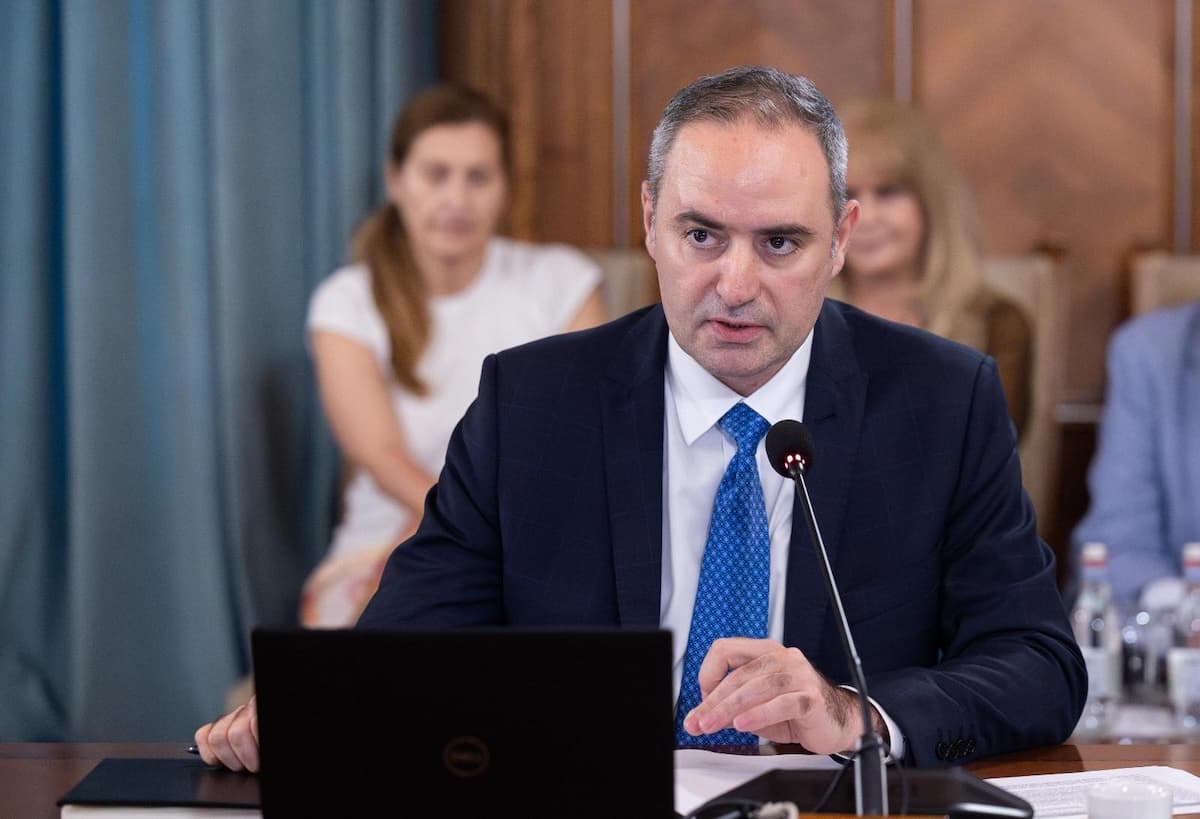
Romania’s new Wage Law for the budgetary sector, required under the Recovery and Resilience Facility (RRF) to unlock EUR 700 million in EU funding, envisages only a modest increase in the public payroll in 2027, according to Hotnews.ro citing finance minister Alexandru Nazare. Having the law passed in parliament will be a test for the functioning of the consensus confirmed by president Nicusor Dan among the "pro-Western" parties.
Speaking to Antena 3, Nazare said the overall salary envelope for public sector employees would rise by around RON 7.2 billion, implying nominal payroll growth of approximately 4.2% next year.
The increase is broadly in line with Romania’s expected average inflation rate for 2027 and comes after public sector wages were effectively frozen in both 2025 and 2026, while consumer prices are projected to rise by more than 15% cumulatively over the two-year period.
“It is true that I sent an address to the Ministry of Labor regarding the envelope for the Wage Law, which indeed is recorded at around RON 7.2 billion for next year,” Nazare said.
According to sources cited by Digi24, slightly more than half of public sector employees are expected to benefit from wage increases under the new framework. The final distribution mechanism is still being modelled by the Labour Ministry.
The legislation was reportedly drafted before the Social Democrats (PSD) withdrew from the ruling coalition, which may improve its chances of parliamentary approval, given that the Labour Ministry was under PSD control at the time.
The reform also envisages eliminating most bonuses currently granted to state employees. Existing allowances, including food allowances, would instead be incorporated into base salaries. The only bonus expected to remain in place would be the one linked to managing projects financed through European funds, which can reach up to 40% of salary levels.
According to Digi24, an initial version of the draft law was completed by the Labour Ministry on April 24 and subsequently forwarded to acting prime minister Ilie Bolojan.
Government officials had already signalled earlier this month that any wage adjustments would remain limited due to fiscal constraints.
“Today we have RON 166 billion in salary expenses, or 8.1% [of GDP]. We only have two real possibilities: a small increase or, if larger increases are desired, the only solution is to reduce staff where they are not justified,” Bolojan said during a government briefing on May 14.
iulian@romania-insider.com
(Photo source: Facebook/Alexandru Nazare)