Romanian Parliament begins new session with government vote among key priorities

Romania’s Senate and Chamber of Deputies begin the second ordinary parliamentary session of the year on Tuesday, September 1. Forming a fully empowered government and adopting reforms in public administration, salaries, and education will be among lawmakers’ main priorities, as reported by Agerpres.
President Nicușor Dan has announced a new round of consultations with political parties in early September to nominate a prime minister. Romania has been governed by a caretaker administration since the previous government led by Liberal leader Ilie Bolojan was dismissed in early May, and the talks on a new ruling majority have been without a clear result so far.
Other items on the Parliament’s agenda include legislation on the unitary public-sector pay system and changes to the high school admission system.
On the first day of the session, both chambers will elect the vice presidents, secretaries, and quaestors of their permanent bureaus. Candidates will be proposed by parliamentary groups based on their representation and negotiations among group leaders.
The National Liberal Party (PNL) has listed reforms to central public administration and state-owned companies among its priorities, according to Agerpres. It also wants administrative-territorial and electoral reform, including reductions in the sizes of Parliament and local administrations, as well as changes to the health insurance budget, and the adoption of a lustration law.
Meanwhile, the far-right Alliance for the Union of Romanians (AUR) is proposing a bicameral Parliament limited to 300 lawmakers, two-round mayoral elections, and a two-term limit for the leadership of public institutions.
Save Romania Union (USR) priorities include administrative-territorial reform and reforming the intelligence services by limiting their heads to two four-year terms. The party also wants to eliminate additional taxation on part-time employment contracts, improve online protections for minors, reform electoral legislation, and amend the law governing the National Integrity Agency (ANI) to prevent retroactive sanctions.
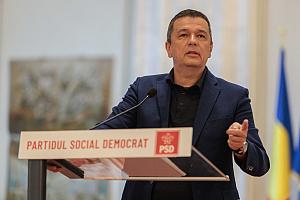
Meanwhile, the Social Democratic Party (PSD) has proposed a two-year political agreement built around ten priorities to parties willing to help form a parliamentary majority. The plan covers energy, the national defence industry, reindustrialization, tax collection, salaries linked to productivity, education and healthcare, irrigation and rural development, strategic investment, and the defence of Romania’s interests within the EU and NATO, the party said.
irina.marica@romania-insider.com
(Photo source: Inquam Photos/George Calin)