Greenpeace Romania signals possible fluid discharge in Neptun Deep offshore drilling area

20 May 2026

The Romanian division of the environmental protection NGO Greenpeace announced on Wednesday, May 20, that satellite images captured a fluid discharge in the Domino perimeter in the Black Sea, a deep-water area where offshore drilling is taking place as part of the Neptun Deep project. According to the organization, the pollution slick stretched for approximately 100 kilometers and covered an area of 45 square km, equivalent to 6,300 football fields.

“Greenpeace Romania raises an alarm regarding the health of the Black Sea ecosystem and the irresponsibility of OMV Petrom and Romgaz, the companies holding the Neptun Deep project. On March 10, 2026, satellite images captured a fluid discharge in the Domino perimeter, a deep-water area where offshore drilling is taking place,” the organization said in a press release.

Greenpeace blamed the two energy giants, OMV Petrom and Romgaz, for the incident. 

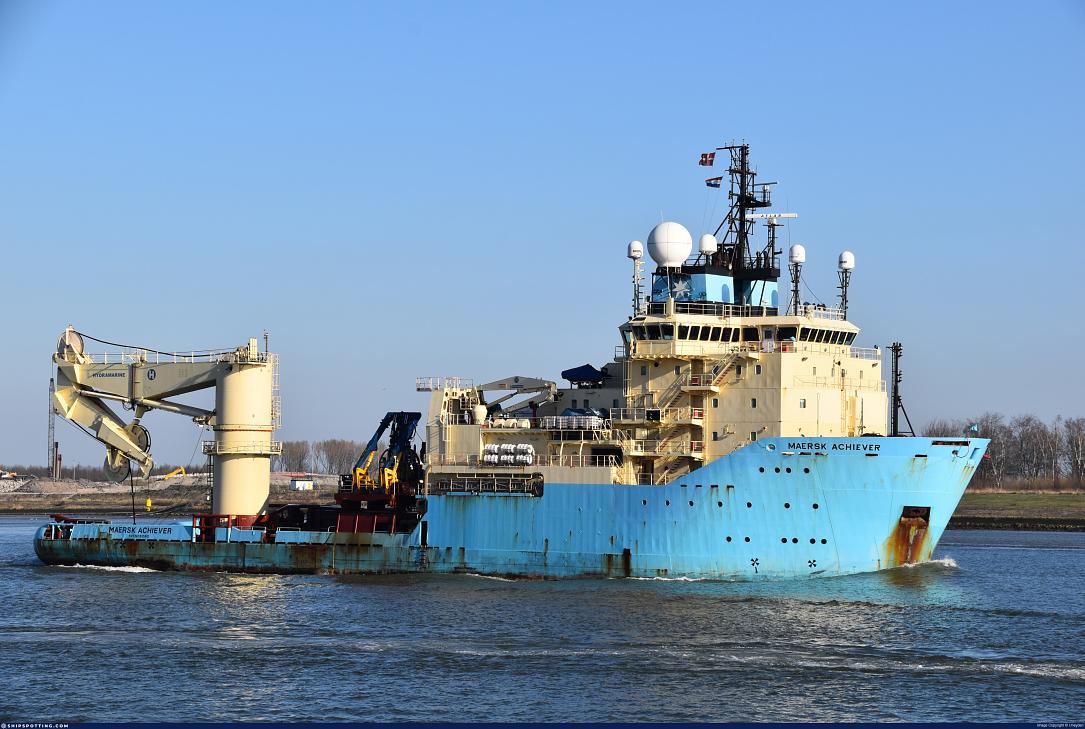
“Based on maritime route analysis, the potential source of this massive discharge would be the vessel  Skandi Asserter (pictured), a multifunctional offshore vessel directly servicing the drilling platform Transocean Barents. The route of this vessel partially overlapped with the pollutant trail identified by satellite,” the organization stated.

Greenpeace received confirmation from the Romanian Naval Authority that the latter received a notification in the CleanSeaNet monitoring system regarding this event, but did not send any team to sea to investigate the case. 

“The authority considered the event ‘operationally irrelevant’ because of the great distance from the shore. At the same time, the Ministry of Environment, Waters and Forests postponed sending a response to Greenpeace Romania, requesting an extension of the legal deadline to 30 days,” the press release also said.

Nevertheless, the pollution event was detected through the Copernicus/Sentinel-1 radar satellites, processed through the Cerulean artificial intelligence system, and manually validated by oceanographic analysis experts.

“The companies behind Neptun Deep take advantage of the fact that the activity is taking place far from public view, while Romanian authorities refuse to investigate offshore pollution unless it reaches tourist beaches,” said Alin Tănase, campaign coordinator at Greenpeace România.

“Romania wants to become a regional energy hub in the Black Sea, but it has an oil pollution marine response plan only on paper, which is rarely tested in reality, and institutions that admit they do not have vessels to go offshore,” he added.

Between 2022 and 2025, Greenpeace identified 226 pollution slicks in the Romanian sector of the Black Sea. The organization called on OMV Petrom and Romgaz to assume responsibility for the activity of subcontracted vessels and to monitor similar incidents. 

Gas production in the Neptun Deep project is scheduled for 2027. Roughly EUR 4 billion was invested in the project by Romgaz and OMV Petrom. Neptun Deep is set to transform Romania into the largest producer of natural gas in the European Union.

radu@romania-insider.com

(Photo source: Greenpeace Romania)

Normal

Greenpeace Romania signals possible fluid discharge in Neptun Deep offshore drilling area
20 May 2026

The Romanian division of the environmental protection NGO Greenpeace announced on Wednesday, May 20, that satellite images captured a fluid discharge in the Domino perimeter in the Black Sea, a deep-water area where offshore drilling is taking place as part of the Neptun Deep project. According to the organization, the pollution slick stretched for approximately 100 kilometers and covered an area of 45 square km, equivalent to 6,300 football fields.

“Greenpeace Romania raises an alarm regarding the health of the Black Sea ecosystem and the irresponsibility of OMV Petrom and Romgaz, the companies holding the Neptun Deep project. On March 10, 2026, satellite images captured a fluid discharge in the Domino perimeter, a deep-water area where offshore drilling is taking place,” the organization said in a press release.

Greenpeace blamed the two energy giants, OMV Petrom and Romgaz, for the incident. 

“Based on maritime route analysis, the potential source of this massive discharge would be the vessel  Skandi Asserter (pictured), a multifunctional offshore vessel directly servicing the drilling platform Transocean Barents. The route of this vessel partially overlapped with the pollutant trail identified by satellite,” the organization stated.

Greenpeace received confirmation from the Romanian Naval Authority that the latter received a notification in the CleanSeaNet monitoring system regarding this event, but did not send any team to sea to investigate the case. 

“The authority considered the event ‘operationally irrelevant’ because of the great distance from the shore. At the same time, the Ministry of Environment, Waters and Forests postponed sending a response to Greenpeace Romania, requesting an extension of the legal deadline to 30 days,” the press release also said.

Nevertheless, the pollution event was detected through the Copernicus/Sentinel-1 radar satellites, processed through the Cerulean artificial intelligence system, and manually validated by oceanographic analysis experts.

“The companies behind Neptun Deep take advantage of the fact that the activity is taking place far from public view, while Romanian authorities refuse to investigate offshore pollution unless it reaches tourist beaches,” said Alin Tănase, campaign coordinator at Greenpeace România.

“Romania wants to become a regional energy hub in the Black Sea, but it has an oil pollution marine response plan only on paper, which is rarely tested in reality, and institutions that admit they do not have vessels to go offshore,” he added.

Between 2022 and 2025, Greenpeace identified 226 pollution slicks in the Romanian sector of the Black Sea. The organization called on OMV Petrom and Romgaz to assume responsibility for the activity of subcontracted vessels and to monitor similar incidents. 

Gas production in the Neptun Deep project is scheduled for 2027. Roughly EUR 4 billion was invested in the project by Romgaz and OMV Petrom. Neptun Deep is set to transform Romania into the largest producer of natural gas in the European Union.

radu@romania-insider.com

(Photo source: Greenpeace Romania)
Normal

Romania Insider Free Newsletters