News from Companies

Electrica Implements Romania's First AI Energy Management System for Buildings

20 May 2026

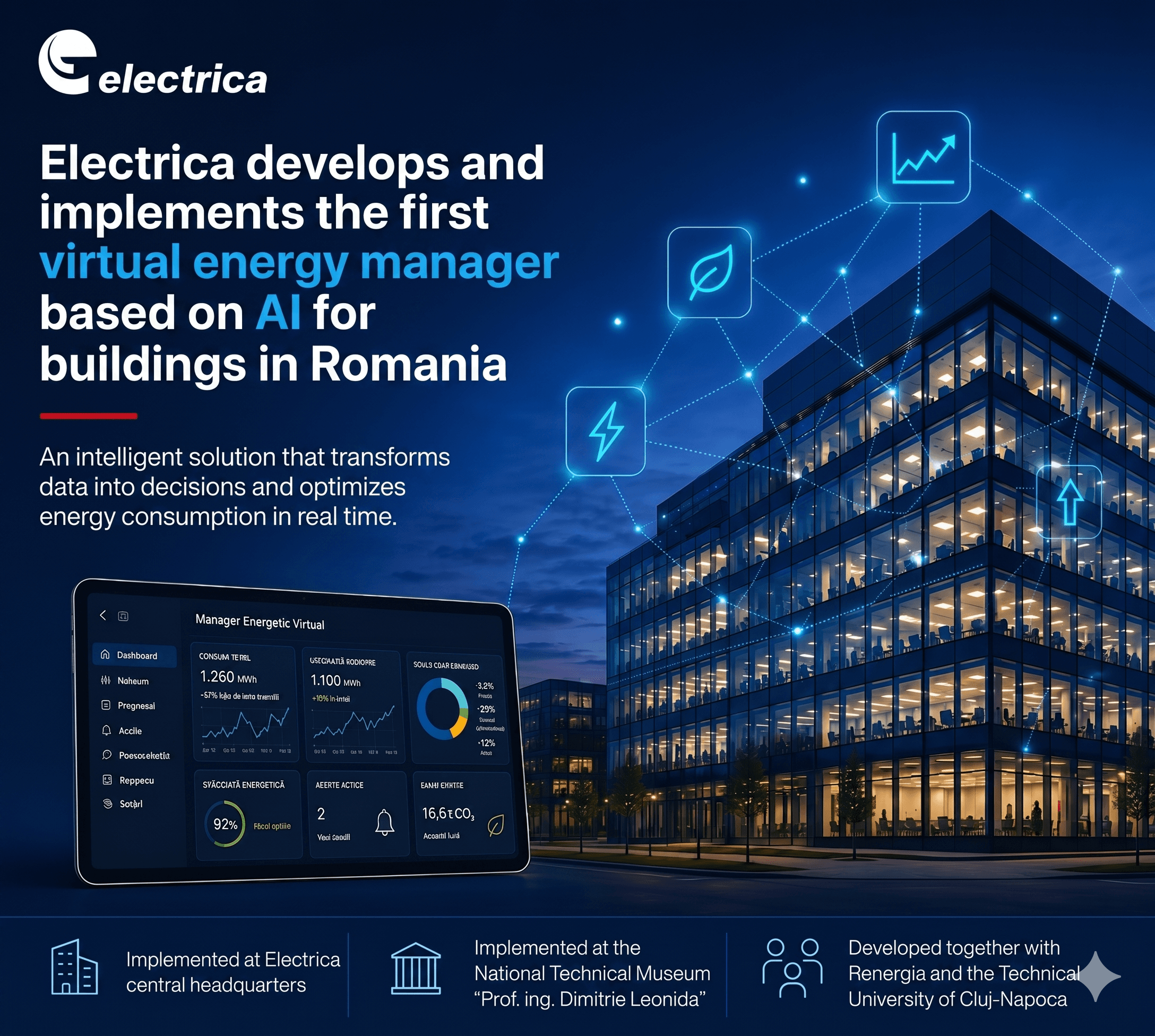
Electrica announces the completion of the AIAE (Artificial Intelligence for Active Energy Management) project, developed in partnership with the Romanian startup Renergia and the Technical University of Cluj-Napoca. This marks the launch of the first smart energy management system for buildings in Romania and introduces a new model for managing energy consumption focused on data, automation, and advanced analysis.

The platform processed over 48 million data sets, and its development involved over 1,000,000 lines of code, which denotes the complexity and maturity level of the solution. At the same time, the initiative also included a research and professional training component, involving 3 PhD students and 4 researchers under 30, thus contributing to the development of a new generation of specialists in the field of energy and artificial intelligence.

Alexandru Chiriță, CEO Electrica: "Digitalization is not a parallel activity. It is critical infrastructure for the energy system. Through AIAE, we have moved from concept to implementation and have demonstrated that artificial intelligence can deliver concrete results in building operations. We are talking about the ability to understand consumption in detail and to intervene where optimization is needed. This translates into control, predictability, and operational performance. The next step is the extension of the solution throughout the entire Electrica Group."

From Monitoring to Energy Management

The AIAE platform functions as a virtual energy manager, capable of analyzing energy consumption in real time and transforming large volumes of data into operational decisions. The system identifies consumption patterns, detects deviations, and generates automated recommendations for optimizing energy performance.

The solution is built on a multi-agent AI architecture and integrates data from multiple sources: electricity consumption, meteorological information, technical characteristics of the building, and operational context. This approach allows for a complete understanding of energy behavior and supports rapid and efficient interventions.

The main functionalities of the platform include:

  • detection of energy consumption anomalies;
  • forecasting energy consumption and production;
  • identification of energy efficiency measures;
  • generation of alerts for critical technical parameters;
  • optimization of self-consumption and reduction of carbon emissions.

An important element of the solution is the ability to "disaggregate" the total energy consumption and understand how each system in the building contributes, without the need for individual monitoring of each piece of equipment. The platform uses artificial intelligence models to identify consumption patterns and to show where and how energy efficiency can be improved.

Following the project, concrete energy efficiency measures have already been adopted, such as the automation of operating regimes for certain systems and the introduction of policies for stopping non-essential equipment outside working hours. These measures demonstrate the system's capacity to generate applicable results, with a direct impact on consumption reduction and increased operational efficiency.

"We aimed from the start for this project to move beyond the research area and into operation. We managed to integrate advanced models and numerical methods into a platform that functions in real time, in a complex environment. In this context, artificial intelligence offers precise instruments for understanding energy behavior and for optimizing consumption, based on data-driven decisions. It is an example of collaboration where research produces applicable results with direct impact," stated assoc. prof. Dorin Beu, PhD Eng., from the Technical University of Cluj-Napoca.

“For Renergia, the AIAE project meant the real-scale validation of technologies developed in the research and innovation area. We integrated disaggregation algorithms and predictive models into a system capable of operating autonomously and delivering concrete recommendations. The results obtained confirm that data-based solutions can change the way buildings are managed, through better consumption control and more efficient use of energy resources," added the coordinators of the Cluj-based startup, Alexandru Mureșan, PhD Eng., and Dacian Jurj, PhD Eng.

Implementation and Expansion Plans

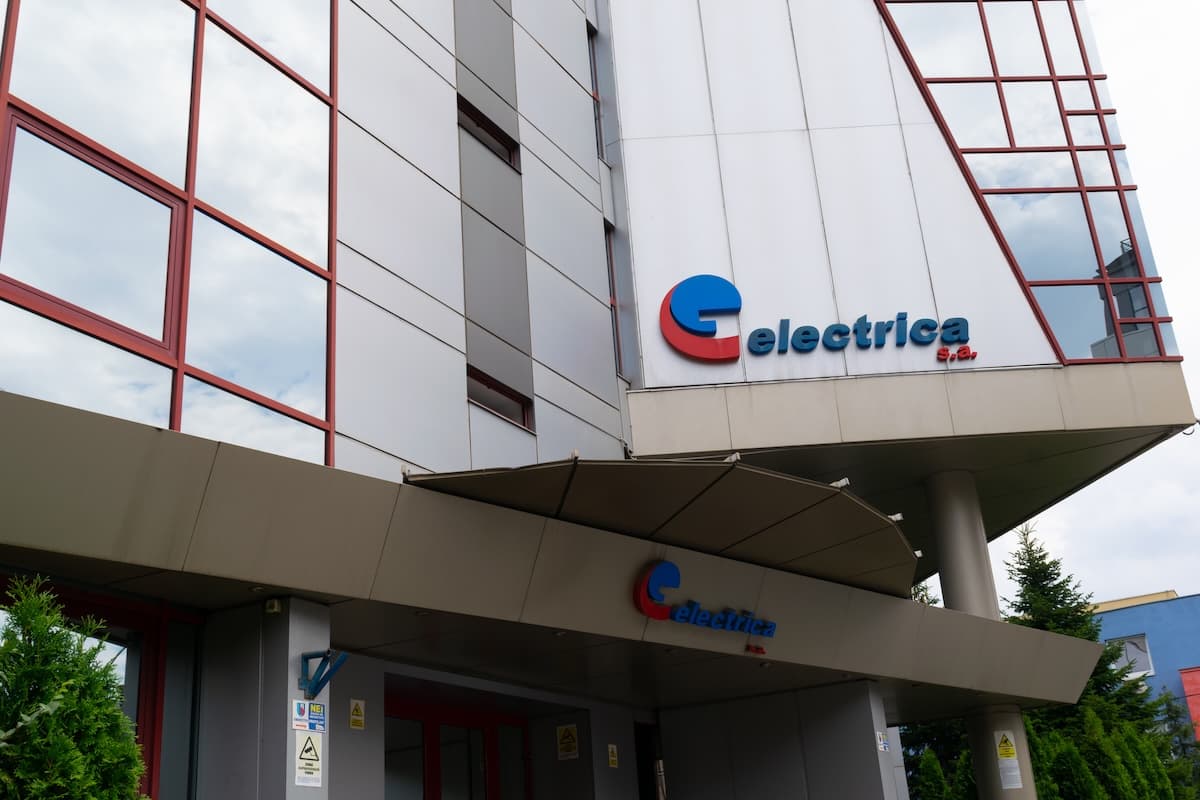
The first integration of the system was carried out at Electrica's headquarters, where it was tested and validated under real operating conditions. The results confirm the platform's ability to generate optimizations and support more efficient control of energy consumption. Based on these results, the company plans to replicate the solution across the buildings within the Group, as part of the digitalization and operational efficiency strategy.

The AIAE project has also been extended to the " PhD Eng Dimitrie Leonida" National Technical Museum, which thus becomes the second building in Romania to benefit from this technology. The integration of the solution is part of the museum's modernization process and contributes to optimizing energy consumption in its operation.

*This is a press release.

Normal
News from Companies

Electrica Implements Romania's First AI Energy Management System for Buildings

20 May 2026

Electrica announces the completion of the AIAE (Artificial Intelligence for Active Energy Management) project, developed in partnership with the Romanian startup Renergia and the Technical University of Cluj-Napoca. This marks the launch of the first smart energy management system for buildings in Romania and introduces a new model for managing energy consumption focused on data, automation, and advanced analysis.

The platform processed over 48 million data sets, and its development involved over 1,000,000 lines of code, which denotes the complexity and maturity level of the solution. At the same time, the initiative also included a research and professional training component, involving 3 PhD students and 4 researchers under 30, thus contributing to the development of a new generation of specialists in the field of energy and artificial intelligence.

Alexandru Chiriță, CEO Electrica: "Digitalization is not a parallel activity. It is critical infrastructure for the energy system. Through AIAE, we have moved from concept to implementation and have demonstrated that artificial intelligence can deliver concrete results in building operations. We are talking about the ability to understand consumption in detail and to intervene where optimization is needed. This translates into control, predictability, and operational performance. The next step is the extension of the solution throughout the entire Electrica Group."

From Monitoring to Energy Management

The AIAE platform functions as a virtual energy manager, capable of analyzing energy consumption in real time and transforming large volumes of data into operational decisions. The system identifies consumption patterns, detects deviations, and generates automated recommendations for optimizing energy performance.

The solution is built on a multi-agent AI architecture and integrates data from multiple sources: electricity consumption, meteorological information, technical characteristics of the building, and operational context. This approach allows for a complete understanding of energy behavior and supports rapid and efficient interventions.

The main functionalities of the platform include:

  • detection of energy consumption anomalies;
  • forecasting energy consumption and production;
  • identification of energy efficiency measures;
  • generation of alerts for critical technical parameters;
  • optimization of self-consumption and reduction of carbon emissions.

An important element of the solution is the ability to "disaggregate" the total energy consumption and understand how each system in the building contributes, without the need for individual monitoring of each piece of equipment. The platform uses artificial intelligence models to identify consumption patterns and to show where and how energy efficiency can be improved.

Following the project, concrete energy efficiency measures have already been adopted, such as the automation of operating regimes for certain systems and the introduction of policies for stopping non-essential equipment outside working hours. These measures demonstrate the system's capacity to generate applicable results, with a direct impact on consumption reduction and increased operational efficiency.

"We aimed from the start for this project to move beyond the research area and into operation. We managed to integrate advanced models and numerical methods into a platform that functions in real time, in a complex environment. In this context, artificial intelligence offers precise instruments for understanding energy behavior and for optimizing consumption, based on data-driven decisions. It is an example of collaboration where research produces applicable results with direct impact," stated assoc. prof. Dorin Beu, PhD Eng., from the Technical University of Cluj-Napoca.

“For Renergia, the AIAE project meant the real-scale validation of technologies developed in the research and innovation area. We integrated disaggregation algorithms and predictive models into a system capable of operating autonomously and delivering concrete recommendations. The results obtained confirm that data-based solutions can change the way buildings are managed, through better consumption control and more efficient use of energy resources," added the coordinators of the Cluj-based startup, Alexandru Mureșan, PhD Eng., and Dacian Jurj, PhD Eng.

Implementation and Expansion Plans

The first integration of the system was carried out at Electrica's headquarters, where it was tested and validated under real operating conditions. The results confirm the platform's ability to generate optimizations and support more efficient control of energy consumption. Based on these results, the company plans to replicate the solution across the buildings within the Group, as part of the digitalization and operational efficiency strategy.

The AIAE project has also been extended to the " PhD Eng Dimitrie Leonida" National Technical Museum, which thus becomes the second building in Romania to benefit from this technology. The integration of the solution is part of the museum's modernization process and contributes to optimizing energy consumption in its operation.

*This is a press release.

Normal

Romania Insider Free Newsletters