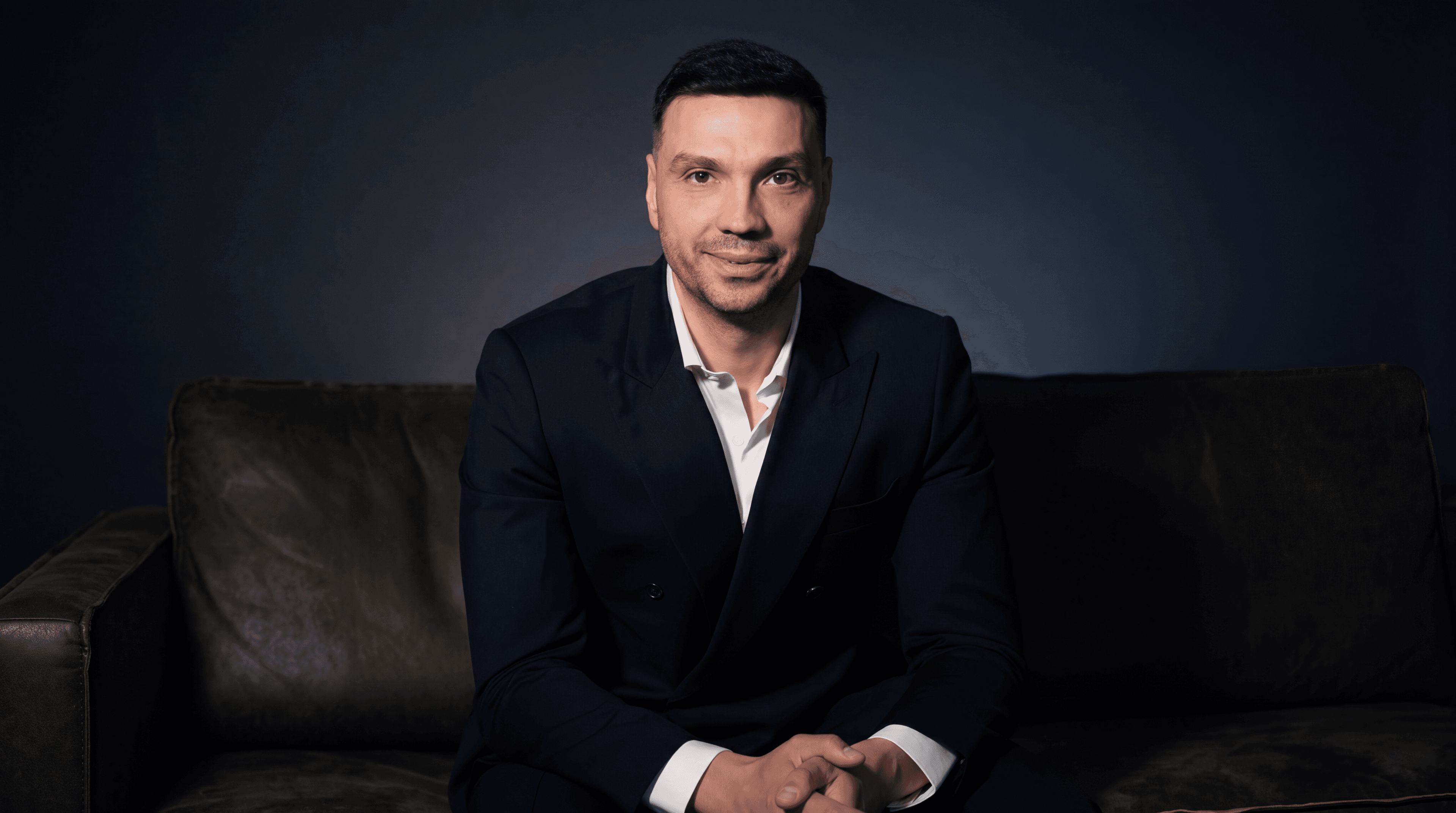
Limitless Agency CEO Daniel Slavenie: "Romanian e-commerce is not declining, but it has become more selective and less forgiving"
Limitless Agency, formed through the 2022 merger of MoLoSo and SEO Cupcake, has grown into one of Romania's top three digital marketing agencies, with group revenues rising from roughly RON 21 million in 2023 to around RON 32 million in 2025. Romania Insider spoke with CEO & Partner Daniel Slavenie about the state of the Romanian e-commerce market, the mistakes online merchants still make, how AI is reshaping agency work, and the company's plans to expand into English-speaking markets, with the United States as a particular focus.
Please tell us a few things about Limitless Agency and your role within the company.
Daniel Slavenie: Today, Limitless is among the top agencies in our industry in Romania, top three by declared group-level revenues. We have grown from approximately RON 21 million in revenue in 2023 to around RON 32 million in 2025, but the most important progress has been unifying the teams while improving our internal procedures and operational flows.
Our business is built around several pillars: SEO, PPC, data & analytics, and more recently GEO, AEO and video content. What connects them is our focus on performance, speed and decisions based on real data. We have also introduced AI much more deeply into our workflows, because the future is not about replacing specialists, but about the right symbiosis between technology, AI and experienced people.
As CEO, my role is to keep the company aligned strategically, commercially and operationally, less about managing every detail, more about building the system, the culture and the clarity that allow the team to perform at a higher level.
The Romanian e-commerce market crossed the €7 billion mark and seems to have entered a phase of stabilisation. What is actually happening underneath that headline number, and who is still growing?
Daniel Slavenie: It is definitely a challenging period. Underneath the €7 billion figure we see a much more cautious consumer environment: political and economic uncertainty, inflationary pressure and lower consumer confidence. Consumers are still buying, but they are far more selective, they compare more, postpone purchases, and respond to clear value and strong offers.
For us, this changes the entire way we work. In many accounts we now allocate almost twice as much strategic and operational effort to protect profitability. It is no longer enough to increase media budgets and expect results.
The merchants that keep growing have strong fundamentals: clean data, good margins, reliable stock, fast decision-making and a clear understanding of their customer. By category, banking and financial services, beauty and well-timed seasonal products have performed best. The market is not declining, but it has become more selective and less forgiving, growth is moving toward merchants who are disciplined and data-driven.
Which of the common mistakes Romanian online merchants make is most costly today, and what separates a "good enough" shop from a genuinely high-performing one in 2026?
Daniel Slavenie: The most expensive mistake is still the lack of clarity in data. Many merchants decide based on instinct or pressure, promoting products with low or unclear margins, or forcing sales for products without real demand, wasting both budget and profitability.
A "good enough" shop knows its audience reasonably well and has functional campaigns and some tracking. A high-performing one connects marketing, stock, margins and customer behaviour into one system. The difference is that a good enough shop reacts, while a high-performing shop anticipates: it promotes the right products, to the right audience, with the right message, at the right moment.
Limitless has invested significantly in its own internal platform. What does it actually do for your clients today?
Daniel Slavenie: The platform is not just a reporting dashboard, it is an operational layer connecting marketing data, product data, stock information and business logic. In e-commerce, we collect product-level data daily and assign up to 25 labels to each product, based on sales performance, margin potential, stock, demand and campaign efficiency. This tells us which products deserve more visibility and budget, and which should be deprioritised.
One very useful feature is the WhatsApp alert system: if an important product or group of products goes out of stock, the system sends an alert, so the client reacts quickly and we avoid wasting media budget. We have also built GEO tools that monitor how brands are positioned inside high-traffic LLMs, as discovery moves beyond classic search engines. The main value is speed and clarity, identifying opportunities and risks early instead of just reporting what happened.
In practice, where is AI changing the day-to-day work of an SEO or PPC specialist most, and where is it still oversold?
Daniel Slavenie: AI still cannot replace strategy, experience and the judgement of a good specialist, that is where the topic is oversold. It accelerates work, structures information and generates options, but the strategic thinking behind a strong SEO or PPC decision remains human.
In PPC, after we analyse performance, margins, demand and stock, AI can suggest structures for product prioritisation or campaign segmentation, but the specialist makes the final call. We also use it operationally: product descriptions, feed optimisation and faster creative testing. In SEO, it helps with research, clustering, content structure and technical analysis.
For us, AI is not a buzzword and not a replacement for people. It is a multiplier, the best results appear when experienced specialists use it correctly, backed by the right data, processes and strategic discipline.
What does the international playbook look like for a Romanian agency entering English-speaking markets, particularly the United States?
Daniel Slavenie: The opportunity is clear, the market is significantly larger, but we are approaching it carefully and selectively. The playbook is not to compete as a classic agency on execution alone, but to combine strong marketing expertise with technology, data and automation.
Our advantage comes from two directions: the technology we have built internally, and the cost-efficiency we can offer without compromising quality, not "cheaper", but a very strong value-to-performance ratio. Romania also has an excellent talent base of both marketers and developers.
As we scale, I would not want to lose what Romania does very well: speed, flexibility, efficiency, pragmatism and a strong focus on results. International expansion is about proving that a Romanian agency, with the right technology, talent and mindset, can compete credibly in the most advanced digital markets.
Looking 12 to 24 months ahead, what is your reading of the market, and what should readers expect from Limitless next?
Daniel Slavenie: I expect Romanian e-commerce to remain under pressure in the short term, with a more visible recovery toward the end of the year. Merchants will need to work harder for every conversion and stay disciplined on margins, stock, pricing and marketing efficiency. AI is accelerating change in how people search, discover and buy, but the customer must remain at the centre. Technology only creates value when it helps us understand the customer better.
For Limitless, the direction is clear: continued investment in our own technology, further development of GEO and AEO services, and a stronger data department. We are also working on several international partnerships with established platforms, which we will announce soon. Ultimately, Limitless wants to be more than an agency, a growth partner built around technology, data and strong specialists, helping companies make better decisions and build more resilient digital businesses.
*This is a Business Views.