

Bucharest’s second airport Băneasa receives bids for feasibility study aimed at modernization

09 April 2026

The “Aurel Vlaicu” Băneasa International Airport, the second airport of the Romanian capital, after the Henri Coandă International Airport, received three bids for the feasibility study aimed at its modernization.

Urban Scope, Egis Romania, Quadratum Architecture (leader), and Haskoning Nederland submitted bids to provide the National Company Bucharest Airports, which manages the airport, with the feasibility study related to the medium- and long-term development strategy of Băneasa Airport.
The feasibility study contract is estimated at RON 7.4 million (EUR 1.45 million), and will take roughly 8 months. 

According to the contract specifications, the Băneasa airport will have a new passenger processing terminal, with the necessary facilities, and with a capacity of at least 800 passengers/hour at peak. To secure this capacity, the airport will consider acquiring nearby properties, according to Profit.ro.

The Băneasa airport is included in Romania’s General Transport Master Plan with two projects, namely the modernization of the takeoff–landing runway to a length of 3500m and PCN 85, and the modernization of the passenger terminal and its expansion with an area of approximately 61,500m². Moreover, the airport should be able to provide cargo facilities.

According to the authorities, the strategic positioning of the airport, in the immediate proximity of Bucharest city center, the extended aircraft parking capacity, the existence of an operational maintenance base, as well as the upward trend of air traffic at the national level, have recently led to increased interest from commercial air operators. 

As a result, passenger traffic at the airport has recorded a significant increase of approximately 400%, from around 10,000 passengers in 2022 to an estimated approximately 400,000 passengers in 2025. According to internal forecasts, starting in 2026, the maximum processing capacity of the current terminal will be reached. This growth estimate is also supported by the development of the M6 subway line currently underway. The subway will ensure a direct connection between it and the Henri Coandă International Airport.

To grow, the airport infrastructure must be properly adapted to serve the traffic demand for public air transport operations, general aviation, and aerial work, both for Schengen and non-Schengen destinations. 

At the same time, for the proper functioning of the airport and in order to maximize operational capacities, it is necessary to develop adjacent infrastructure and support facilities, such as an aircraft hangar and maintenance facilities for general aviation. 

radu@romania-insider.com

(Photo source: Mihai Olaru|Dreamstime.com)

Normal

Bucharest’s second airport Băneasa receives bids for feasibility study aimed at modernization

09 April 2026

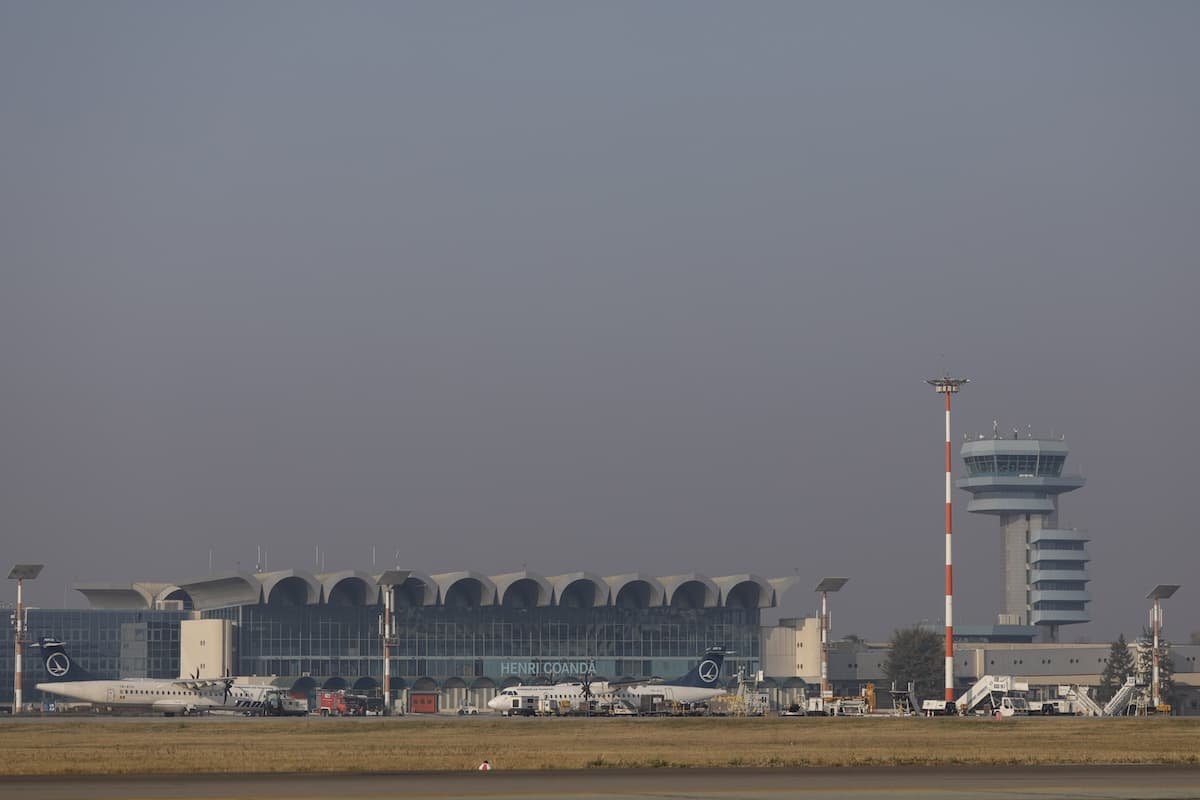
The “Aurel Vlaicu” Băneasa International Airport, the second airport of the Romanian capital, after the Henri Coandă International Airport, received three bids for the feasibility study aimed at its modernization.

Urban Scope, Egis Romania, Quadratum Architecture (leader), and Haskoning Nederland submitted bids to provide the National Company Bucharest Airports, which manages the airport, with the feasibility study related to the medium- and long-term development strategy of Băneasa Airport.
The feasibility study contract is estimated at RON 7.4 million (EUR 1.45 million), and will take roughly 8 months. 

According to the contract specifications, the Băneasa airport will have a new passenger processing terminal, with the necessary facilities, and with a capacity of at least 800 passengers/hour at peak. To secure this capacity, the airport will consider acquiring nearby properties, according to Profit.ro.

The Băneasa airport is included in Romania’s General Transport Master Plan with two projects, namely the modernization of the takeoff–landing runway to a length of 3500m and PCN 85, and the modernization of the passenger terminal and its expansion with an area of approximately 61,500m². Moreover, the airport should be able to provide cargo facilities.

According to the authorities, the strategic positioning of the airport, in the immediate proximity of Bucharest city center, the extended aircraft parking capacity, the existence of an operational maintenance base, as well as the upward trend of air traffic at the national level, have recently led to increased interest from commercial air operators. 

As a result, passenger traffic at the airport has recorded a significant increase of approximately 400%, from around 10,000 passengers in 2022 to an estimated approximately 400,000 passengers in 2025. According to internal forecasts, starting in 2026, the maximum processing capacity of the current terminal will be reached. This growth estimate is also supported by the development of the M6 subway line currently underway. The subway will ensure a direct connection between it and the Henri Coandă International Airport.

To grow, the airport infrastructure must be properly adapted to serve the traffic demand for public air transport operations, general aviation, and aerial work, both for Schengen and non-Schengen destinations. 

At the same time, for the proper functioning of the airport and in order to maximize operational capacities, it is necessary to develop adjacent infrastructure and support facilities, such as an aircraft hangar and maintenance facilities for general aviation. 

radu@romania-insider.com

(Photo source: Mihai Olaru|Dreamstime.com)

Normal

Romania Insider Free Newsletters