Bucharest exhibition spotlights investigations of Romania’s Communist-era political police Securitate

10 June 2026

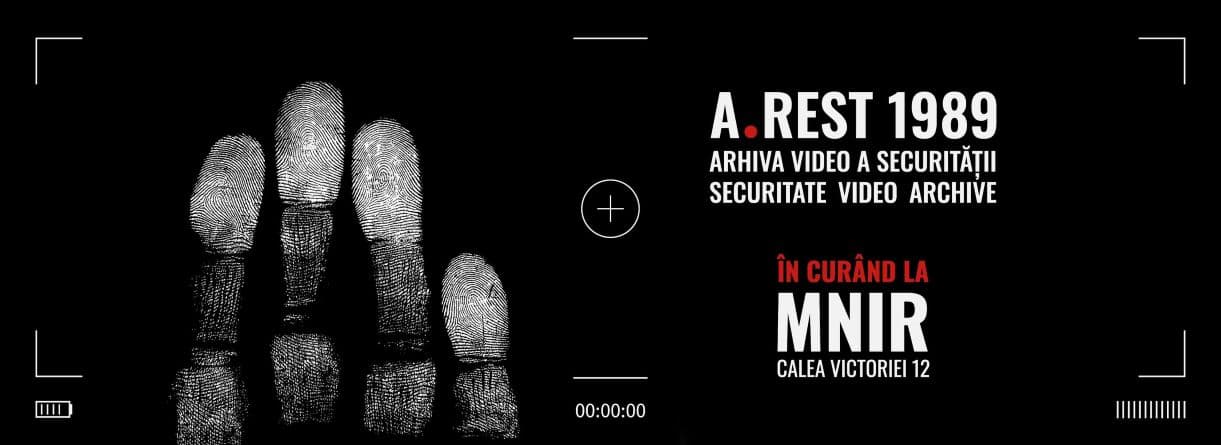
A.REST 1989, an exhibition reconstructing the world of the 1989 criminal investigations of Romania’s political police Securitate, will open at the National Museum of History of Romania on June 16.

The exhibition makes public for the first time audio-video recordings from interrogations and prison cells, as well as original artifacts from the Securitate Detention Center and pieces of criminal evidence. Among them is the printing press used by the group formed around Petre Mihai Băcanu to produce the clandestine newspaper România. Confiscated by Securitate on the night of January 24, 1989, the press was recovered and brought back to Romania for this exhibition, after more than 27 years abroad.

Alongside the exhibition, the online platform www.arestulsecuritatii.ro, showcasing histories, case studies, documents, audio-video recordings, and interviews with former victims of the Securitate, will be launched.

The exhibition aims to make better known the nature of the repression carried out by Securitate, the political police of the Romanian Communist Party. “In the world of the Securitate's ‘justice,’ detainees and prisoners were little more than captives, trapped in the operational labyrinth through which guilt was constructed. For the totalitarian state, guilt was a given. The Securitate secretly isolated its victims, without informing their families or associates, and without publicly disclosing their place of detention. For a long time, the institution of secrecy protected both the oppressors and the sanitized image of autocratic rule,” a description of the exhibition reads.

“Our project is not only an effort to recover a part of history that has not been seen or heard before; it is also a warning. It speaks of a past that was long denied, falsified, or minimized by former officers involved in these abuses, and later relativized, forgotten, or distorted through disinformation and public manipulation strategies related to late Romanian communism,” the organizers explained.

The exhibition is open until September 20.

(Illustration: the organizers)

simona@romania-insider.com

Normal

Bucharest exhibition spotlights investigations of Romania’s Communist-era political police Securitate

10 June 2026

A.REST 1989, an exhibition reconstructing the world of the 1989 criminal investigations of Romania’s political police Securitate, will open at the National Museum of History of Romania on June 16.

The exhibition makes public for the first time audio-video recordings from interrogations and prison cells, as well as original artifacts from the Securitate Detention Center and pieces of criminal evidence. Among them is the printing press used by the group formed around Petre Mihai Băcanu to produce the clandestine newspaper România. Confiscated by Securitate on the night of January 24, 1989, the press was recovered and brought back to Romania for this exhibition, after more than 27 years abroad.
Alongside the exhibition, the online platform www.arestulsecuritatii.ro, showcasing histories, case studies, documents, audio-video recordings, and interviews with former victims of the Securitate, will be launched.

The exhibition aims to make better known the nature of the repression carried out by Securitate, the political police of the Romanian Communist Party. “In the world of the Securitate's ‘justice,’ detainees and prisoners were little more than captives, trapped in the operational labyrinth through which guilt was constructed. For the totalitarian state, guilt was a given. The Securitate secretly isolated its victims, without informing their families or associates, and without publicly disclosing their place of detention. For a long time, the institution of secrecy protected both the oppressors and the sanitized image of autocratic rule,” a description of the exhibition reads.

“Our project is not only an effort to recover a part of history that has not been seen or heard before; it is also a warning. It speaks of a past that was long denied, falsified, or minimized by former officers involved in these abuses, and later relativized, forgotten, or distorted through disinformation and public manipulation strategies related to late Romanian communism,” the organizers explained.

The exhibition is open until September 20.

(Illustration: the organizers)

simona@romania-insider.com

Normal

Romania Insider Free Newsletters