‘We have always been huge believers in the growth of the country’ - Krzysztof Kulig, Senior Partner at Innova Capital, on the private equity player’s presence in Romania

17 March 2026

Romania, alongside Poland, is at the core of private equity firm Innova Capital’s investment focus, thanks to its scale, technical talent, and “entrepreneurial energy.” In this interview, Senior Partner Krzysztof Kulig discusses the firm's local presence and some of the plans for the companies in its Romanian portfolio.

Innova Capital has been present in Romania since 1998 and has carried out several acquisitions and exits over the years, most recently from Optical Investment Group, the optical eyewear retailer operating under the OptiBlu and Optiplaza brands, which it sold in 2024 to eyewear giant EssilorLuxottica.

Innova’s Romanian portfolio now includes EMI, a provider of industrial access maintenance services for logistics and industrial buildings, where it holds a 51% stake alongside founder Jerome France and private equity fund Morphosis Capital. It is also an investor in payment processor and a digital solutions provider Netopia Group, co-founded by Antonio Éram and Felix Crișan, as well as in payment services operator PayPoint, which has been active in Romania since 2007.

Innova’s approach centers on applying what it calls its “3I” strategy - namely, institutionalize, internationalize, and innovate - to high-potential, founder-led companies. One example is EMI Group, which it acquired in 2023. Since then, the group has made acquisitions in the Netherlands, Belgium, and Romania. Netopia, which recently sold its SMS messaging business, Web2SMS, to Norway’s Link Mobility, could also follow an internationalization path.

At the same time, with its two investments in the digital payments sector, the firm is betting on the shift away from cash transactions while planning to expand beyond pure payment services and offer additional financial products through the network it operates locally.

More on Innova Capital’s views on Romania’s potential and its plans for the payment businesses in its local portfolio in this interview with Krzysztof Kulig, Senior Partner at Innova Capital.

Innova Capital has been active locally since 1998. How would you assess the current investment climate compared to other periods?

Romania has been the second-largest market for us, after Poland, and we have always been huge believers in the growth of the country and convergence with the rest of Europe. That hasn't changed. We believe that the country has enormous potential, offering scale and what we call entrepreneurial energy. That is, of course, what we are looking at.

Both Poland and Romania are going through the change from a low-cost-based country to technology-driven, digitalization-driven companies. The space might be different, but it's definitely a trend, and we like it. We like the fact that Romania is getting their macro policy tied up, that they fight the deficit, which in the long run is going to contribute to more stability in the country, so it's better in terms of investments. From an attractiveness standpoint, I think that right now, for us, maybe Romania is more attractive than it has ever been in terms of investments.

As Innova, we started looking more into investing in very good, founders-led companies, which we can take and turn into European or regional champions. It's basically taking a very good Romanian company and trying to do something which we call the 3I, which is institutionalize, internationalize, and innovate.

When we talk about institutionalizing, we always bring an upgrade in the management. We always discuss with the founders how we can improve the management of the company. That's something that we do: bringing really good talent into those companies.

Then we innovate, which is basically we double down on the digitalization of those businesses. That's where Romania is very strong because there's enormous technical talent here. When I look especially at our payments businesses, the things that we have to do, usually using outside companies, we can [do] using people and engineers that we have in our businesses, which is quite unusual.

Once you do those two things, then you can internationalize these businesses because they are getting stronger, and you can take them outside Romania. One good example of that is EMI, where we bought a Romanian company, which has now bought three companies in Belgium and one in the Netherlands, and became one of the largest European players. So, it is possible, if you do it in the right way, to invest in those companies and grow them not only in Romania, but also outside. That is our focus. Again, when I look at this, there probably hasn't been a better time to invest in Romania than today.

Of course, we see in our businesses that there was a dip in terms of consumer spending as a result of tax increases and cost-cutting, but I think it's temporary. In the mid and long run, this growth is going to come back. I believe that this year already you're going to see growth in the economy in Romania, and I think it's going to be more stable. The other thing that, of course, is very important - for us, probably as important as fighting the deficit - is regulatory predictability. If we talk to our investors, they compare investing in Western Europe and investing in our part of the world, and the same applies to Poland and Romania. The regulatory predictability is one of the most important issues: that we're not going to be surprised by changing regulations, and that they are transparent. That is still something to improve.

You currently have in your portfolio EMI and two payment businesses. Are there any other sectors that you are looking at?

At Innova, we have three sectors that we're looking at. One is business services - financial services, one is industrial, and the other one is what we call the lifestyle, which also includes retail and consumer, but also healthcare. These are the sectors that we will be looking at.

This is basically reflected in our recent deals that we've done in Romania. We have one industrial deal in EMI. We have two deals in financial services and digital payments. We used to have the retail chain of opticians in Romania [e.n. Optical Investment Group] which we sold to EssilorLuxottica. So you know we believe that these sectors are very interesting in Romania. They are still, in my opinion, underpenetrated. Digital payments and modern retail infrastructure still need to be consolidated and invested in, and these are the sectors that we'll be looking at.

Are you looking at all at defense?

Because of our investor base - we have both EBRD and IFC as our investors - their charter did not allow us to invest strictly into defense businesses. We can do dual use and, of course, that's something that we'll be very interested [in] but we cannot invest in pure defense. We wouldn't be able to invest in a producer of ammunition or anything that is offensive in a military sense. In Poland, we have invested in a provider of satellite cloud services [e.n. CloudFerro], with both civil and military use. This we can do.

Would you say that you're seeing enough investment opportunities in Romania?

As I said, Romania is our second market, and I think it's going to continue to be. We have invested hundreds of millions in the country, and we see transactions from Romania. I think they're changing in the sense that companies are becoming larger and with more ambitions to grow. I think that we'll be seeing more and more of those companies.

Moving on to PayPoint and Netopia, where do they stand in your investment cycle?

They are both in the digital payments and we've been investing in that sector, especially in Poland, for a very long time. When we looked at the Romanian market, we realized that Romania probably in terms of penetration of those services is a couple of years behind Poland.  For us, it was sort of making a bet that Romania is going to catch up. One of the things that, of course, we bet on is the conversion from cash payments to digital payments.

That was our premise when we invested in PayPoint, where we developed a network of not only bill payment terminals, but a sort of financial hub for a client, for a consumer, where they can do multiple transactions, including using digital payments, cards, RoPay, or any other system that will be available. We plan to build the network to a significant number, which we are in the process of doing. We still would like to continue for some time to build a larger network in Romania, so I'll say that probably another couple of years, we would like to keep the business.

In Netopia, [e.n. the investment] is from a younger fund. Again, we still have more years to come, and we're quite excited. The penetration of e-commerce transactions is growing in Romania, despite the sort of a dip in consumer spending. I think that is going to catch up, and the driver for that is the conversion to digital payments more and more. Again, I think we would like to continue to be an investor for some time. Especially for Netopia, I think there is an opportunity to take the company also outside Romania with some of our clients.

Romania is still cash-heavy compared to other European markets. What does that mean for the strategies you're applying for Netopia and PayPoint?

In Poland, there was a very interesting idea that the Government had, where they founded something called Cashless Poland, where they funded a terminal for a merchant for twelve months. Basically, it was free of charge to any merchant who wanted to use the POS terminal in the market. Of course, that skyrocketed the use of cards.

In Romania, it's a different approach. There’s a law, which is now in power, that you actually have to have a terminal, which wasn't really that well enforceable. Now that things change, there should be a big boost in terms of available terminals to pay, and since cards also penetrate quite well, I believe that we are just before a sort of a really big increase in those numbers. That is one of the reasons still why we wanted to stay longer in this investment.

At the end of last year, Netopia partnered with MerchantPro to introduce AI checkout with one-click payment. Do you have any feedback yet on this, or any data on the adoption?

We have it ready. We're quite excited about having this because it’s a facilitated transaction. It's much more customer friendly in that sense. My expectation is that it should be increasing its penetration as a method of completing the transaction.

Are there any other plans for PayPoint or Netopia that you can disclose?

We are in the licensing process with the National Bank of Romania, which is quite important for us. We have invested a lot of money in the last year into security compliance and basically preparing ourselves to take the both companies to the next level. Once we get the licenses, I think we'll be able to introduce a lot of new products for both companies and Romanian customers, which opens up the next very exciting chapter for our investments.

We would like to be able to offer not only pure payments, but also cash debit accounts to merchants or line of credits to merchants. We would like to offer some more products in cooperation with banks, for which we do need a license. This is in line with our strategy to be able to offer more financial products using the merchants and the hubs that we have in Romania.

That is especially important because in Bucharest you have a lot of bank branches, you have opportunities, but if you go to the rural areas, which are underbanked, it is important to be able to offer them these other services at the points where they do grocery shopping and that they can get more financial products.

Are you looking to expand the PayPoint network?

We've surpassed 35,000 terminals, and by the end of the year, we plan to reach nearly 50,000. Of course, we would like to continue. At the point of exit, I would like it to be somewhere closer to 100, 000, but it's going very well, and the bigger adoption, the more transactions, that would allow us to roll out faster in some other areas. It's very important to activate these inactive customers who don't use cards or take cards and use them once a month to pay everything in cash from an ATM. We really need to sort of teach them that they can use this card not only for bill payments, but also for other things like insurance, everything that we can think of to be digitalized. […]

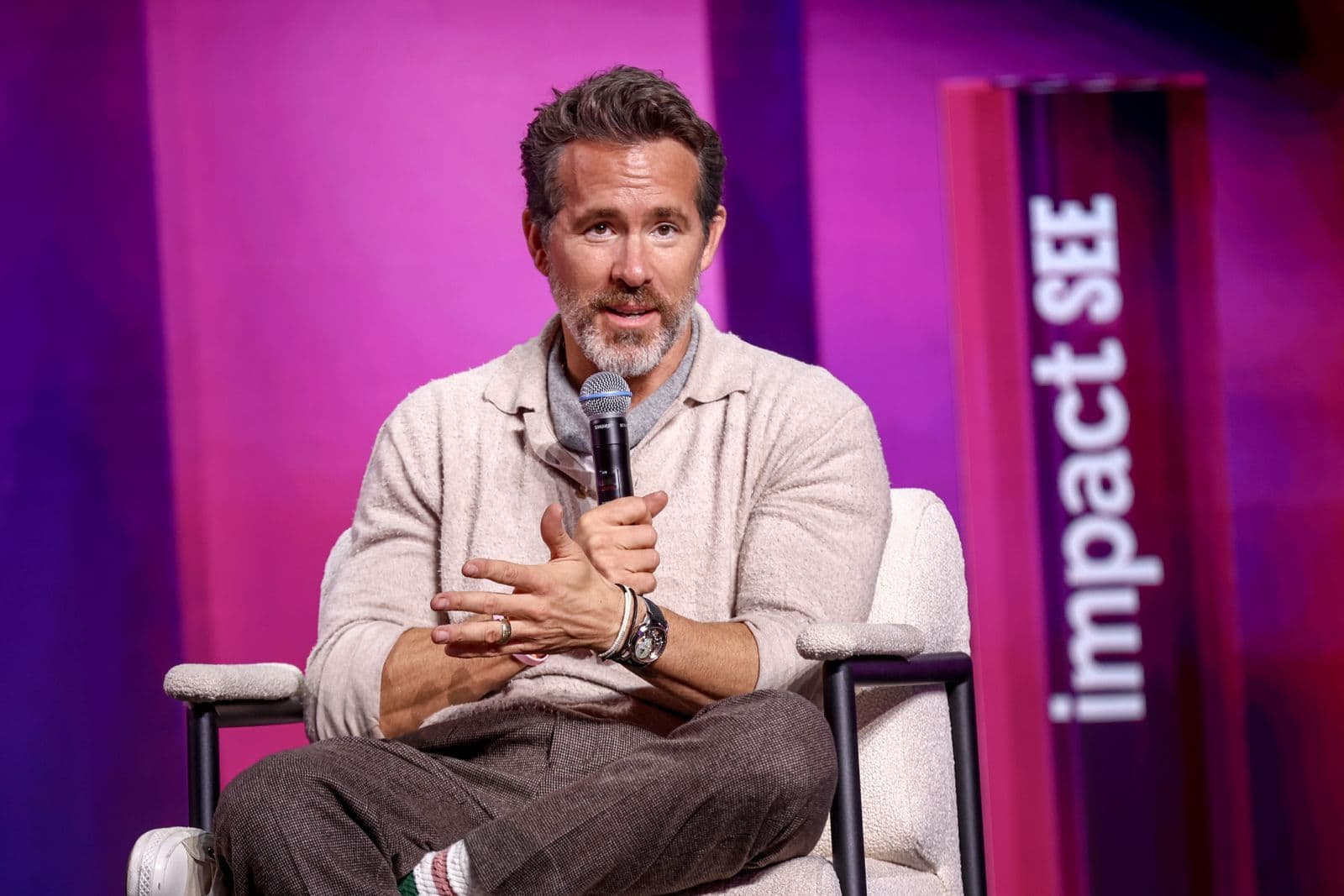
(Photo: Innova Capital)

simona@romania-insider.com

Normal

‘We have always been huge believers in the growth of the country’ - Krzysztof Kulig, Senior Partner at Innova Capital, on the private equity player’s presence in Romania

17 March 2026

Romania, alongside Poland, is at the core of private equity firm Innova Capital’s investment focus, thanks to its scale, technical talent, and “entrepreneurial energy.” In this interview, Senior Partner Krzysztof Kulig discusses the firm's local presence and some of the plans for the companies in its Romanian portfolio.

Innova Capital has been present in Romania since 1998 and has carried out several acquisitions and exits over the years, most recently from Optical Investment Group, the optical eyewear retailer operating under the OptiBlu and Optiplaza brands, which it sold in 2024 to eyewear giant EssilorLuxottica.
Innova’s Romanian portfolio now includes EMI, a provider of industrial access maintenance services for logistics and industrial buildings, where it holds a 51% stake alongside founder Jerome France and private equity fund Morphosis Capital. It is also an investor in payment processor and a digital solutions provider Netopia Group, co-founded by Antonio Éram and Felix Crișan, as well as in payment services operator PayPoint, which has been active in Romania since 2007.

Innova’s approach centers on applying what it calls its “3I” strategy - namely, institutionalize, internationalize, and innovate - to high-potential, founder-led companies. One example is EMI Group, which it acquired in 2023. Since then, the group has made acquisitions in the Netherlands, Belgium, and Romania. Netopia, which recently sold its SMS messaging business, Web2SMS, to Norway’s Link Mobility, could also follow an internationalization path.

At the same time, with its two investments in the digital payments sector, the firm is betting on the shift away from cash transactions while planning to expand beyond pure payment services and offer additional financial products through the network it operates locally.

More on Innova Capital’s views on Romania’s potential and its plans for the payment businesses in its local portfolio in this interview with Krzysztof Kulig, Senior Partner at Innova Capital.

Innova Capital has been active locally since 1998. How would you assess the current investment climate compared to other periods?

Romania has been the second-largest market for us, after Poland, and we have always been huge believers in the growth of the country and convergence with the rest of Europe. That hasn't changed. We believe that the country has enormous potential, offering scale and what we call entrepreneurial energy. That is, of course, what we are looking at.

Both Poland and Romania are going through the change from a low-cost-based country to technology-driven, digitalization-driven companies. The space might be different, but it's definitely a trend, and we like it. We like the fact that Romania is getting their macro policy tied up, that they fight the deficit, which in the long run is going to contribute to more stability in the country, so it's better in terms of investments. From an attractiveness standpoint, I think that right now, for us, maybe Romania is more attractive than it has ever been in terms of investments.

As Innova, we started looking more into investing in very good, founders-led companies, which we can take and turn into European or regional champions. It's basically taking a very good Romanian company and trying to do something which we call the 3I, which is institutionalize, internationalize, and innovate.

When we talk about institutionalizing, we always bring an upgrade in the management. We always discuss with the founders how we can improve the management of the company. That's something that we do: bringing really good talent into those companies.

Then we innovate, which is basically we double down on the digitalization of those businesses. That's where Romania is very strong because there's enormous technical talent here. When I look especially at our payments businesses, the things that we have to do, usually using outside companies, we can [do] using people and engineers that we have in our businesses, which is quite unusual.

Once you do those two things, then you can internationalize these businesses because they are getting stronger, and you can take them outside Romania. One good example of that is EMI, where we bought a Romanian company, which has now bought three companies in Belgium and one in the Netherlands, and became one of the largest European players. So, it is possible, if you do it in the right way, to invest in those companies and grow them not only in Romania, but also outside. That is our focus. Again, when I look at this, there probably hasn't been a better time to invest in Romania than today.

Of course, we see in our businesses that there was a dip in terms of consumer spending as a result of tax increases and cost-cutting, but I think it's temporary. In the mid and long run, this growth is going to come back. I believe that this year already you're going to see growth in the economy in Romania, and I think it's going to be more stable. The other thing that, of course, is very important - for us, probably as important as fighting the deficit - is regulatory predictability. If we talk to our investors, they compare investing in Western Europe and investing in our part of the world, and the same applies to Poland and Romania. The regulatory predictability is one of the most important issues: that we're not going to be surprised by changing regulations, and that they are transparent. That is still something to improve.

You currently have in your portfolio EMI and two payment businesses. Are there any other sectors that you are looking at?

At Innova, we have three sectors that we're looking at. One is business services - financial services, one is industrial, and the other one is what we call the lifestyle, which also includes retail and consumer, but also healthcare. These are the sectors that we will be looking at.

This is basically reflected in our recent deals that we've done in Romania. We have one industrial deal in EMI. We have two deals in financial services and digital payments. We used to have the retail chain of opticians in Romania [e.n. Optical Investment Group] which we sold to EssilorLuxottica. So you know we believe that these sectors are very interesting in Romania. They are still, in my opinion, underpenetrated. Digital payments and modern retail infrastructure still need to be consolidated and invested in, and these are the sectors that we'll be looking at.

Are you looking at all at defense?

Because of our investor base - we have both EBRD and IFC as our investors - their charter did not allow us to invest strictly into defense businesses. We can do dual use and, of course, that's something that we'll be very interested [in] but we cannot invest in pure defense. We wouldn't be able to invest in a producer of ammunition or anything that is offensive in a military sense. In Poland, we have invested in a provider of satellite cloud services [e.n. CloudFerro], with both civil and military use. This we can do.

Would you say that you're seeing enough investment opportunities in Romania?

As I said, Romania is our second market, and I think it's going to continue to be. We have invested hundreds of millions in the country, and we see transactions from Romania. I think they're changing in the sense that companies are becoming larger and with more ambitions to grow. I think that we'll be seeing more and more of those companies.

Moving on to PayPoint and Netopia, where do they stand in your investment cycle?

They are both in the digital payments and we've been investing in that sector, especially in Poland, for a very long time. When we looked at the Romanian market, we realized that Romania probably in terms of penetration of those services is a couple of years behind Poland.  For us, it was sort of making a bet that Romania is going to catch up. One of the things that, of course, we bet on is the conversion from cash payments to digital payments.

That was our premise when we invested in PayPoint, where we developed a network of not only bill payment terminals, but a sort of financial hub for a client, for a consumer, where they can do multiple transactions, including using digital payments, cards, RoPay, or any other system that will be available. We plan to build the network to a significant number, which we are in the process of doing. We still would like to continue for some time to build a larger network in Romania, so I'll say that probably another couple of years, we would like to keep the business.

In Netopia, [e.n. the investment] is from a younger fund. Again, we still have more years to come, and we're quite excited. The penetration of e-commerce transactions is growing in Romania, despite the sort of a dip in consumer spending. I think that is going to catch up, and the driver for that is the conversion to digital payments more and more. Again, I think we would like to continue to be an investor for some time. Especially for Netopia, I think there is an opportunity to take the company also outside Romania with some of our clients.

Romania is still cash-heavy compared to other European markets. What does that mean for the strategies you're applying for Netopia and PayPoint?

In Poland, there was a very interesting idea that the Government had, where they founded something called Cashless Poland, where they funded a terminal for a merchant for twelve months. Basically, it was free of charge to any merchant who wanted to use the POS terminal in the market. Of course, that skyrocketed the use of cards.

In Romania, it's a different approach. There’s a law, which is now in power, that you actually have to have a terminal, which wasn't really that well enforceable. Now that things change, there should be a big boost in terms of available terminals to pay, and since cards also penetrate quite well, I believe that we are just before a sort of a really big increase in those numbers. That is one of the reasons still why we wanted to stay longer in this investment.

At the end of last year, Netopia partnered with MerchantPro to introduce AI checkout with one-click payment. Do you have any feedback yet on this, or any data on the adoption?

We have it ready. We're quite excited about having this because it’s a facilitated transaction. It's much more customer friendly in that sense. My expectation is that it should be increasing its penetration as a method of completing the transaction.

Are there any other plans for PayPoint or Netopia that you can disclose?

We are in the licensing process with the National Bank of Romania, which is quite important for us. We have invested a lot of money in the last year into security compliance and basically preparing ourselves to take the both companies to the next level. Once we get the licenses, I think we'll be able to introduce a lot of new products for both companies and Romanian customers, which opens up the next very exciting chapter for our investments.

We would like to be able to offer not only pure payments, but also cash debit accounts to merchants or line of credits to merchants. We would like to offer some more products in cooperation with banks, for which we do need a license. This is in line with our strategy to be able to offer more financial products using the merchants and the hubs that we have in Romania.

That is especially important because in Bucharest you have a lot of bank branches, you have opportunities, but if you go to the rural areas, which are underbanked, it is important to be able to offer them these other services at the points where they do grocery shopping and that they can get more financial products.

Are you looking to expand the PayPoint network?

We've surpassed 35,000 terminals, and by the end of the year, we plan to reach nearly 50,000. Of course, we would like to continue. At the point of exit, I would like it to be somewhere closer to 100, 000, but it's going very well, and the bigger adoption, the more transactions, that would allow us to roll out faster in some other areas. It's very important to activate these inactive customers who don't use cards or take cards and use them once a month to pay everything in cash from an ATM. We really need to sort of teach them that they can use this card not only for bill payments, but also for other things like insurance, everything that we can think of to be digitalized. […]

(Photo: Innova Capital)

simona@romania-insider.com

Normal

Romania Insider Free Newsletters