Romania Is Becoming Europe's Green-Energy Powerhouse - and the Smart Money Is Already Moving
Record solar build-out. A battery-storage market that just crossed a historic threshold. Billions in EU-backed funding and a wave of institutional capital flowing in. For investors seeking European exposure with room for stronger returns,…
Romania Insider
· Updated · 7 min read
Record solar build-out. A battery-storage market that just crossed a historic threshold. Billions in EU-backed funding and a wave of institutional capital flowing in. For investors seeking European exposure with room for stronger returns, Romania has quietly become one of the continent's most compelling renewable-energy opportunities - and the best way in is execution-ready projects.
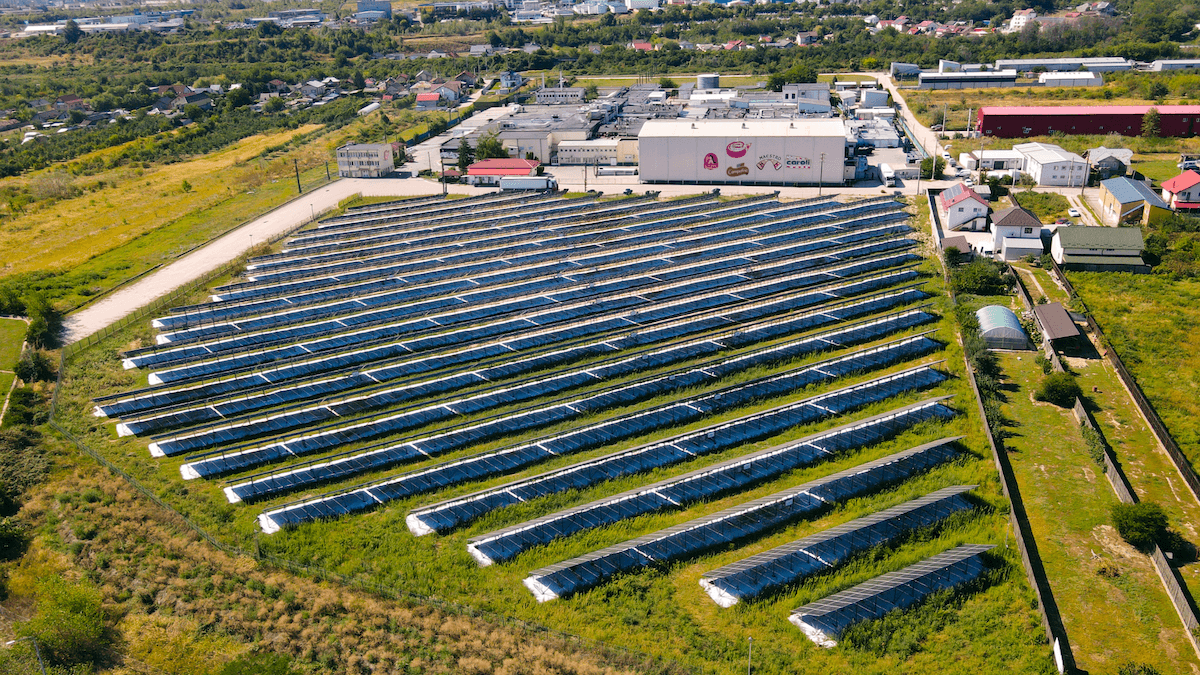
There is a moment in every emerging market when the smart money stops asking whether and starts asking how fast. For Romanian green energy, that moment is now. The signals are hard to miss. Romania added roughly 1.5 GW of new solar capacity in the first five months of 2026 alone and is on course to break its own deployment record for the second year running, according to figures from the Romanian Photovoltaic Industry Association. Its battery-storage market has just crossed a historic line - passing the 1 GWh threshold and climbing toward 500 MW of installed power. And the capital following these numbers is no longer speculative or local: pan-European independent power producers, Nordic and Israeli developers, and institutions including the European Bank for Reconstruction and Development are now committing tens of millions of euros at a time to Romanian solar-and-storage projects. This is what the early phase of a market re-rating looks like. Here is why Romania has become the destination - and why the investors who understand one particular dynamic are positioned to win. A market moving at speed Romania is in the middle of the most significant energy transformation in its modern history. It is building utility-scale solar, wind and battery capacity simultaneously, while retiring coal - the country is set to complete its coal phase-out by 2032 - and racing to modernise a grid that a decade of underinvestment left behind. That combination creates something investors prize: structural, long-term demand for new generation. Coal is coming off the system. Electricity consumption is rising. Industry is electrifying. Data centres and advanced manufacturing are arriving. Every one of those trends points the same way - Romania needs to build, and keep building, for years. The state has put real money behind the transition. Achieving Romania's energy-strategy goals is estimated to require on the order of €127 billion in investment this decade, and the policy scaffolding is already in place to de-risk it: a Contracts-for-Difference scheme offering long-term revenue stability, a second CfD round covering roughly 3,472 MW financed with €3 billion from the EU Modernisation Fund, and a dedicated €150 million scheme launched by the Ministry of Energy for stand-alone battery storage. For a foreign investor, this is the rare case where public policy and private return are pulling in the same direction.
Free newsletters
Romania, in your inbox before your first coffee.
Get the Daily — the morning briefing, free, in English, unsubscribe anytime. Want business, real estate or travel digests too? Pick your newsletters →
Ambition alone doesn't attract capital. Returns do. And this is where Romania's case becomes genuinely difficult to argue against. Set against mature Western European markets - Germany, the Netherlands, France, Denmark - Romania offers markedly lower land-acquisition costs, lower development expenses and competitive labour, while sitting inside the very same European Union single market. The result is a familiar one to anyone who has watched capital rotate through Europe's energy transition: comparable EU-grade regulatory protection, but room for meaningfully stronger risk-adjusted returns. The natural resources are there to support it. Romania has some of the strongest wind resources in southeastern Europe, concentrated in the Dobrogea region, alongside solar irradiation that has made photovoltaics increasingly bankable. Its position at the crossroads of Central Europe, Eastern Europe and the Balkans makes it a natural regional energy hub - which is precisely why international utilities, infrastructure funds and independent power producers have started treating it as one. And then there is storage - the part of the story that has moved fastest of all.
The storage turn - and why it matters for returns
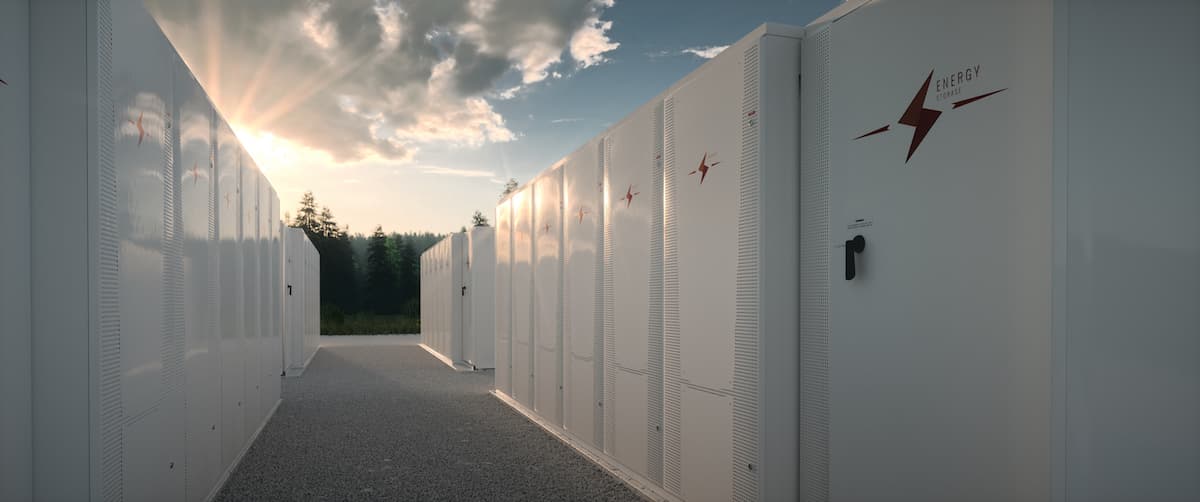
For years, Romanian renewable investment meant one thing: build solar. That era is ending, and the shift is a decisive one. As the country's solar fleet has grown, the value has migrated to the technology that makes it dispatchable. Without storage, solar and wind remain hostage to weather, grid congestion and negative prices at peak production. With storage, that same clean power can be shifted to the evening hours when the system - and the price - needs it most. The transmission operator, Transelectrica, estimates that integrating all of Romania's planned renewable capacity will require between 10 and 20 GWh of storage by 2030. Against today's roughly 1 GWh, that is not an incremental target. It is a market waiting to be built. The capital already understands this. Recent months have seen a French-backed hybrid project set to become the largest solar park in Europe once commissioned; an Israeli developer committing more than $93 million to pair batteries with its Romanian solar parks; and EBRD-financed and multi-party standalone storage projects reaching hundreds of megawatt-hours. Co-located solar-plus-storage is fast becoming the default configuration for serious money - and the projects being financed today are overwhelmingly hybrid. For an investor, the implication is simple: the most attractive Romanian energy assets are no longer panels on land. They are integrated, grid-connected, storage-enabled projects. Which raises the question that separates a good Romanian investment from a stalled one.
The real edge: execution-ready capacity
Here is the dynamic most newcomers miss. Romania's project
pipeline
is enormous - tens of thousands of megawatts have been screened. But a pipeline is not a power plant. The scarce, valuable and genuinely investable commodity is capacity that has cleared the gauntlet: land secured, permits obtained, grid-connection approval granted, ready to build. The attrition along that path is severe. Industry pipeline data tells the real story - of the thousands of megawatts screened, only a fraction, on the order of one in ten, actually progress from early-stage approval to commissioning. Grid access in congested regions, multi-stage permitting that can run to two years, and the transmission-connection agreements that must be secured within defined timelines - these are where projects quietly die. A megawatt on a spreadsheet is not the same as a megawatt with a signed grid-connection contract. That gap is not a reason to hesitate. It is the entire opportunity. In a market this active,
execution-ready capacity commands a premium
, delivers revenue sooner, and hands its owner first position for the next round of projects. The investors who win in Romania are not the ones chasing the cheapest megawatts on paper. They are the ones with access to projects that are actually built to be built.
How DTR Energy positions investors on the right side of that gap
This is the discipline DTR Energy was created around. Building on the network and local depth of Door to Romania, DTR Energy is a dedicated renewable-energy investment and development company focused on utility-scale solar, storage and wind - and specifically on the part of the market where value is real rather than theoretical. DTR Energy's model gives investors access on both sides of the risk spectrum: ready-to-build hybrid PV-and-battery projects with permits and grid connection already secured, and earlier-stage greenfield opportunities originated directly, at competitive cost, with significant upside. In renewable energy, the difference between a project that looks good on paper and one that delivers value to investors comes down to grid access, permitting status and the ability to meet genuine market demand - and that difference is exactly what DTR Energy is structured to manage. Behind that sits what actually moves projects from approval to operation: local land and logistics reach, established relationships with the authorities and grid operator, lender-grade documentation, and the execution discipline to keep a project on timeline. For an international investor, it is the combination that turns Romania's opportunity into a Romanian asset that performs.
“Romania has moved from potential to performance: the resources, the EU funding and the demand are all in place, and serious capital is already moving. What still separates a strong return from a stalled project is access to capacity that is genuinely ready to build - and that is exactly where we position our investors,” says Dragos Poede, CEO of DTR Energy.
The window is open now Romania has the resources, the EU framework, the demand and the returns. It has record deployment, a storage market at an inflection point, and institutional capital arriving in size. What it also has - for now - is available execution-ready capacity at a stage of the cycle where early movers are rewarded. Markets like this do not stay early forever. For investors seeking exposure to one of Europe's fastest-growing renewable-energy markets, DTR Energy offers a direct, local, execution-focused way in - turning opportunity into long-term value.