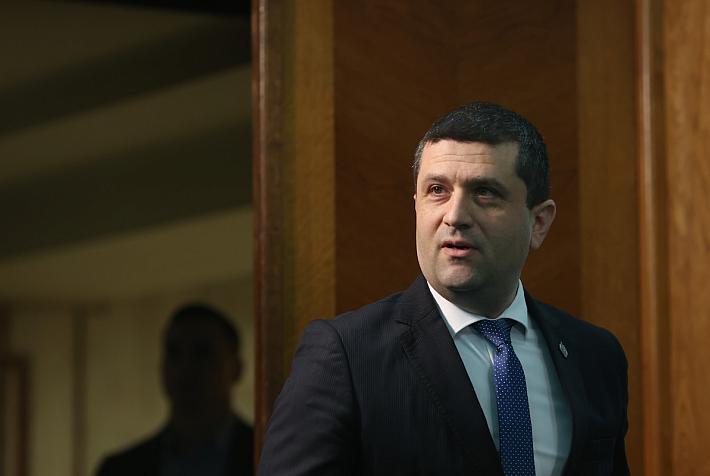
CoE Commissioner for Human Rights expresses concern over illegal care homes case in Romania

The Council of Europe Commissioner for Human Rights, Michael O'Flaherty, addressed an open letter to Romanian acting prime minister Ilie Bolojan on Tuesday, July 21, expressing concern over the issue of the unauthorized care homes operating in Bihor County, western Romania.
The letter follows a visit to Romania that O’Flaherty conducted in May of this year, during which he gained “deep insights into the human rights situation of older persons in residential care.” The CoE official noted that Romania achieved progress in reforming social services in recent years.
“I was encouraged by the commitment demonstrated by many of those working in care homes,” he said.
The visit also revealed problems. “Older people and others in care institutions continue to be regarded as beneficiaries of services rather than fully-fledged rights holders, a perspective that warrants reconsideration across the social care system. The ongoing shortage of care services makes access difficult, particularly as Romania’s population ages and care needs are growing,” the official noted in the letter.
Similarly, some of the most vulnerable, including those living in poverty or with disabilities or mental health issues, struggle to obtain proper care.
Bihor illegal care homes
The letter, however, centered on the issue of unlicensed care homes operating illegally in various forms in Romania, particularly the ones in Bihor County, where Ilie Bolojan served as mayor of Oradea and then County Council president.
“For many years, this institution operated unlawfully, reportedly hosting thousands of vulnerable people under abusive conditions, with over a thousand deaths recorded. I welcome the recent intervention of the Directorate for Investigating Organised Crime and Terrorism and the transfer of residents to hospitals and licensed care facilities. However, I am concerned by how long this situation persisted, despite repeated alerts from civil society and journalists,” the Council of Europe Commissioner for Human Rights said.
The CoE official argued it would be useful to review and adopt legal provisions to combat the operation of illegal care homes and to strengthen independent monitoring mechanisms. He said Romania should establish clear procedures for reporting and investigating deaths occurring in homes for elderly people.
Michael O'Flaherty also said that care home residents should have access to mechanisms through which they can report problems and request their resolution. At the same time, the role of non-governmental organizations in promoting respect for human rights and the dignity of residents should be recognized and supported.
Care homes owner’s response
The owner of the illegal care homes in Bihor, Viorel Paşca, responded to O’Flaherty’s letter, rejecting his criticism. Paşca disputed the CoE official’s information and said that his establishment, Dumbrava, never operated as a center or a care home.
“All the locations were actually residential homes where Romanian citizens lived and had their official residence. None of them lived there illegally, were held against their will, abused, or tortured, as was claimed in the media,” he said in a post on Facebook.
Finally, Viorel Paşca criticized O’Flaherty’s appreciation for DIICOT prosecutors and the way they acted in the Dumbrava case.
The Bihor illegal care homes case broke at the end of last month, uncovering similarities with another, more serious case from 2023. Prosecutors claim that hundreds of elderly individuals, people with severe mental disabilities, and homeless people were turned into simple “sources of income” under the guise of charitable activity. According to DIICOT, over 2,200 vulnerable persons passed through centers controlled by the group in the last 6 years.
Unlike the 2023 case, however, the situation of the care homes in Bihor is not as clear, leading many to argue that Viorel Pașca and his association were doing their best with the available resources, taking care of patients who had been abandoned by state institutions.
(Photo source: Council of Europe Commissioner for Human Rights on Facebook)