Remains of 23 political prisoners and anti-communist martyrs discovered in southern Romania
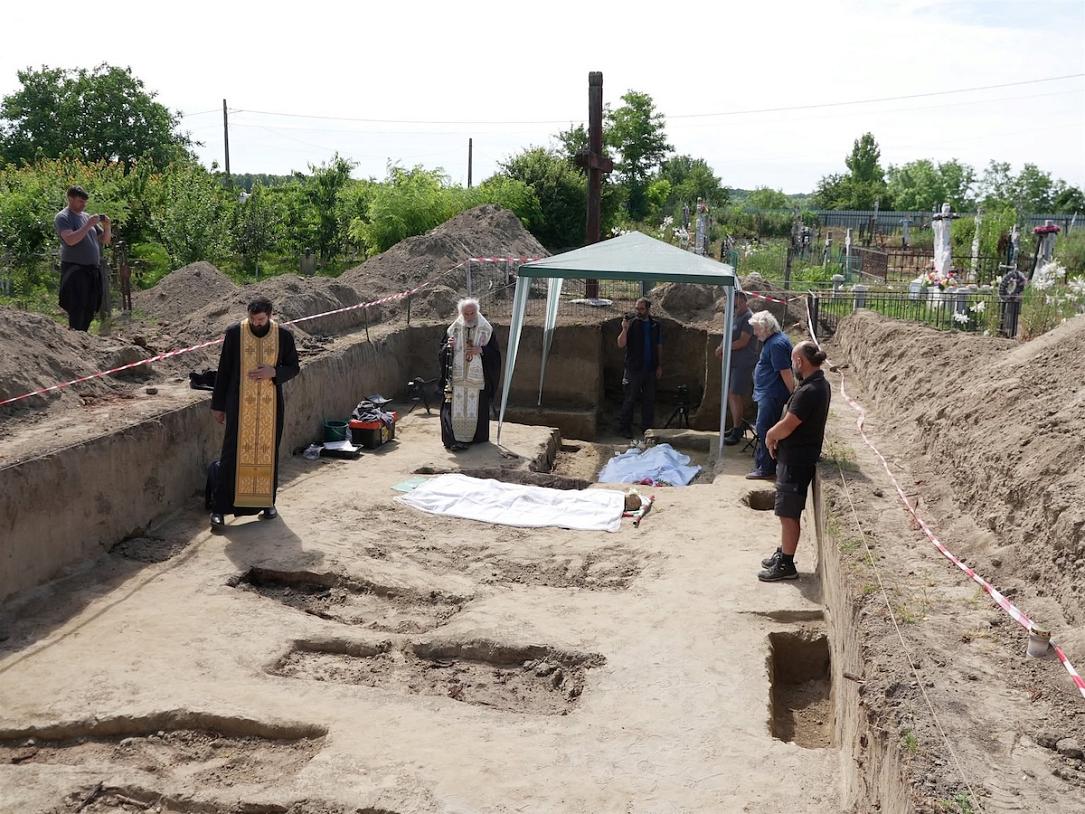
The remains of 23 political prisoners and anti-communist martyrs were discovered following the third stage of archaeological excavations carried out in the cemetery in the village of Agaua, in the Great Island of Brăila, as part of the project to identify and recover the victims of the former Salcia labor camp.
According to the Archdiocese of Lower Danube, the excavations were carried out by a team of experts coordinated by historian Marius Oprea.
Experts found a coffin containing five bodies that had been there for 75 years.
“Following the excavations, 23 new human remains of victims from this forced labor colony were identified, after in previous years another 15 earthly remains of those who endured terrible suffering and torment in this area of the country had also been discovered,” the Press Office of the Archdiocese of Lower Danube transmitted, cited by Agerpres.
Church officials conducted the funeral service for the victims of the communist regime, and the remains were placed in wooden reliquaries and deposited in the churches in the localities of Agaua and Frecăţei, according to church regulations.
At the conclusion of the religious ceremony, Lower Danube Archbishop Casian performed the service for the placing of the cross of the ossuary shrine, located near the “Holy 40 Martyrs of Sebaste” Memorial Cross, inaugurated in 2021 and dedicated to the victims of the former Salcia camp.
The former Salcia labor colony operated between 1952 and 1964, on the Great Island of Brăila, being considered one of the harshest camps of the Romanian communist repressive system. Thousands of political prisoners were used for dike construction, drainage, and agricultural development works in the Brăila Marsh, under extremely difficult conditions marked by hunger, cold, illness, violence, and exhausting labor. Numerous prisoners lost their lives in the camp, being buried in mass graves.
The Agaua dig site and the accompanying research project aim to recover and honor the memory of those who were imprisoned, exploited, and died in tragic conditions in one of the harshest labor colonies of the communist period.
(Photo source: Arhiepiscopia Dunării de Jos on Facebook)