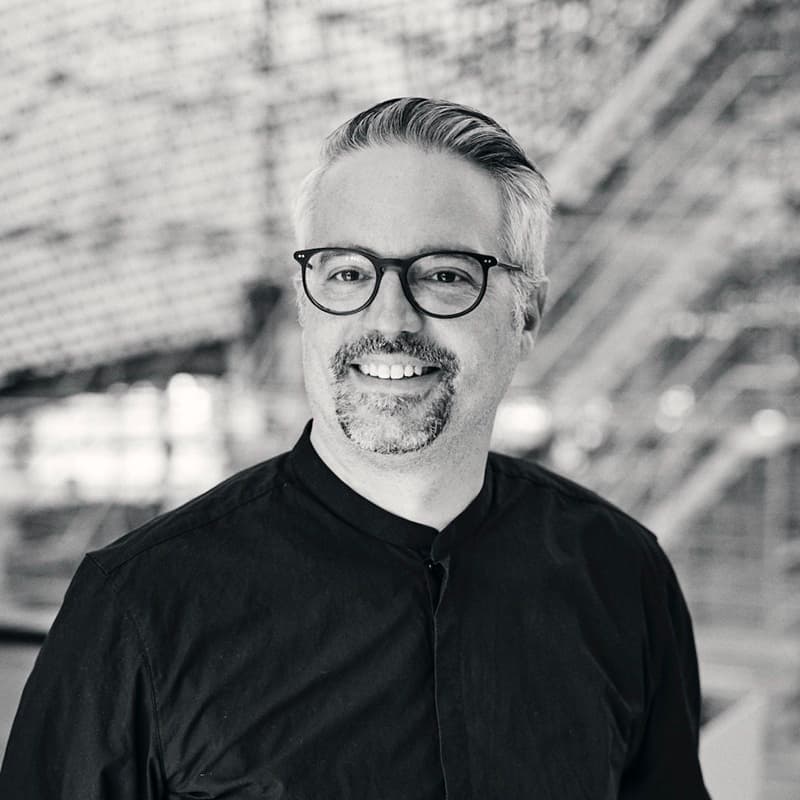
Not a byproduct of the day: Matthias Rauch on why nighttime economy and culture belong in urban planning and the example of Mannheim

09 June 2026

Mannheim, the second largest city in Germany’s federal state of Baden-Württemberg, has turned its cultural and creative sectors into drivers of urban development, with music taking center stage. Matthias Rauch, Head of Cluster Creative Economy at the City of Mannheim, was in Bucharest for the East European Music Conference 2026 and spoke to Romania Insider about the city’s transformation since recognizing the importance of the creative industries, the introduction of Germany’s first Night Mayor position, and why integrating the night economy into urban planning matters.

Mannheim's cultural creative industries are “an economic powerhouse” and, beyond their economic contribution, they serve other vital functions, “whether it's bringing people together, urban development, social cohesion as well as just making a city feel different,” Matthias Rauch explains. The city has also turned its attention to what happens after hours, and, in July 2018, it added a night mayor position, a role that created visibility for the nighttime economy and night culture. From restaurants, bars, clubs, and festivals to theaters, cinemas, and other cultural activities, the nighttime economy generates around EUR 9 billion in revenue annually in Baden-Württemberg and employs more than 220,000 people, the 2025 study NightLÄND found. At the same time, the night mayor position increased awareness of why cities need to think about governing the night. “At night, we seem to approach each other differently than during the day, and the social differences seem not to play as big a role as during the day,” Rauch says. "I think that's something that we have to use as cities and as societies: to use nighttime spaces and the nighttime in general to come together, to celebrate, to discuss, to find new ideas, to find new inspiration. That's why the nighttime economy and night culture are so important." More about this in the interview below.

How does Mannheim’s creative economy cluster work? What are its main pillars?

The creative economy cluster is part of the city administration. Five clusters are formally supported by the city of Mannheim. Creative economy is one of them. We support basically all the companies in the cultural and creative industries. In Germany, it has 11 sub-markets. It includes music, film, literature, performing arts, advertising, and so on. We do all of that, with a focus on music, design, and film. We do a lot of consulting work, we provide spaces for companies, we do a lot of networking events, and knowledge transfer formats to bring expertise and competence to the companies.

Why the focus on music, design, and film?

Music has always been a strong factor in Mannheim because historically the city has a strong music tradition going back to classical music with [e.n. Johann] Stamitz, the current form of the symphony originated in Mannheim. We had a lot of Americans stationed in Mannheim, so the jazz, blues, and R&B scene was fairly strong. Out of that developed a very lively and dynamic jazz scene, an electronic music scene, and also an indie rock scene. So music was always very prevalent and part of the DNA of the city of Mannheim.

Design is also fairly strong because we have a college for design, so we are trying to support that and, of course, keep the brains and all the potential in the city as much as possible. The same with music. We have a pop academy [e.n. Popakademie Baden-Württemberg] and the University for Music and Performing Arts, so basically you can study everything related to music in Mannheim, whether it is pop music, classical music, jazz, or even global music.

We have had a film commission since, I believe, 2007. We are not a huge film city, but it is a nice addition to what we do.  But if an architect, an author, or someone from a different field comes to us, of course, they are supported in the same way as a musician or someone from the design field.

When did you decide to create it? Why was it important?

It goes back about 25 years, when the former mayor was one of the first mayors to recognize the importance of cultural and creative industries on urban development, and also as an economic, social, and cultural driver for the city. That's when he started to implement a fairly unique support structure, particularly for music, in Mannheim. It was a political decision to do that. It has changed forms and functions over the years, but it has remained that Mannheim has a very strong focus on creative industries as well as music, also with regard to having them be a driver of urban development.

For instance, there is a neighborhood called Jungbusch. It's an old harbor area that was very downtrodden structurally, very weak. The city started, step by step, to install cultural and creative industry institutions there.

The city of Mannheim runs eight startup hubs with about 35,000 sqm of office space and about 360 companies that are in the hubs. Half of them are geared towards the cultural and creative industries. Mannheim is also running the only, to this day, first and only startup center exclusively for the music industry, the Music Park.

This entire neighborhood became more sustainable, more diverse, and more resilient through having creatives live and work in the neighborhood. It's not the classic gentrification story, so that people are being pushed out and that creatives are not there anymore, but now trying to balance the milieu, the mixture of the neighborhood, so that it's still exciting, still very diverse, and that it's dynamic and thriving. I think through that the city has been perceived very differently over the last 20 to 25 years.

Mannheim, historically, is an industrial, working-class city, with a lot of manufacturing, but it also started to reinvent itself as a creative city many years ago, and now I think creativity and culture are an essential part of the city. Also, how it is perceived now is a big difference from 20 - 30 years ago.

How have the creative industries contributed to the economy of the city? Has this changed in time?

The last empirical study that we did was quite a few years ago, so the numbers are quite old, unfortunately. […] The cultural creative industries are a very important sector, and they're bigger than the chemical industry, for instance, or the insurance industry, or the pharmaceutical industry. Taken together it's really an economic powerhouse.

I think it's short-sighted to only consider them as economic drivers. Cultural creative industries also have other assets, whether it's bringing people together, urban development, social cohesion, as well as just making a city feel different, which a pharmaceutical company hardly ever does.

You were involved in designing the first position of night mayor in Germany. Why did you feel that was needed in Mannheim?

I think it was a very, very good addition. Not because the nighttime economy did very badly in Mannheim, but we wanted to further strengthen the scene and have one go-to person for all the concerns of bars, clubs, owners, live music venues, etc., to have someone in the municipality or someone at arm's length who could communicate the concerns and the needs of the industry to the municipality and the administration.

Before that, the only contact point of the stakeholders was the department that said ‘no, you can't do this’ or ‘yes, you can,’ but no one who would progressively talk about issues that were concerning the industry, and trying to help them, and be a moderator between the municipality and the stakeholders. That's why we installed this position. It was really helpful to have a position like this during the pandemic, for instance, where the phone rang 24-7; basically, we were trying to help people out and trying to explain the different measures and the support programs.

I'm very happy to say that I think more than 20 cities in Germany now have a night mayor position or a nighttime economy officer. Our example led to the spread of this position and the popularity of it, at least in Mannheim. We contributed a little bit to that.

Has the role changed at all since it was first added?

Not really. The person has three main functions. One aspect is mediating conflict with the different conflict parties, bringing them together around the table, and trying to find solutions together. The second aspect is to build and strengthen networks in the nighttime economy and night culture, and to also come up with innovative formats for the night. So, together with stakeholders to co-create new events, new formats, but of course, he's also concerned with safety at night, inclusion, diversity, making the night interesting and exciting, and having the night not be considered as a byproduct of the day. That was usual about 30 years ago. Cities never thought about the night from a governance perspective, and I think that significantly changed in the last 10 to 20 years, where the night, of course, is something that you have to take care of from a city perspective as well. There are a lot of people who work during the night, so there's got to be a certain kind of infrastructure in place during the night. To take care of that starts with public transport to lighting issues, to safety issues, to having food available during the night, opening hours, licensing, sound ordinance, all of this is daily work for the night mayor.

What are some signs that a city could benefit from a night mayor position?

If the needs and concerns of the industry and the stakeholders are addressed, I think that's a sign that a nighttime economy officer is probably there.

If there are a lot of clubs, bars and live music venues that are struggling, if you have closures, if you have vacancies for a long time, especially in the inner downtown core but also in outside parts of the city, I think these are essential signs where you could or should think about having something like a nighttime commission or a night mayor that could help alleviate and address these problems and work together with the stakeholders to better the situation and the framework for value creation.

What would you say sets apart a city with a lot of nightlife from one with a functioning night economy?

Usually, if there's a lot of it, it's usually functioning, but there is an economic factor that can be measured. I think it's not measured enough, and it's not a standard procedure to measure nighttime economies, but there are plenty of studies these days. The UK has been doing it since the late 80s even. There are many cities in Germany nowadays that have done nighttime economy studies that measure the economic impact, how many people are employed. The fact that if you go to an event, there are so many other factors that contribute to the other businesses or the place-based economy, whether people go out to have something to eat or they go shopping, they need a hotel room, they use a taxi, it's a long list. If you have a certain amount of people employed in the industry, and you can keep that, and create frameworks for the industry that make it sustainable for them to be there in the long run, then I think you've achieved quite a bit.

Was there opposition to the idea of focusing on nightlife?

There is this short-sighted perspective that it only creates noise and drinking and other problems, and there's trash on the street, etc. These can be side effects, but I think if you only consider this, you're leaving out all the positive aspects that are also there, where there are spaces for communication, for exchange, where different people, from different backgrounds, come together and speak with each other and exchange ideas.

I always claim that clubs or bars are actually also innovation hubs, because the greatest ideas - I don't know if you find that to be true, I certainly do - they were born at three o'clock at night, not at nine o'clock in the morning, in the office. At night, we seem to approach each other differently than during the day, and the social differences seem not to play as big a role as during the day. I think that's something that we have to use as cities and as societies: to use nighttime spaces and the nighttime in general to come together, to celebrate, to discuss, to find new ideas, to find new inspiration. That's why nighttime economy and night culture are so important.

What would you say that Bucharest can learn from Mannheim when it comes to a functioning nighttime economy?

I'm not saying Mannheim is perfect, but I think this role really has first created visibility for the nighttime economy and night culture, for the needs of the stakeholders. It has created more awareness of why it's important for a city to also, in general, think about how to govern the night. Thirty years ago, the only thing that the city did during the night was if the police were called, or if there was a riot, or if there was something going on, then the city was active. But the city hardly ever thought proactively about how to govern the night, how to provide infrastructure during the night.

I'm a big fan of Jane Jacobs, the Canadian-American urbanist. She always said that if you want to have sustainable, lively, dynamic, thriving neighborhoods, you need a diversity of uses in the neighborhood. That means day use, evening use, and night use in the city. Of course, that can create a bit of conflict of interest. But if you moderate these conflicts, I think it can have phenomenal results. I'm a strong believer that neighborhoods should have these different kinds of uses. Usually, if you have a mono-functional use, it's the same as in biology. If you only have daytime uses, at night, some places can turn out to be places of fear, where people don't want to go because there's hardly anyone on the street. In order to prevent that, I think to create incentives for diversity of uses is always a good idea for sustainable urban development, and it always also has an economic impact that is sustainable. That is a learning not only for Mannheim, but for many other cities these days, that make it an important part of urban planning and urban governance to also think about the night.

(Photo courtesy of East European Music Conference)

simona@romania-insider.com

Normal

Not a byproduct of the day: Matthias Rauch on why nighttime economy and culture belong in urban planning and the example of Mannheim

09 June 2026

Mannheim, the second largest city in Germany’s federal state of Baden-Württemberg, has turned its cultural and creative sectors into drivers of urban development, with music taking center stage. Matthias Rauch, Head of Cluster Creative Economy at the City of Mannheim, was in Bucharest for the East European Music Conference 2026 and spoke to Romania Insider about the city’s transformation since recognizing the importance of the creative industries, the introduction of Germany’s first Night Mayor position, and why integrating the night economy into urban planning matters.

Mannheim's cultural creative industries are “an economic powerhouse” and, beyond their economic contribution, they serve other vital functions, “whether it's bringing people together, urban development, social cohesion as well as just making a city feel different,” Matthias Rauch explains. The city has also turned its attention to what happens after hours, and, in July 2018, it added a night mayor position, a role that created visibility for the nighttime economy and night culture. From restaurants, bars, clubs, and festivals to theaters, cinemas, and other cultural activities, the nighttime economy generates around EUR 9 billion in revenue annually in Baden-Württemberg and employs more than 220,000 people, the 2025 study NightLÄND found. At the same time, the night mayor position increased awareness of why cities need to think about governing the night. “At night, we seem to approach each other differently than during the day, and the social differences seem not to play as big a role as during the day,” Rauch says. "I think that's something that we have to use as cities and as societies: to use nighttime spaces and the nighttime in general to come together, to celebrate, to discuss, to find new ideas, to find new inspiration. That's why the nighttime economy and night culture are so important." More about this in the interview below.
How does Mannheim’s creative economy cluster work? What are its main pillars?

The creative economy cluster is part of the city administration. Five clusters are formally supported by the city of Mannheim. Creative economy is one of them. We support basically all the companies in the cultural and creative industries. In Germany, it has 11 sub-markets. It includes music, film, literature, performing arts, advertising, and so on. We do all of that, with a focus on music, design, and film. We do a lot of consulting work, we provide spaces for companies, we do a lot of networking events, and knowledge transfer formats to bring expertise and competence to the companies.

Why the focus on music, design, and film?

Music has always been a strong factor in Mannheim because historically the city has a strong music tradition going back to classical music with [e.n. Johann] Stamitz, the current form of the symphony originated in Mannheim. We had a lot of Americans stationed in Mannheim, so the jazz, blues, and R&B scene was fairly strong. Out of that developed a very lively and dynamic jazz scene, an electronic music scene, and also an indie rock scene. So music was always very prevalent and part of the DNA of the city of Mannheim.

Design is also fairly strong because we have a college for design, so we are trying to support that and, of course, keep the brains and all the potential in the city as much as possible. The same with music. We have a pop academy [e.n. Popakademie Baden-Württemberg] and the University for Music and Performing Arts, so basically you can study everything related to music in Mannheim, whether it is pop music, classical music, jazz, or even global music.

We have had a film commission since, I believe, 2007. We are not a huge film city, but it is a nice addition to what we do.  But if an architect, an author, or someone from a different field comes to us, of course, they are supported in the same way as a musician or someone from the design field.

When did you decide to create it? Why was it important?

It goes back about 25 years, when the former mayor was one of the first mayors to recognize the importance of cultural and creative industries on urban development, and also as an economic, social, and cultural driver for the city. That's when he started to implement a fairly unique support structure, particularly for music, in Mannheim. It was a political decision to do that. It has changed forms and functions over the years, but it has remained that Mannheim has a very strong focus on creative industries as well as music, also with regard to having them be a driver of urban development.

For instance, there is a neighborhood called Jungbusch. It's an old harbor area that was very downtrodden structurally, very weak. The city started, step by step, to install cultural and creative industry institutions there.

The city of Mannheim runs eight startup hubs with about 35,000 sqm of office space and about 360 companies that are in the hubs. Half of them are geared towards the cultural and creative industries. Mannheim is also running the only, to this day, first and only startup center exclusively for the music industry, the Music Park.

This entire neighborhood became more sustainable, more diverse, and more resilient through having creatives live and work in the neighborhood. It's not the classic gentrification story, so that people are being pushed out and that creatives are not there anymore, but now trying to balance the milieu, the mixture of the neighborhood, so that it's still exciting, still very diverse, and that it's dynamic and thriving. I think through that the city has been perceived very differently over the last 20 to 25 years.

Mannheim, historically, is an industrial, working-class city, with a lot of manufacturing, but it also started to reinvent itself as a creative city many years ago, and now I think creativity and culture are an essential part of the city. Also, how it is perceived now is a big difference from 20 - 30 years ago.

How have the creative industries contributed to the economy of the city? Has this changed in time?

The last empirical study that we did was quite a few years ago, so the numbers are quite old, unfortunately. […] The cultural creative industries are a very important sector, and they're bigger than the chemical industry, for instance, or the insurance industry, or the pharmaceutical industry. Taken together it's really an economic powerhouse.

I think it's short-sighted to only consider them as economic drivers. Cultural creative industries also have other assets, whether it's bringing people together, urban development, social cohesion, as well as just making a city feel different, which a pharmaceutical company hardly ever does.

You were involved in designing the first position of night mayor in Germany. Why did you feel that was needed in Mannheim?

I think it was a very, very good addition. Not because the nighttime economy did very badly in Mannheim, but we wanted to further strengthen the scene and have one go-to person for all the concerns of bars, clubs, owners, live music venues, etc., to have someone in the municipality or someone at arm's length who could communicate the concerns and the needs of the industry to the municipality and the administration.

Before that, the only contact point of the stakeholders was the department that said ‘no, you can't do this’ or ‘yes, you can,’ but no one who would progressively talk about issues that were concerning the industry, and trying to help them, and be a moderator between the municipality and the stakeholders. That's why we installed this position. It was really helpful to have a position like this during the pandemic, for instance, where the phone rang 24-7; basically, we were trying to help people out and trying to explain the different measures and the support programs.

I'm very happy to say that I think more than 20 cities in Germany now have a night mayor position or a nighttime economy officer. Our example led to the spread of this position and the popularity of it, at least in Mannheim. We contributed a little bit to that.

Has the role changed at all since it was first added?

Not really. The person has three main functions. One aspect is mediating conflict with the different conflict parties, bringing them together around the table, and trying to find solutions together. The second aspect is to build and strengthen networks in the nighttime economy and night culture, and to also come up with innovative formats for the night. So, together with stakeholders to co-create new events, new formats, but of course, he's also concerned with safety at night, inclusion, diversity, making the night interesting and exciting, and having the night not be considered as a byproduct of the day. That was usual about 30 years ago. Cities never thought about the night from a governance perspective, and I think that significantly changed in the last 10 to 20 years, where the night, of course, is something that you have to take care of from a city perspective as well. There are a lot of people who work during the night, so there's got to be a certain kind of infrastructure in place during the night. To take care of that starts with public transport to lighting issues, to safety issues, to having food available during the night, opening hours, licensing, sound ordinance, all of this is daily work for the night mayor.

What are some signs that a city could benefit from a night mayor position?

If the needs and concerns of the industry and the stakeholders are addressed, I think that's a sign that a nighttime economy officer is probably there.

If there are a lot of clubs, bars and live music venues that are struggling, if you have closures, if you have vacancies for a long time, especially in the inner downtown core but also in outside parts of the city, I think these are essential signs where you could or should think about having something like a nighttime commission or a night mayor that could help alleviate and address these problems and work together with the stakeholders to better the situation and the framework for value creation.

What would you say sets apart a city with a lot of nightlife from one with a functioning night economy?

Usually, if there's a lot of it, it's usually functioning, but there is an economic factor that can be measured. I think it's not measured enough, and it's not a standard procedure to measure nighttime economies, but there are plenty of studies these days. The UK has been doing it since the late 80s even. There are many cities in Germany nowadays that have done nighttime economy studies that measure the economic impact, how many people are employed. The fact that if you go to an event, there are so many other factors that contribute to the other businesses or the place-based economy, whether people go out to have something to eat or they go shopping, they need a hotel room, they use a taxi, it's a long list. If you have a certain amount of people employed in the industry, and you can keep that, and create frameworks for the industry that make it sustainable for them to be there in the long run, then I think you've achieved quite a bit.

Was there opposition to the idea of focusing on nightlife?

There is this short-sighted perspective that it only creates noise and drinking and other problems, and there's trash on the street, etc. These can be side effects, but I think if you only consider this, you're leaving out all the positive aspects that are also there, where there are spaces for communication, for exchange, where different people, from different backgrounds, come together and speak with each other and exchange ideas.

I always claim that clubs or bars are actually also innovation hubs, because the greatest ideas - I don't know if you find that to be true, I certainly do - they were born at three o'clock at night, not at nine o'clock in the morning, in the office. At night, we seem to approach each other differently than during the day, and the social differences seem not to play as big a role as during the day. I think that's something that we have to use as cities and as societies: to use nighttime spaces and the nighttime in general to come together, to celebrate, to discuss, to find new ideas, to find new inspiration. That's why nighttime economy and night culture are so important.

What would you say that Bucharest can learn from Mannheim when it comes to a functioning nighttime economy?

I'm not saying Mannheim is perfect, but I think this role really has first created visibility for the nighttime economy and night culture, for the needs of the stakeholders. It has created more awareness of why it's important for a city to also, in general, think about how to govern the night. Thirty years ago, the only thing that the city did during the night was if the police were called, or if there was a riot, or if there was something going on, then the city was active. But the city hardly ever thought proactively about how to govern the night, how to provide infrastructure during the night.

I'm a big fan of Jane Jacobs, the Canadian-American urbanist. She always said that if you want to have sustainable, lively, dynamic, thriving neighborhoods, you need a diversity of uses in the neighborhood. That means day use, evening use, and night use in the city. Of course, that can create a bit of conflict of interest. But if you moderate these conflicts, I think it can have phenomenal results. I'm a strong believer that neighborhoods should have these different kinds of uses. Usually, if you have a mono-functional use, it's the same as in biology. If you only have daytime uses, at night, some places can turn out to be places of fear, where people don't want to go because there's hardly anyone on the street. In order to prevent that, I think to create incentives for diversity of uses is always a good idea for sustainable urban development, and it always also has an economic impact that is sustainable. That is a learning not only for Mannheim, but for many other cities these days, that make it an important part of urban planning and urban governance to also think about the night.

(Photo courtesy of East European Music Conference)

simona@romania-insider.com

Normal

Romania Insider Free Newsletters