At €10M+, intuition becomes expensive: Insights from Capital Decisions co-founder Florin Pop
Why financial structure is the hidden growth lever most SME founders are missing?
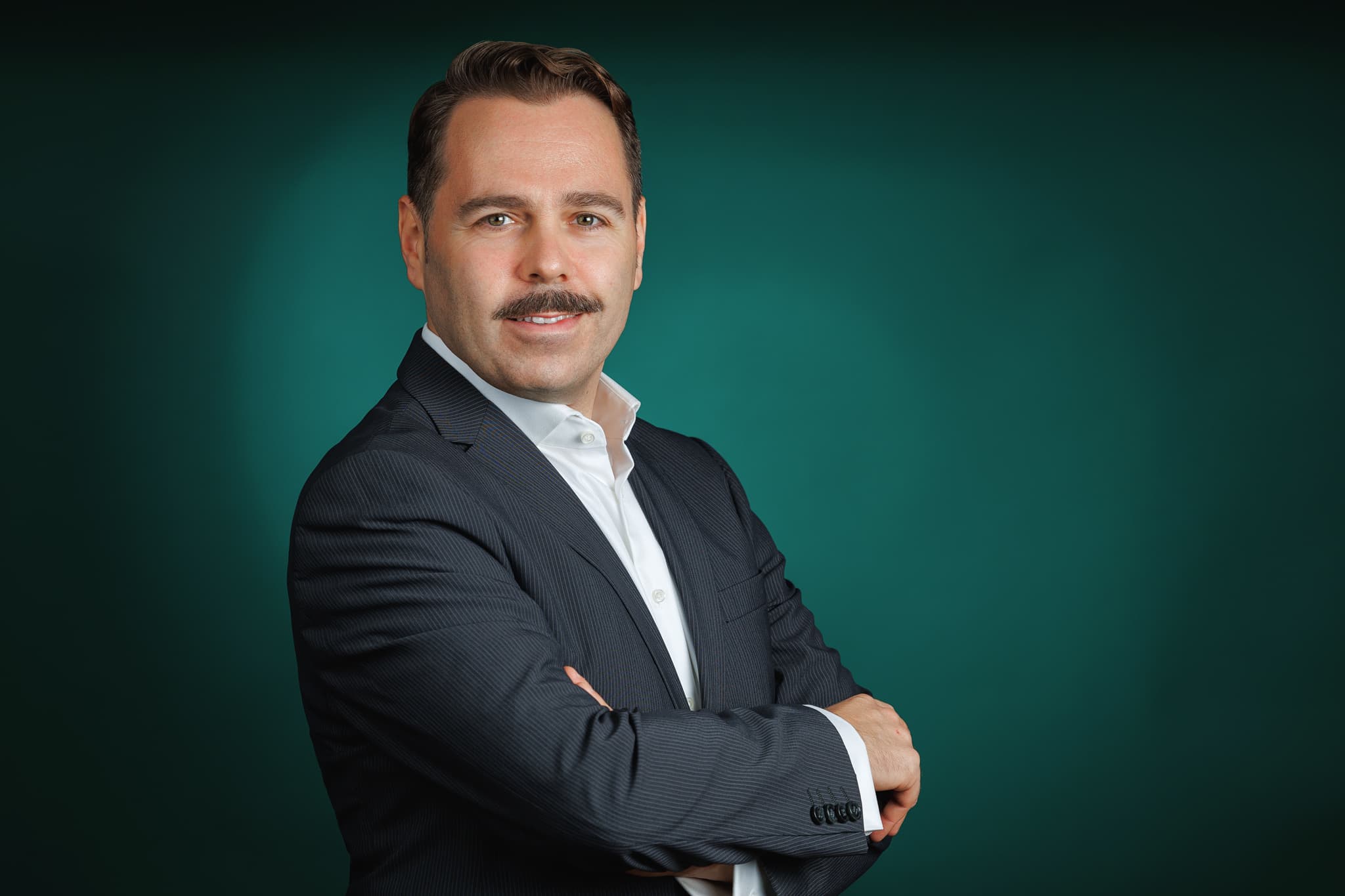
Many Romanian founders build companies to €10M, €20M, even €30M in revenue and still feel that something is off. The product works, the team keeps growing, and the top line keeps climbing, but decisions feel slow, cash is always tight, and the business cannot run without the founder in the room. The problem, in most cases, is not the market or the team. It is the lack of a real financial structure underneath the growth.
Capital Decisions is a fractional CFO services firm built around exactly that gap. Its extended team of senior finance professionals works with ambitious small and medium-sized companies in the €5M to €30M range, helping them put in place the reporting, margin analysis, cash flow forecasting and decision frameworks they will need long before they outgrow their current way of working.
In the Q&A below, co-founder Florin Pop walks through the side of growth that gets less airtime: why scaling revenue scales inefficiencies, why fewer than one in five SMEs at this stage can name their most profitable client with confidence, why a healthy bank balance is often a misleading signal, and why founder dependency tends to be priced as risk the moment a business tries to attract investors or buyers. The conversation closes with a rapid-fire myth check on what fractional CFO services actually do, and on the thesis Capital Decisions keeps coming back to: at €10M and above, intuition becomes expensive, and structure is what turns growth into something sustainable.
Read more in the Q&A interview below:
Growth & Structure
Many founders say, “we’re doing €20million, but everything still feels chaotic.” From your experience, why does growth often create the illusion of structure rather than actually fixing underlying inefficiencies?
The short answer is that growth scales everything, including inefficiencies.
In a small and medium company, structure doesn’t evolve at the same pace as revenue. Processes remain informal, decisions stay over-centralized with 1 or 2 persons, and financial visibility is limited. As the company grows, complexity increases. So ,what worked at €2million, at €20million creates incredible friction.
In addition, we noticed that many times revenue growth gives a false sense of progress. The business is doing well commercially, so its tempting for a founder to assume the underlying systems are working too. In reality, growth just covers up all the inefficiencies, not solving them.
The €5M–€20M Trap
There seems to be a critical phase between €5M and €20M where complexity explodes. What typically breaks in a company’s financial setup during this stage, and why do so many SMEs fail to adapt their finance function accordingly?
At €5million, you can run most things on instinct and a few excel tables. At €20million, you have multiple product lines, a larger team, several client segments and many times you're making decisions with the same financial visibility tools you had at €5M. That is the trap.
What we see breaking first is margin clarity. The company doesn't know which products, services, or clients are actually profitable. Overhead gets allocated incorrectly or sometimes not at all. Then, very soon comes cash flow pressure. More working capital is needed to fuel growth, but the business isn't planning it or managing it proactively. And finally, decision-making slows because there's no data to back it up. This is when we usually see companies reaching out to us.
Regarding the why, we’ve noticed two psychological factors which make SMEs delay to adapt. First, growth feels like evidence that things are working. Why change something that seems to be working, right ? The risk is that when it stops working the problems are much harder to fix. Second, very often SME founders see finance as a support function: recording history and not driving decisions. So, they keep adding revenue, people, and products without upgrading how they manage the business financially.
In a nutshell, the company evolves, but the financial thinking doesn’t.

Profit vs. Reality
A lot of entrepreneurs believe they are profitable, but often lack real visibility. In practice, how often do SMEs actually know their margins at product or client level, and what are the biggest blind spots you see?
Rarely. In my experience, fewer than one in five SMEs in the €5M–€30M range can tell you, with confidence, which client or product is most profitable (not by revenue, but by actual margin after allocating all costs).
The typical blind spots: founder time is never costed in, overhead is spread equally across everything, and operational inefficiencies are invisible because they've always been there. A business owner once told me they were making 18% margin on their top client. When we modelled it properly (including logistics, customisation, priority support, and the owner's time spent managing that account) the real margin was under 4%.
"We're profitable" is often true at the aggregate level. At the product or client level, it's much messier. And that's where the real decisions need to be made.
The Cash Flow Paradox
Cash flow stress is surprisingly common even in companies that are growing and appear successful. What are the main reasons behind this, and why does “money in the bank” often give a false sense of security?
Growth consumes cash. That's the fundamental paradox. When you're growing fast, you're paying for inventory, payroll, and suppliers before clients pay you. The faster you grow, the more cash you need to fuel that gap.
The other problem is using the comforting idea of "we have money in the bank" as a decision signal. Founders see a healthy bank balance and of course feel safe. But that balance might need to cover payroll, VAT, a supplier payment, and a seasonal dip. All in the next 45 days. Without a rolling cash flow forecast, really, the number on the screen is close to meaningless.
Founder Dependency
Founder dependency is rarely discussed as a financial risk. How does over-centralized decision-making impact a company’s scalability and financial health in the long run?When every significant decision flows through the founder, the business has a permanent bottleneck. It looks like leadership but instead it functions like a constraint.
Financially, the impact is real: decisions slow down, opportunities are missed, and the business becomes impossible to sell, scale, or step back from. If a company can't function without the founder making the calls, its enterprise value is much lower than its revenue might suggest. Investors and acquirers price that risk heavily.
There's also a hidden cost: the founder's time. A founder spending hours approving invoices, negotiating supplier terms, and reviewing every financial report is not building strategy or client relationships. That's an opportunity cost most founders never calculate.
The fix isn't to step away. It's to build systems that make decisions transparent enough to delegate. That requires financial structure, clear reporting, and defined thresholds for who approves what.
The CFO Delay
Many SMEs delay bringing in senior financial leadership, saying they are “not big enough for a CFO.” What is the real cost of this delay, and how does a fractional CFO change the way decisions are made?The cost is always invisible. Until one of these things happen: a bad pricing decision, margin erosion, a cash crisis or a failed growth push. These aren't 100% inevitable. Most of them can be predicted and, more importantly, prevented with a good financial planning & reporting (FP&A) system in place.
The "not big enough" belief is also a misunderstanding of what a CFO actually does. Most founders think they need a CFO when they're raising financing or preparing to sell. In reality, the biggest impact is much earlier: building the reporting systems, margin analysis, cash flow forecasting, and decision frameworks that make the business manageable as it scales.
When we work with our clients we see a change in the nature of decisions: from gut feel to structured analysis. Instinct is still a great asset, but at €10M+, the stakes of being wrong are much higher.
The fractional model specifically addresses the "not big enough" objection: you get senior expertise at 30% of the cost of a full-time hire, applied to exactly the problems you have right now.
From Reactive to Proactive
If a company wants to move from reactive to proactive, what does a proper finance function actually look like in practice? How does it shift from reporting the past to actively shaping the future of the business?The big paradigm shift is in the question finance is asked to answer.
Reactive finance asks: "What happened?" Proactive finance asks: "What should we do next, and what will it cost?"
In practice, that means three things: (1) clean reporting: profit margin by product, client, and channel, updated regularly, not just at year-end; (2) a rolling cash flow forecast: not a static budget, but a live view of the next 90 days, updated weekly; (3) scenario planning: before a big decision (a new hire, a market expansion, a pricing change), you model the financial impact in advance.
When finance works this way, it becomes a decision-support function. Proactive finance doesn't predict the future but it makes sure the future doesn't catch you off guard.
Rapid Fire: Fractional CFO — True or False
- A fractional CFO is just a more expensive accountant. — False. An accountant records what happened. A CFO shapes what happens next.
- Revenue is the best indicator of when you need a CFO. — False. Complexity is the real trigger: more products, people, or markets.
- A fractional CFO is only useful if you're raising funding. — False. In reality, the biggest impact is on the operational side and internal cash generation: margins, cash flow, investment decision-making.
- As long as revenue is growing, financial structure can wait. — False. Growth without structure just builds bigger problems.
- A fractional CFO is a temporary fix, not a long-term solution. — False. For many SMEs, it's the most efficient model long term: senior expertise, no full-time cost.
The Bottom Line
Financial structure isn't a back-office concern. It's a strategic advantage. The founders who build proper finance functions early (before they need them) are the ones who scale with clarity rather than chaos. The ones who wait usually get there eventually, but at a much higher cost.
"At €10M+, intuition becomes expensive. Structure is what makes growth sustainable."
*This is a Business View.