Verita's Strongest IB Results Yet and What the Diploma Is Really Teaching Students: 'The Goal Is Not Only to Acquire Knowledge, but to Think with Flexibility, Judgement, and Intellectual Curiosity'
As more Romanian families weigh international education options, the IB Diploma Programme stands out for combining academic breadth with independent research and critical thinking.
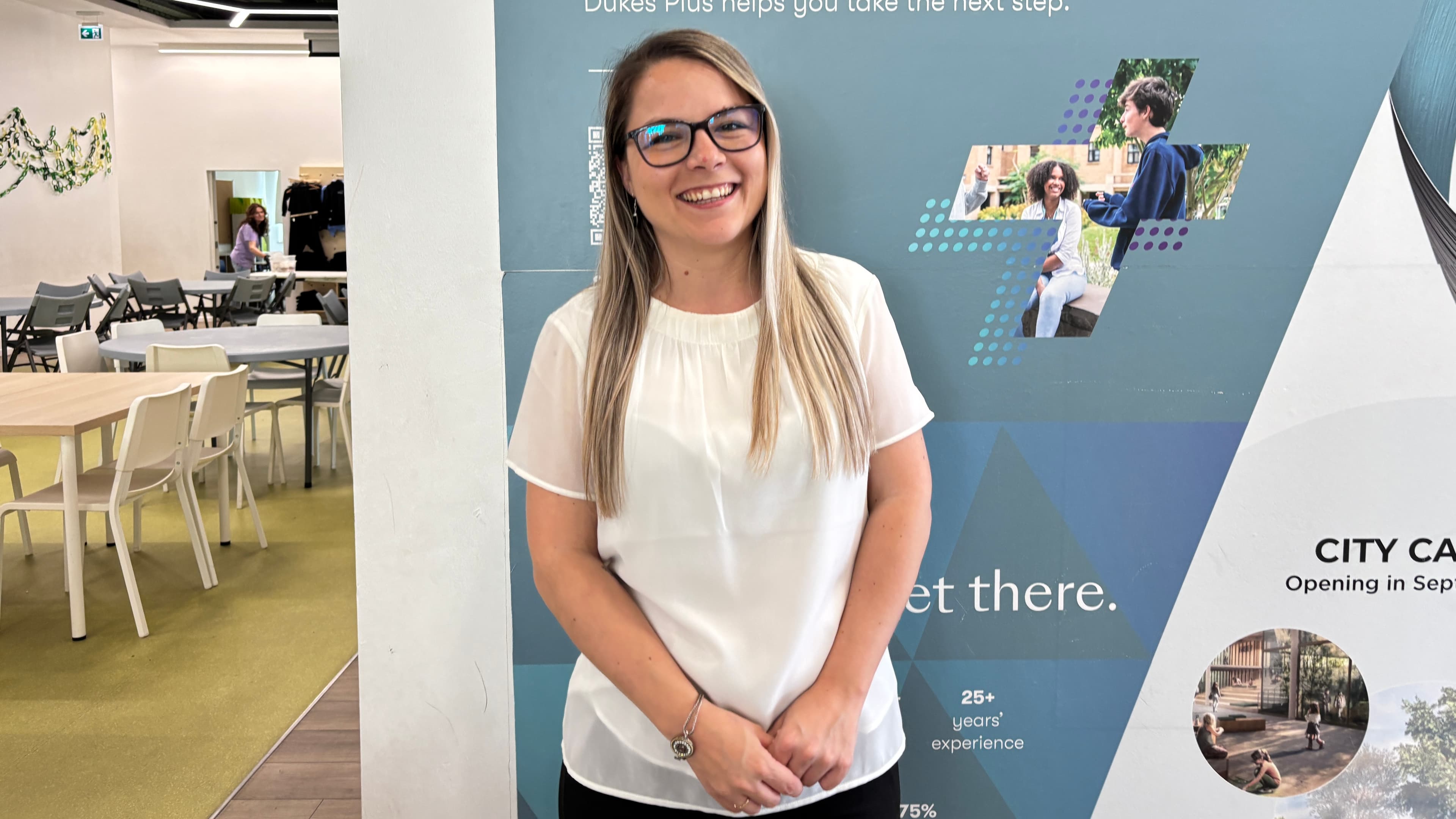
Romania Insider spoke with Doria Draghiciu, Deputy Head of Secondary High School at Verita International School in Bucharest, about how the IB's inquiry-based approach differs from traditional education, how universities view the diploma, and the school's recent highlights, including its strongest IB results in recent years, with a cohort average of 32.2 points and one student scoring 44 out of 45.
How does the IB's inquiry-based approach differ from more traditional models of education?
Doria Draghiciu: The IB inquiry-based approach differs from more traditional models of education mainly in the way knowledge is constructed and used. In a traditional model, knowledge is transferred from the teacher to the student directly. The student uses it to solve some kind of exercise and is then assessed on whether they can reproduce that knowledge on a test.
The IB does not reject knowledge taken in this way or direct instruction. In fact, strong inquiry cannot happen without subject knowledge. Where the IB differs is that it asks students to go beyond the acquisition of knowledge. Students are challenged to question, make connections, investigate and build models in unfamiliar situations, as well as reflect on the process of learning itself. In order to do this, the process starts from the practical experience and builds the abstract concepts afterwards. Students start with an applied example and find the general rules after identifying the patterns.
In this sense, the role of the teacher is central and shifts from the traditional model. The teacher is still an expert and provides knowledge, explanation, feedback, and assessment, but the lessons are transformed into learning experiences that require students to be conceptual learners and independent thinkers. The goal is not only for students to acquire knowledge, but that they look at what they know with more flexibility, judgement, and intellectual curiosity.
How do universities weigh the IB Diploma against A-Levels, AP, or national curricula in admissions decisions?
Doria Draghiciu: Universities recognise the IB Diploma as a strong and challenging qualification, alongside A Levels, AP, and national curricula. Each system has its own strengths. A Levels allow students to specialise earlier, and AP offers flexibility, especially for students applying within the American system.
At Verita, one of the reasons we value the IB Diploma is that it gives students both breadth and depth. Students study six subjects, so they continue to develop across languages, humanities, sciences, mathematics, and the arts or electives, while also going deeper in their Higher Level subjects. This means they do not close doors too early, but they still have the academic depth needed for competitive university courses.
Through its Diploma Core, the IB also gives universities a fuller picture of the student. Through the Extended Essay (EE), students complete independent research. Through the Theory of Knowledge (TOK), they learn to question how knowledge is built and evaluated. Through Creativity, Activity, Service (CAS), they engage with creativity, activity, and service beyond the classroom. So universities are not only seeing subject grades, but also evidence of research skills, critical thinking, time management, reflection, and balance.
I would not frame the IB as better than every other system for every student. But I do think its advantage is that it prepares students very well for university life, not only because of what they study, but because of how they learn to think, manage work, and take responsibility for their own learning.
How does Verita support students in their IBDP?
Doria Draghiciu: At Verita, we support students in the IB DP through both academic and pastoral structures. Students have strong subject teaching, but they are also supported through Core time, TOK, CAS, Extended Essay guidance, mock exams, reflection meetings, academic tracking, university counselling, and individual follow-up.
The DP is not only challenging because of the content. It is challenging because students have to manage deadlines, independent research, internal assessments, exams, CAS, and university planning at the same time. So our role is to help students understand the programme, plan ahead, and build the habits they need to manage it well.
We also work closely as a team. Teachers, the DP Coordinator, the counsellor, learning support, parents, and students themselves are all part of the support system. Our aim is to help students become independent, but not isolated. They are expected to take ownership, but we give them the structures and guidance to learn how to do that.
How do you involve parents in their child's DP journey?
Doria Draghiciu: We involve parents by trying to make the Diploma Programme less mysterious. From the outside, the DP can look like just another school programme with final exams at the end, but it is much more layered than that. There are internal assessments, the Extended Essay, TOK, CAS, predicted grades, university applications, and deadlines that come at different moments across the two-year programme.
So our role is to communicate clearly and early on, not only when something has gone wrong. We use parent information sessions, individual meetings, reports, emails, and follow-up conversations to help parents understand both the programme and their child's progress.
I think parents are an important part of the DP journey, but their role is not to manage things for the student. Their role is to understand the pressure points, support routines at home, encourage balance, and help students become more independent over time.
What were the school's highlights in the past academic year?
Doria Draghiciu: The Class of 2026 delivered Verita's strongest IB Diploma results in recent years, marking the highest cohort average of 32.2 points. One student's near-perfect score of 44 out of a possible 45 points stands out as an exceptional achievement, placing them among the very top IB performers worldwide.
One of the main highlights of the past academic year was our IB evaluation visit. It was an important moment for Verita because it allowed us to pause, reflect on the Diploma Programme, and look honestly at both our strengths and our next steps. The process confirmed many things we are proud of, especially our culture of care, our student support, and the way teachers work together around students.
We also continued to strengthen the Core of the programme, especially TOK, CAS, and the Extended Essay. The TOK Exhibition was a real highlight this year. It was a hit with students, teachers, and the wider school community, and it gave students a meaningful opportunity to show how they are thinking about knowledge, perspective, evidence, and real-world objects.
Another important highlight was the development of our university counselling programme, supported by the Dukes network, which has significantly improved the way we support students in thinking about pathways, careers, and university choices. This has made the process more intentional and has helped students and families have these conversations earlier and with more clarity.
For me, the highlight is not a single event. It is seeing the programme become more intentional, more coherent, and more connected to who we are as a school.
*This business view wast edited by Romania Insider for Verita.